




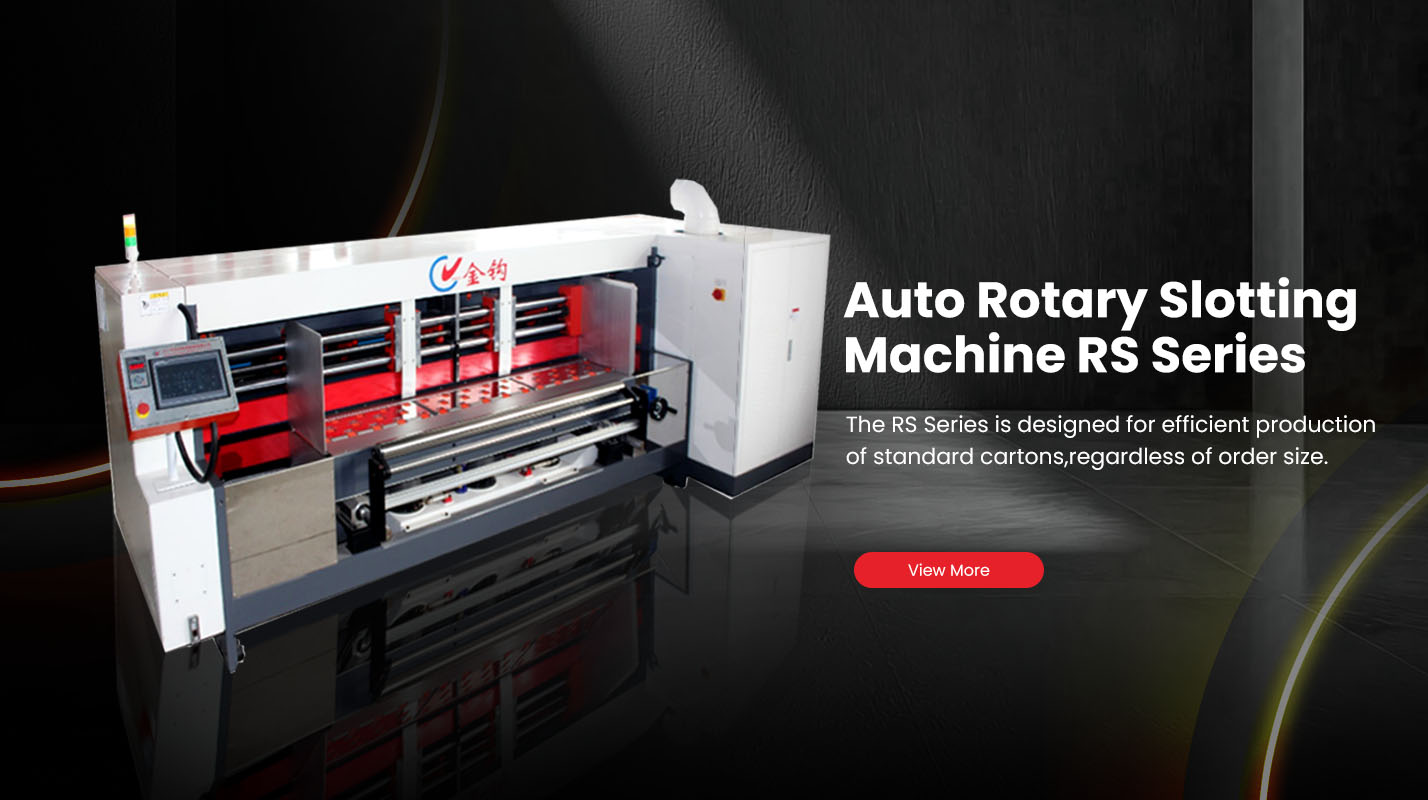
Exploring Automation in Carton Packaging Lines for Small Quantity Orders
In the evolving world of packaging production, customization and flexibility have become just as important as speed and output. With e-commerce, boutique manufacturing, and personalized branding on the rise, more packaging converters are handling small and diverse quantity orders instead of traditional long-run production.
This shift has created new challenges — and opportunities — for manufacturers who need to balance efficiency, cost, and precision. That’s where automation in carton packaging lines plays a transformative role.
JINGOUPACK, a leading manufacturer of carton forming machines, slitter scorers, and Box Making Equipment, has been at the forefront of developing automation solutions specifically designed for small-batch, on-demand carton production.
The Growing Demand for Small Quantity Carton Orders
Global packaging trends show a clear movement toward short-run and custom-size box manufacturing.
Brands today want to reduce warehouse inventory and produce boxes only when needed — often in small quantities and varying designs.
Typical industries driving this change include:
E-commerce sellers: Frequently changing product sizes and seasonal packaging.
Food delivery and bakery brands: Short-term campaigns and limited-edition packaging.
Consumer electronics: Custom-fit boxes for new product launches.
Printing and design studios: Sample or prototype packaging for clients.
The result is an urgent need for flexible, digital-ready, and fully automated packaging lines that can switch between orders quickly without sacrificing accuracy or wasting material.
Traditional Carton Lines vs. Automated Systems
Conventional carton production lines were designed for high-volume, standardized boxes.
They typically involve multiple standalone machines — such as slitter scorers, slotters, printers, and folder gluers — which require manual adjustments between jobs.
Challenges in small-quantity orders:
Long setup and calibration time.
High paper waste during adjustments.
Increased labor cost for manual changeovers.
Inconsistent accuracy due to frequent operator intervention.
In contrast, automated carton packaging lines utilize digital control, servo positioning, and data synchronization to make instant changes with minimal human input — ideal for short-run, multi-size, and customized production.
How Automation Solves Small-Batch Challenges
1. Quick Job Changeovers
Automated systems allow operators to enter order data directly into a touchscreen interface.
The digital control system automatically adjusts slitting, scoring, and slotting positions without manual tool changes.
Result:
Changeover time reduced from 30 minutes to under 3 minutes.
Minimal sheet waste during setup.
High production uptime even with multiple small orders per shift.
2. On-Demand Production Capability
Instead of relying on large pre-cut stock, automated carton lines can produce boxes on demand according to exact order quantities.
With servo-driven feeding and cutting, machines like JINGOUPACK’s CK25 Box Maker can instantly adapt to different box dimensions — reducing inventory and material usage.
Benefits:
No need to store thousands of unused boxes.
Lower risk of damage or obsolescence.
Just-in-time production for greater flexibility.
3. Precise Servo Control and Consistent Quality
In small orders, accuracy matters more than speed.
Automation ensures every sheet is processed with consistent slitting, scoring, and folding accuracy through servo synchronization and PLC monitoring.
Key results:
Dimensional precision within ±0.3 mm.
Smooth folds and uniform scoring lines.
Reduced waste and rework.
With JINGOUPACK’s servo control technology, operators can maintain consistent box quality even when producing diverse box types back-to-back.
4. Integration with Digital Workflow Systems
Modern automated carton lines are compatible with digital workflow integration — connecting machines with ERP or MES systems.
This enables:
Automatic job scheduling.
Real-time production monitoring.
Instant performance reports and material tracking.
For factories handling many short runs daily, this level of connectivity dramatically improves operational transparency and efficiency.
5. Labor Cost Reduction and Operator Safety
Automation minimizes manual involvement, allowing one operator to oversee multiple stages — from feeding to folding.
Automatic feeders reduce manual sheet loading.
Auto stackers and conveyors handle finished boxes safely.
Built-in CE-certified safety features ensure secure operation during continuous runs.
By reducing repetitive manual tasks, factories can cut labor costs while improving workplace safety and ergonomics.
6. Enhanced Sustainability and Waste Reduction
Automation allows factories to use materials more efficiently:
Optimized cutting paths reduce offcuts.
Real-time monitoring minimizes defective production.
Energy-efficient drive systems lower power consumption.
For eco-conscious brands and suppliers, automated carton lines align perfectly with sustainable manufacturing goals.
JINGOUPACK’s Automation Solutions for Small Quantity Production
To help converters and packaging plants achieve flexibility, JINGOUPACK has developed a range of intelligent box making and slitting solutions featuring:
Digital touch-screen control systems with memory storage.
Servo-driven knife adjustment for accurate scoring and cutting.
Compact design suitable for limited production space.
Fully automatic feeding and delivery systems for continuous operation.
CE-certified safety structure for reliable global export.
Machines such as the CK25 Box Maker and BM-series carton forming Machines are designed to deliver fast changeovers, precision operation, and low waste — making them ideal for small-batch and customized box production.
Case Example: Automation in Short-Run Packaging
A mid-size printing and packaging company in Spain upgraded from manual slitting and folding equipment to a JINGOUPACK automatic box forming line.
Results after 90 days:
Setup time reduced by 70%.
Paperboard waste cut by 22%.
Labor savings of 30%.
Throughput increased by 35%.
This shift allowed them to accept small custom orders profitably — something previously impossible with traditional machinery.
The Future of Automated Carton Production
The future of packaging lies in smart, digital, and modular manufacturing.
Automation empowers small and medium enterprises (SMEs) to compete with large-scale producers by providing:
Flexible production capabilities.
Reduced waste and operational cost.
Shorter delivery times for custom packaging.
With its focus on intelligent control and automation, JINGOUPACK continues to lead the innovation path — offering packaging manufacturers the right technology to meet modern market demands for efficiency, accuracy, and sustainability.
Conclusion
Automation in carton packaging lines is no longer a luxury — it’s a necessity for handling the dynamic demands of small-quantity, on-demand orders.
By integrating digital control, servo precision, and smart data systems, factories can achieve greater efficiency, higher accuracy, and stronger profitability.
For packaging converters ready to upgrade to next-generation automation, JINGOUPACK offers proven solutions that transform box production into a smarter, greener, and more flexible process — designed for the future of packaging.