




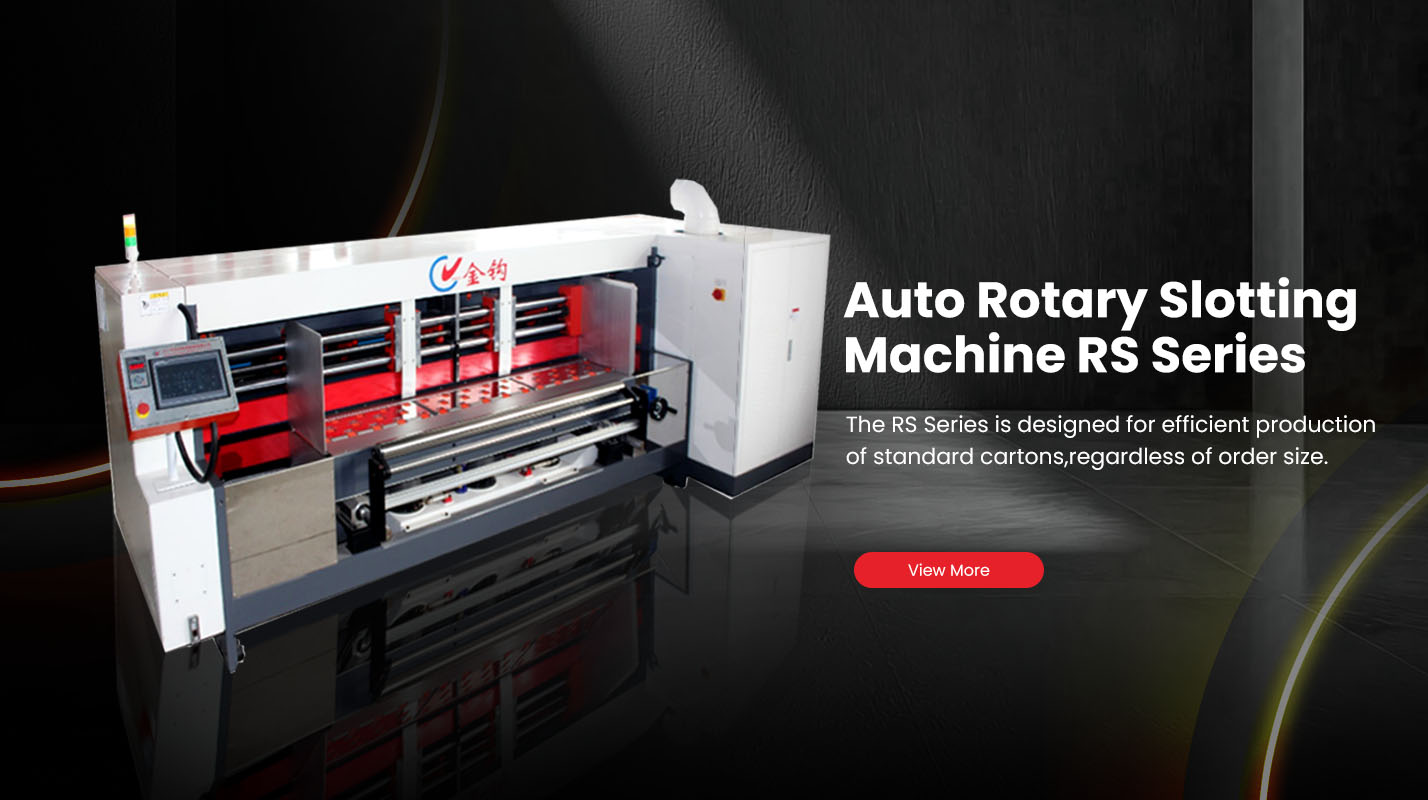
Comparison: Manual Vs. Automatic Slitter Scorer Machines
In corrugated packaging manufacturing, slitting and scoring are vital steps that determine the accuracy, strength, and quality of the final box. The choice between a manual slitter scorer machine and an automatic slitter scorer machine directly affects production speed, waste rate, and long-term profitability.
For factories upgrading their packaging lines or optimizing short-run orders, understanding the difference between manual and automatic systems is crucial.
As a professional packaging machinery manufacturer, JINGOUPACK offers both manual and automatic slitter scorer models — giving customers the flexibility to match equipment to their production needs.
What Is a slitter scorer machine?
A slitter scorer machine performs two essential functions in corrugated board processing:
Slitting: Cutting the corrugated sheet into specific widths for each panel of the box.
Scoring: Creating precise creases that allow smooth folding during box forming.
These two actions prepare flat sheets for folding, gluing, and die-cutting, ensuring accurate box dimensions and consistent shape.
While both manual and automatic machines perform the same tasks, the difference lies in operation mode, accuracy, speed, and automation level.
Manual Slitter Scorer Machines
Manual models are basic and cost-effective, suitable for small workshops or startup packaging plants.
Operators manually adjust knife and scoring wheel positions using mechanical handwheels or rulers.
Advantages
Lower investment cost: Ideal for factories with limited budgets.
Simple maintenance: Fewer electronic parts mean easier servicing.
Suitable for small runs: Effective for limited orders or prototyping.
No specialized training required: Operators can learn basic setup quickly.
Limitations
Long setup time: Manual adjustment for each order can take 15–30 minutes.
Inconsistent accuracy: Human error may lead to uneven cuts or misaligned creases.
Slower production speed: Typically 30–50 sheets per minute.
Higher waste rate: Setup errors and misalignment can increase scrap by 5–10%.
Difficult to repeat jobs: No digital memory for recurring orders.
Manual slitter scorers are therefore best suited for low-volume production or as support machines in larger facilities.
Automatic Slitter Scorer Machines
Automatic systems, such as those developed by JINGOUPACK, use digital control, servo motors, and touch-screen operation to perform fast, precise adjustments.
Knife positions, scoring depths, and sheet spacing are controlled by software — not hand tools — making operation far more efficient and accurate.
Advantages
High precision: Servo positioning ensures ±0.3 mm accuracy.
Quick setup: Change orders in less than 2–3 minutes via digital interface.
Consistent results: Every sheet is slit and scored identically.
Faster throughput: Production speeds up to 150 sheets per minute.
Data memory: Save multiple job settings for instant recall.
Reduced waste: Optimized alignment minimizes offcuts and errors.
Compatible with smart production lines: Integrates easily with digital workflows and ERP systems.
Limitations
Higher initial cost: Greater technology investment upfront.
Requires skilled supervision: Operators need training for PLC control.
Electrical maintenance: More complex systems require periodic technical checks.
For medium to large-scale factories or high-mix, short-run production, automatic slitter scorer machines deliver superior efficiency and long-term savings.
Technical Comparison Table
| Feature | Manual Slitter Scorer | Automatic Slitter Scorer |
|---|---|---|
| Operation Type | Manual mechanical adjustment | Servo motor & PLC digital control |
| Setup Time | 15–30 minutes | 2–3 minutes |
| Accuracy | ±1–2 mm | ±0.3 mm |
| Speed | 30–50 sheets/min | 100–150 sheets/min |
| Waste Rate | 5–10% | 1–3% |
| Labor Requirement | 2–3 operators | 1 operator |
| Job Memory | Not available | Available |
| Maintenance | Simple mechanical | Requires periodic electronic checks |
| Cost | Low initial investment | Higher initial cost, lower long-term expense |
| Ideal Use | Small workshops, prototypes | Large factories, multi-size, high-precision jobs |
Efficiency and Cost Analysis
Although automatic machines require a higher initial investment, they reduce operating costs over time:
Labor Savings: One operator can manage a full automatic line.
Material Savings: Lower waste rates improve yield.
Faster ROI: Increased throughput and reduced downtime shorten payback period.
Many JINGOUPACK clients achieve a full return on investment within 12–18 months after switching from manual to automatic slitter scorers.
Automation and Smart Control Integration
Automatic slitter scorer machines feature PLC and servo systems that enable advanced features such as:
Real-time alignment monitoring.
Automatic sheet feed synchronization.
Multi-language touch-screen operation.
Remote troubleshooting and software updates.
For factories moving toward Industry 4.0, automation ensures digital traceability, production tracking, and consistent output quality.
Application Scenarios
Manual Slitter Scorer
Best for:
Small converters and packaging startups.
Sample or R&D departments.
Manual backup operations in hybrid lines.
Automatic Slitter Scorer
Best for:
Corrugated box factories with diverse box sizes.
High-speed production environments.
On-demand packaging service providers.
Companies focusing on precision and low waste.
Why JINGOUPACK’s Automatic Slitter Scorers Stand Out
JINGOUPACK integrates innovation, safety, and sustainability into every machine:
Servo-controlled accuracy: Ensures perfect cuts and scores.
CE certification: Meets European safety and performance standards.
Energy-efficient drives: Reduce operational power costs.
Compact design: Saves workshop space while maximizing output.
After-sales support: Includes remote technical service and spare parts supply.
Whether producing small batches or large-scale orders, JINGOUPACK’s slitter scorer machines offer the ideal balance of technology, precision, and reliability.
Conclusion
The difference between manual and automatic slitter scorer machines reflects the broader shift in the packaging industry — from labor-intensive production to digital automation.
Manual systems remain practical for limited runs and startups.
Automatic systems deliver long-term efficiency, consistency, and profitability.
For factories aiming to enhance productivity and reduce waste, upgrading to an automatic slitter scorer machine is a strategic investment that pays off in speed, precision, and sustainability.
To explore advanced models and customization options, visit JINGOUPACK — your trusted partner in high-performance corrugated packaging machinery.