




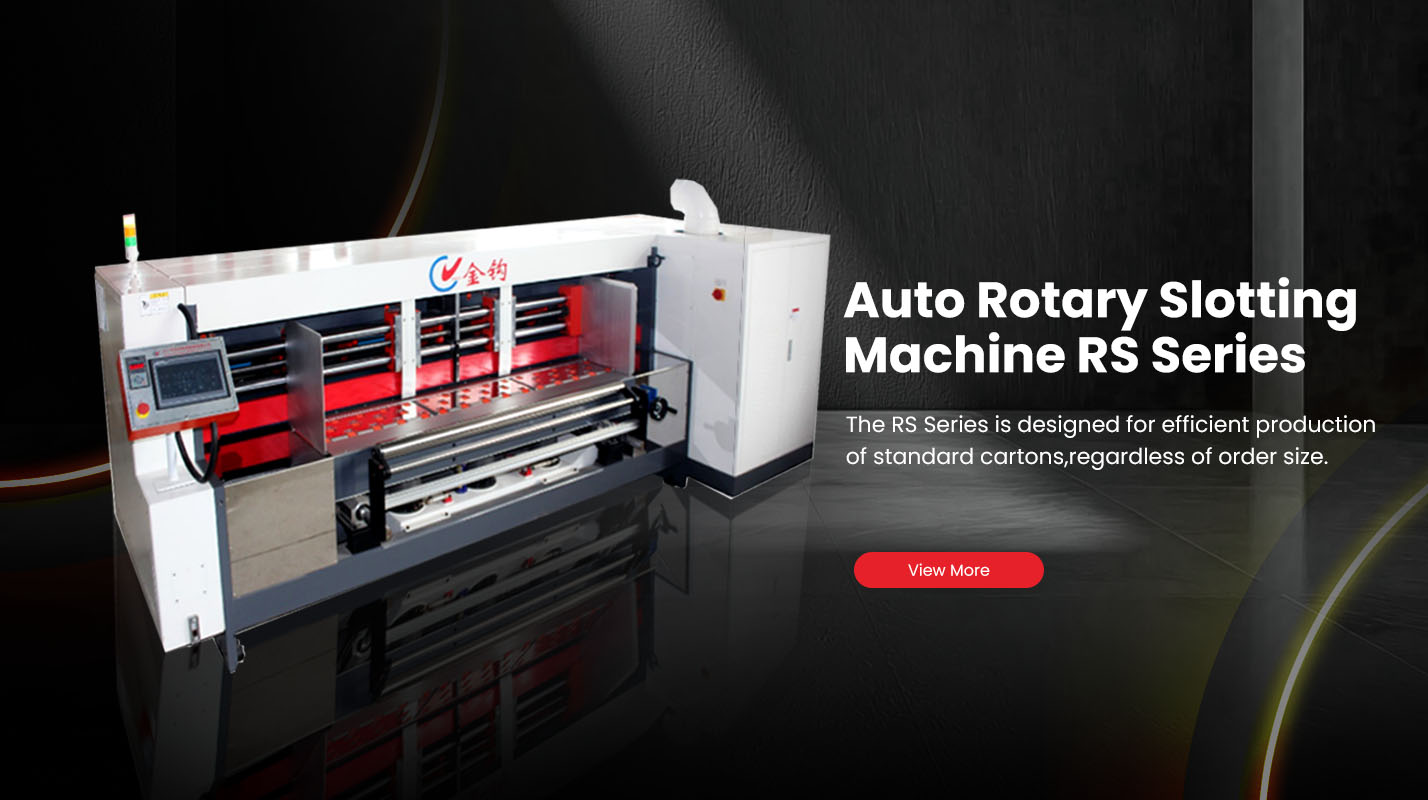
What Are the Key Differences Between a Carton Forming Machine and a Carton Erecting Machine?
In the packaging industry, the terms “carton forming machine” and “carton erecting machine” are often used interchangeably — yet they represent two distinct stages in the packaging process.
Both are essential for converting flat materials into ready-to-use packaging, but they serve different purposes and operate at different points in the production line.
At Jingou Packaging Machinery, we design and manufacture both systems, ensuring compatibility and efficiency across the entire corrugated packaging workflow. Understanding their differences helps you select the right machine for your factory’s needs and growth strategy.
1. Definition and Core Function
| Machine Type | Primary Function | Production Stage |
|---|---|---|
| carton forming Machine | Converts flat corrugated sheets into pre-shaped box blanks with slots, folds, and creases | Early stage of box manufacturing |
| Carton Erecting Machine | Takes pre-cut box blanks and folds them into finished, open-top cartons ready for filling | End-of-line packaging stage |
In short, the carton forming machine creates the box structure, while the carton erecting machine assembles it into its final shape.
2. Process and Operation
2.1 Carton Forming Machine
A carton forming machine works primarily with corrugated sheets. It performs several precision operations in sequence:
Slitting and scoring – Cuts and creases the board for folding.
Slotting and corner cutting – Shapes the box flaps.
Folding and gluing – Bonds panels into a flat, collapsible carton blank.
Jingou’s forming systems integrate servo-controlled drives, digital control panels, and auto order memory, ensuring ±0.5 mm precision and quick changeovers for various box sizes.
The output: a flat, pre-folded carton ready for final erection.
2.2 Carton Erecting Machine
In contrast, a carton erecting machine starts with pre-glued blanks and folds them into fully open boxes. It’s often used for:
Food and beverage trays
Takeaway boxes
Cosmetic or pharmaceutical packaging
The erecting process typically involves:
Feeding and picking up flat blanks
Folding side panels with vacuum suction arms
Gluing or locking flaps automatically
Delivering finished, open-top cartons ready for filling
Thus, the erecting machine transforms flat blanks into rigid, 3D containers used for packing and shipping.
3. Structural and Design Differences
| Aspect | Carton Forming Machine | Carton Erecting Machine |
|---|---|---|
| Material Input | Corrugated sheets | Pre-glued or die-cut blanks |
| Output Type | Flat, collapsible cartons | Fully erected cartons |
| Operation Mechanism | Slotting, scoring, folding, gluing | Vacuum forming and flap locking |
| Machine Layout | Integrated with upstream slitter/slotter lines | Typically standalone, near filling lines |
| Speed Range | 150–250 pcs/min depending on box type | 20–60 pcs/min depending on size |
| Automation Level | Highly servo-synchronized for precision | Mechanically or servo-driven for folding |
| Main Users | Corrugated box manufacturers | End-product packaging factories |
In simple terms:
Forming machines build the box blanks.
Erecting machines open and prepare the blanks for use.
4. Industrial Application Differences
4.1 Carton Forming Machine Applications
Forming machines are ideal for corrugated packaging production lines that manufacture:
Shipping cartons and transport boxes
Industrial packaging containers
Custom-sized boxes for bulk packaging
They are often integrated with slotting, scoring, printing, and folding units to complete all structural preparation steps before shipment.
4.2 Carton Erecting Machine Applications
Erecting machines are commonly used by product packaging factories such as:
Food and beverage producers (juice, milk, snacks)
Consumer goods and electronics packaging lines
Cosmetic and pharmaceutical filling lines
These machines are typically located at the end of production, just before filling or sealing.
5. Automation and Control Technology
Carton Forming Machines demand higher mechanical precision since they define box dimensions.
Jingou integrates servo-driven synchronization and PLC control for continuous operation.
Digital panels with memory functions ensure quick format changes.
Thin-blade slitting systems minimize paper fiber loss.
Carton Erecting Machines, on the other hand, focus on folding accuracy and output rhythm.
Often use vacuum pickup arms and glue or lock mechanisms.
Equipped with sensors for blank detection and alignment.
Designed for integration with filling and sealing machines.
Both machine types can be connected under Industry 4.0 standards, enabling smart diagnostics, real-time monitoring, and energy optimization.
6. Cost and Investment Perspective
| Cost Factor | Carton Forming Machine | Carton Erecting Machine |
|---|---|---|
| Initial Investment | Higher (complex structure and automation) | Moderate (simpler folding mechanics) |
| Operational Cost | Lower over time due to durability | Slightly higher due to adhesive use |
| ROI Potential | High, as it supports large-scale production | Fast, for high-speed consumer packaging |
| Maintenance Need | Periodic blade and servo inspection | Regular glue and vacuum maintenance |
| Expansion Capability | Modular – can add slotter or stacker | Scalable with filling line integration |
For factories manufacturing corrugated packaging, carton forming machines are a long-term capital investment.
For consumer goods packers, carton erecting machines offer fast automation ROI.
7. How Jingou Packaging Machinery Integrates Both Systems
At Jingou Packaging Machinery, we offer a complete line solution — from sheet slitting and slotting to final folding and erection.
Our systems are:
Servo-controlled for precision and efficiency
Modular and upgradeable, supporting future production expansion
CE and ISO certified, ensuring compliance and export readiness
Digitally controlled for easier operation and troubleshooting
By combining forming and erecting systems, Jingou helps packaging factories create seamless, high-speed production lines tailored to specific industries — from corrugated transport boxes to printed retail cartons.
8. Choosing the Right Machine for Your Factory
When deciding between a forming and an erecting machine, ask:
Are you manufacturing boxes or filling them?
Do you need to handle corrugated sheets or flat blanks?
What is your target production speed and automation level?
Will your line require future integration with printing or filling systems?
If your core business is producing corrugated boxes, invest in a carton forming machine.
If your production involves packing products into cartons, a carton erecting machine is the better choice.
Jingou’s engineering team can assess your workflow and recommend the right configuration to maximize output and minimize total ownership cost.