




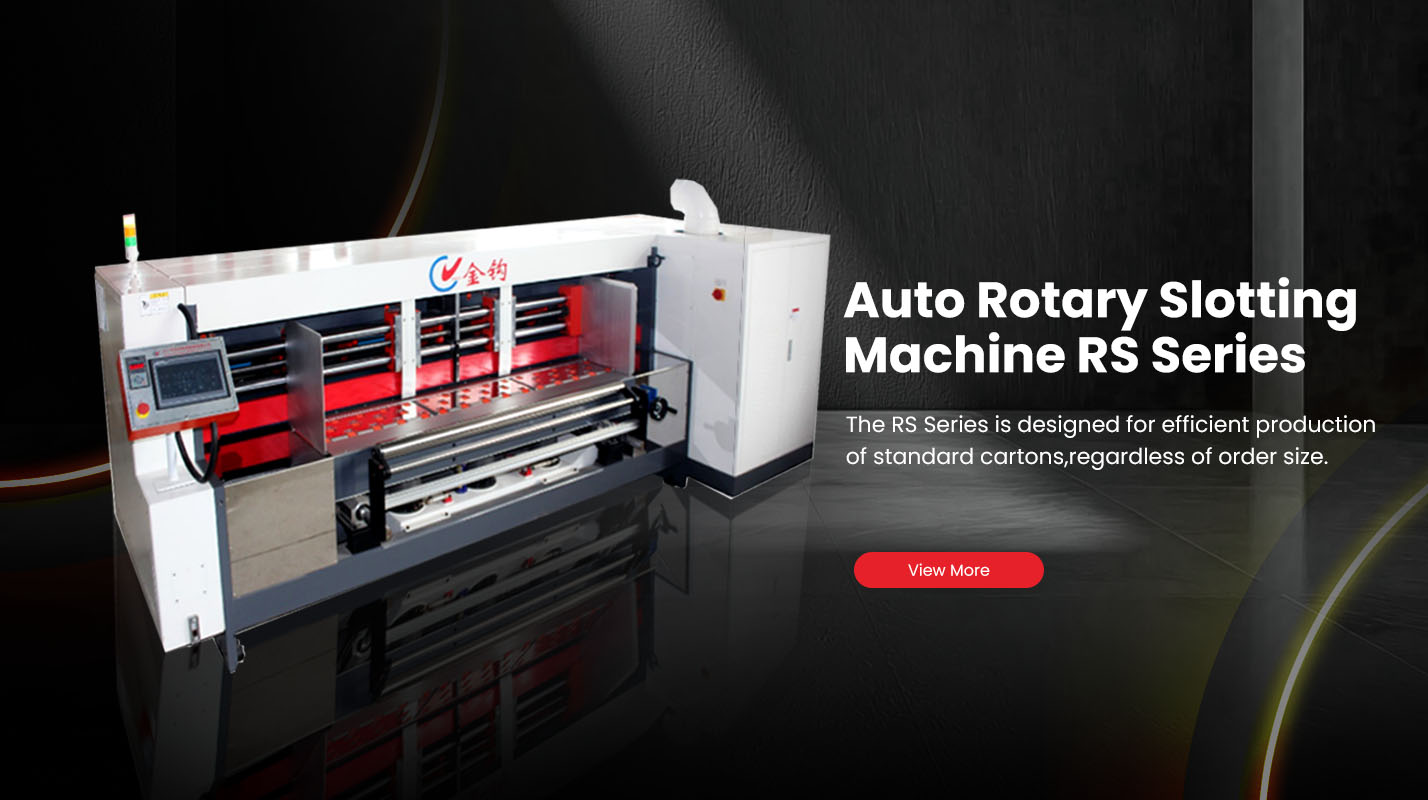
What Carton Sizes And Board Thicknesses Can The Machine Handle?
Typical Size & Thickness Ranges for Forming Machines
From the Jingou spec sheets:
Feeding thickness (board or sheet thickness) for one model: 2 mm to 11 mm.
Feeding width for one model: up to 2500 mm (sheet width) for certain models.
Min. box / sheet size: one model states minimum feed size ~ 120 × 350 mm.
Maximum box or sheet height between slot knives: one model gives up to ~1600/1800/2000 mm.
So for your machine choice:
It likely can accommodate board thicknesses around 2 mm up to ~11 mm (depending on flute type and board quality).
It can handle large sheet widths (e.g., up to ~2500 mm), allowing for wide cartons or multiple‐up layouts.
Smaller format cartons (minimum dimensions ~120 mm width) are supported on some models.
Large format cartons (sheet heights or slot‐knife distances up to ~1600–2000 mm) are possible depending on configuration.
What to Check / Clarify Before Purchase
Since your production needs may vary, here are key questions and specification clarifications to ask the supplier, so you choose the right machine:
Board/Sheet Thickness Capability
What is the minimum and maximum paperboard or corrugated board thickness the machine is rated for? (e.g., 2–11 mm quoted)
If you run heavier or specialty boards (double wall, heavy duty), can the machine be upgraded or adapted?
Flute Type / Board Composition
Are the thickness specs valid for single-wall, double-wall, or heavy duty boards?
If you use 5-ply, triple wall, or heavy flutes, ensure the machine’s drive, scoring depth and slotting knife strength are compatible.
Feeding Sheet Dimensions (Width × Length)
What is the maximum width of the sheet the machine accepts? (E.g., ~2500 mm in some models)
What is the max sheet length / any “unlimited” length claim?
What are the minimum sheet dimensions the machine can handle (for small cartons)?
Is there a restriction when using very small sizes or special layouts?
Box / Carton Final Size Support
What is the maximum box height (distance between slotting or between slot knives) possible? E.g., one spec shows up to 1600/1800/2000 mm.
What is the minimum box height or small size the machine can reliably produce (one spec shows min ~70 mm).
Are there limitations when producing very wide boxes or very tall boxes?
Knife / Slotting Depth/Width
What is the standard slotting knife width? (One model: 7mm width)
What is the maximum slotting depth allowed for your board thickness/type? (e.g., 500/400/300mm)
For heavy boards, deeper slotting may be required — check if the machine supports it or needs an upgrade.
Speed and Throughput
Board thickness and size will affect speed. Heavier boards = slower production. A machine spec might quote 400–600 pcs/hr for certain sizes.
Ensure the machine speed for your board thickness/size meets your production volume.
Upgradeability & Customisation
If future production involves heavier board, larger cartons or new formats, ask whether the machine supports customisation of feeding system, knife sets, servo drives.
Are there optional modules for heavy flutes or double‐wall boards?
Summary Recommendation for Your Selection
Given the typical spec ranges, if your production involves:
Standard single‐wall corrugated boards or light double‐wall boards (thickness ~2–7 mm) → a machine like the one referenced will likely serve well.
Larger cartons with sheet widths up to ~2500 mm and box heights up to ~1600–2000 mm → the machine appears capable.
If you use very thick boards (e.g., heavy double‐wall, triple wall) or extremely large formats beyond these numbers, you should specify and confirm with the supplier custom capacity for that board thickness/format.