




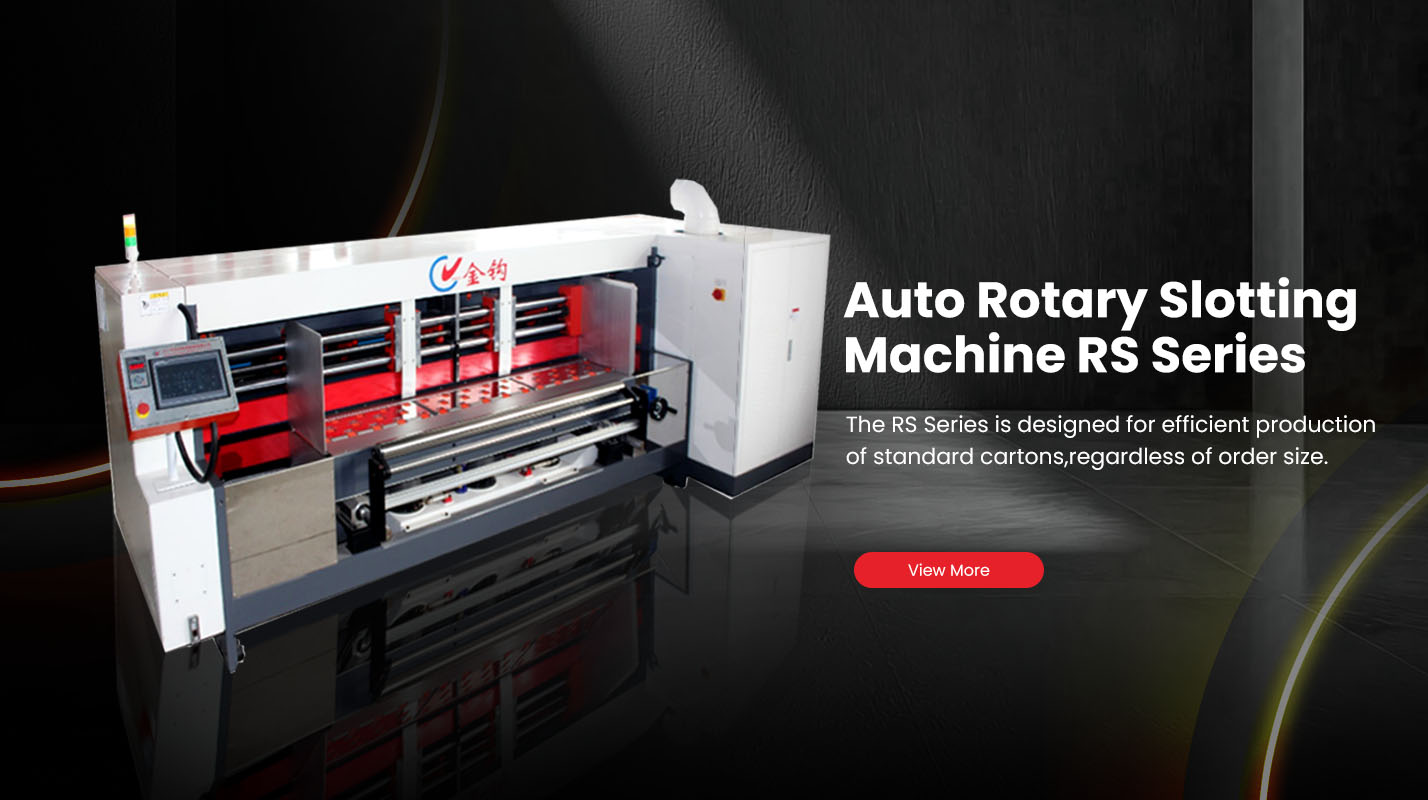
How Much Floor Space And Utility Infrastructure Does A Carton Forming Machine Require?
Installing a new carton forming machine is not just about purchasing the right equipment — it also requires proper space planning and facility preparation.
Understanding how much floor space, power, and air supply the machine needs will ensure smooth installation and long-term, trouble-free operation.
At Jingou Packaging Machinery, we help customers assess their factory layout before purchase, providing clear guidelines for footprint, working clearance, and utility requirements. The following overview explains the key spatial and infrastructure considerations when planning a carton forming line.
1. Typical Floor Space Requirements
1.1 Machine Footprint
Carton forming machines come in various models depending on automation level and maximum sheet size.
Typical dimensions are:
| Machine Type | Approx. Length (mm) | Width (mm) | Height (mm) | Floor Area (m²) |
|---|---|---|---|---|
| Compact Semi-Automatic Model | 2500–3000 | 1200–1500 | 1300–1600 | 4–5 |
| Standard Automatic Model | 4000–5500 | 1800–2200 | 1600–2000 | 8–10 |
| High-Speed Servo Line with Stacker | 6500–9000 | 2200–2800 | 1800–2300 | 12–16 |
These figures represent the machine footprint only. Always allow extra clearance for feeding, maintenance, and operator access.
1.2 Working Clearance
To ensure safety and convenient operation, leave adequate space around the machine:
Front/Feeding Side: Minimum 1.5 m for loading sheets or blanks.
Discharge/Stacking Side: 2 m clearance for carton delivery or conveyor connection.
Service/Back Side: 1 m for maintenance access.
Overhead Clearance: At least 0.5 m above machine height for ventilation and cable routing.
Including this, a standard automatic carton forming machine may require a total floor area of 15–25 m² for full operational efficiency.
1.3 Integration with Other Equipment
If your line includes slitter-scorer, rotary slotter, or automatic stacker, the total layout may extend to 12–18 m in length. Jingou’s engineering team typically provides layout drawings customized to your factory dimensions, ensuring seamless workflow from feeding to delivery.
2. Utility Infrastructure Requirements
2.1 Electrical Power Supply
Most automatic carton forming machines are electrically driven (servo motors, PLC, touch-screen control).
Typical requirements:
Voltage: 380 V, 3-phase, 50/60 Hz
Installed Power: 7–15 kW (standard model); up to 25 kW for large servo lines
Power Cable: Sized for machine rating, with proper grounding (≥4 mm² copper recommended)
Breaker/Protection: Isolated circuit with surge protection and emergency cutoff switch
If using hydraulic assist modules, allow for an additional 2–3 kW for the pump motor.
2.2 Compressed Air
Many folding, gluing, and flap-forming functions rely on pneumatic cylinders or suction systems.
Typical pneumatic requirements:
Pressure: 0.5–0.7 MPa (72–100 psi)
Air Consumption: 300–600 L/min for standard models
Air Quality: Dry, filtered air supply; add air dryer and oil-water separator to prevent contamination
Position the air inlet within 1 m of the machine’s pneumatic interface and ensure stable pressure during peak operation.
2.3 Dust Extraction & Ventilation
While carton forming machines generally generate less dust than cutting or die-pressing systems, a light extraction or filtration system is recommended for paper debris near the slotting and scoring units.
Maintain room temperature around 15–35 °C with relative humidity below 65 % to protect paper stability and electronic control systems.
2.4 Data and Control Connections
For modern digital production lines:
PLC/HMI may connect to a local network or Industry 4.0 system for data logging and remote diagnostics.
Provide a LAN or Wi-Fi connection point near the machine cabinet.
Cable trays or conduits should be planned for safe, concealed wiring.
Jingou offers machines with integrated communication ports for easy connection to plant monitoring software.
3. Floor & Foundation Conditions
3.1 Floor Strength
Minimum bearing capacity: ≥ 600 kg/m² for standard machines, ≥ 1000 kg/m² for large servo systems.
Concrete thickness: at least 150 mm, reinforced if heavy vibration is expected.
The surface should be level within ±2 mm/m, clean, and free from oil or debris.
3.2 Anchoring
Most Jingou carton forming machines are vibration-balanced and require no special foundation, but anchor bolts are recommended for high-speed lines to maintain precision alignment.
4. Environmental & Safety Considerations
| Aspect | Recommended Practice |
|---|---|
| Lighting | ≥ 500 lux illumination for operator visibility |
| Noise Control | < 80 dB(A); optional acoustic covers available |
| Operator Area | Non-slip floor mats, clear aisle markings |
| Safety Perimeter | Install safety fences or light curtains if machine is in an open production zone |
| Fire Safety | Keep extinguishers rated for electrical and paper hazards within 5 m |
A well-planned workspace enhances safety, reduces downtime, and supports efficient material flow.
5. Example Layout: Standard Jingou Automatic Carton Forming Line
Recommended layout (approx.):
| Zone | Function | Area (m²) | Notes |
|---|---|---|---|
| A | Sheet Feeding & Pre-Alignment | 6–8 | Optional conveyor feeding |
| B | Forming / Slotting / Creasing | 10–12 | Core machine footprint |
| C | Folding & Gluing | 4–6 | Integrated or modular |
| D | Delivery & Stacking | 6–8 | Can connect to bundler or conveyor |
| Total | – | 25–30 m² | Including maintenance clearance |
6. Utility Checklist Before Installation
| Utility | Specification | Verified (✓) |
|---|---|---|
| Power supply available (380 V / 3-phase) | ___ kW | |
| Circuit breaker and grounding installed | Yes/No | |
| Compressed air supply 0.6 MPa | ___ L/min | |
| Dry air filter and water separator | Installed | |
| Floor level and concrete thickness checked | Yes/No | |
| Space clearance around all sides | ___ m | |
| Lighting, ventilation, and fire safety ready | Yes/No |
Jingou’s technical team can assist in completing this checklist before machine delivery to ensure a smooth commissioning process.
7. Jingou’s Space-Efficient Design Advantage
Compact engineering:
Jingou machines feature integrated servo modules and stacking mechanisms that reduce footprint without sacrificing speed.
Optimized cabling & piping:
All air and power lines are routed internally, simplifying installation and maintenance.
Modular expansion:
If future upgrades are planned (e.g., printer-slotter or gluer), Jingou provides compatible modules that fit existing layouts — avoiding factory reconstruction.