




What Environmental Factors Affect The Performance Of A Carton Forming Machine?
As global demand for high-quality corrugated cartons continues to grow across e-commerce, logistics, FMCG, food, and industrial sectors, manufacturers increasingly count on carton forming machines to deliver precision, speed, and consistent box quality. However, even the most advanced equipment is affected by environmental conditions inside the production facility.
Understanding these environmental factors is essential for packaging plants, converters, and exporters who want to maximize uptime, minimize defects, and extend equipment lifespan.
Below is a detailed industry report—based on current packaging-manufacturing best practices—highlighting the key environmental conditions that affect carton forming machine performance, reliability, and operational stability.
1. Temperature Stability and Its Impact on Mechanical Accuracy
Carton forming machines require stable operating temperatures to maintain alignment, lubrication performance, and paperboard behavior.
Temperature fluctuations can cause:
Expansion and contraction of machine components, affecting cutting and scoring accuracy
Changes in glue viscosity, leading to poor adhesion
Increased wear on belts, shafts, and bearings
Inconsistent moisture levels in corrugated board, resulting in warping or misfolding
For optimal performance, most factories maintain temperatures between 18°C – 25°C to ensure mechanical precision and board stability.
2. Humidity Levels and Corrugated Board Sensitivity
Humidity is one of the most critical environmental factors impacting carton forming operations.
If humidity is too high:
Corrugated board absorbs moisture
Carton stiffness decreases
Folding resistance becomes inconsistent
Glue joints weaken
Finished cartons deform during stacking
If humidity is too low:
Paper becomes brittle
Cracking occurs during folding or creasing
Static electricity increases, interfering with sheet feeding
Maintaining 45%–60% relative humidity is considered ideal for carton processing.
3. Airborne Dust and Debris Affect Sensor Precision and Moving Parts
Production environments with heavy dust—especially those cutting corrugated sheets nearby—can affect machine reliability.
Dust accumulation can lead to:
Sensor misreads or false triggering
Jamming in feeders
Reduced performance of vacuum suction feeders
Faster wear on guide rails and belts
Factories that integrate proper dust control or centralized scrap-extraction systems see significantly higher machine uptime.
4. Floor Stability and Vibration Control
Carton forming machines require extremely stable foundations. Excessive vibration—often caused by neighboring heavy equipment—can disrupt:
Scoring depth consistency
Die-cutting alignment
Folding precision
Gluing accuracy
Factories typically isolate carton forming machines from vibrating equipment like die-cutters or large rotary machinery to maintain precision output.
5. Power Quality and Electrical Stability
Inconsistent or unstable power supply directly affects automation systems.
Voltage fluctuation or poor grounding may cause:
PLC or servo motor errors
Communication faults
Glue application inconsistencies
Unplanned machine shutdowns
Using industrial-grade stabilizers or UPS systems helps ensure uninterrupted, accurate operations.
6. Workspace Layout and Material Flow Efficiency
Environmental performance also depends on space planning:
Tight or cluttered layouts disrupt sheet feeding
Poor pallet handling areas cause board damage before forming
Insufficient space around the machine impedes maintenance
A clean, organized, spacious layout reduces operational errors and improves throughput.
7. Operator Work Environment & Safety Conditions
Human factors are also environmental factors.
Poor lighting, ventilation, or safety conditions can result in:
Misfeeding
Incorrect settings
Improper glue application
Slower reaction during troubleshooting
Packaging plants investing in operator-friendly environments report higher efficiency and lower error rates.
Industry Conclusion: Why Environmental Control Matters More Today
As carton packaging evolves—driven by e-commerce, sustainability and global transport requirements—the quality expectations for corrugated boxes continue to increase.
Environmental factors directly influence:
Production efficiency
Carton strength & stability
Machine lifespan
Glue performance
Cutting/scoring accuracy
Downtime and maintenance intervals
Manufacturers worldwide are now prioritizing controlled production environments to ensure consistent, export-grade carton quality.
Why This Matters for Buyers Considering Jingou Packaging Machinery
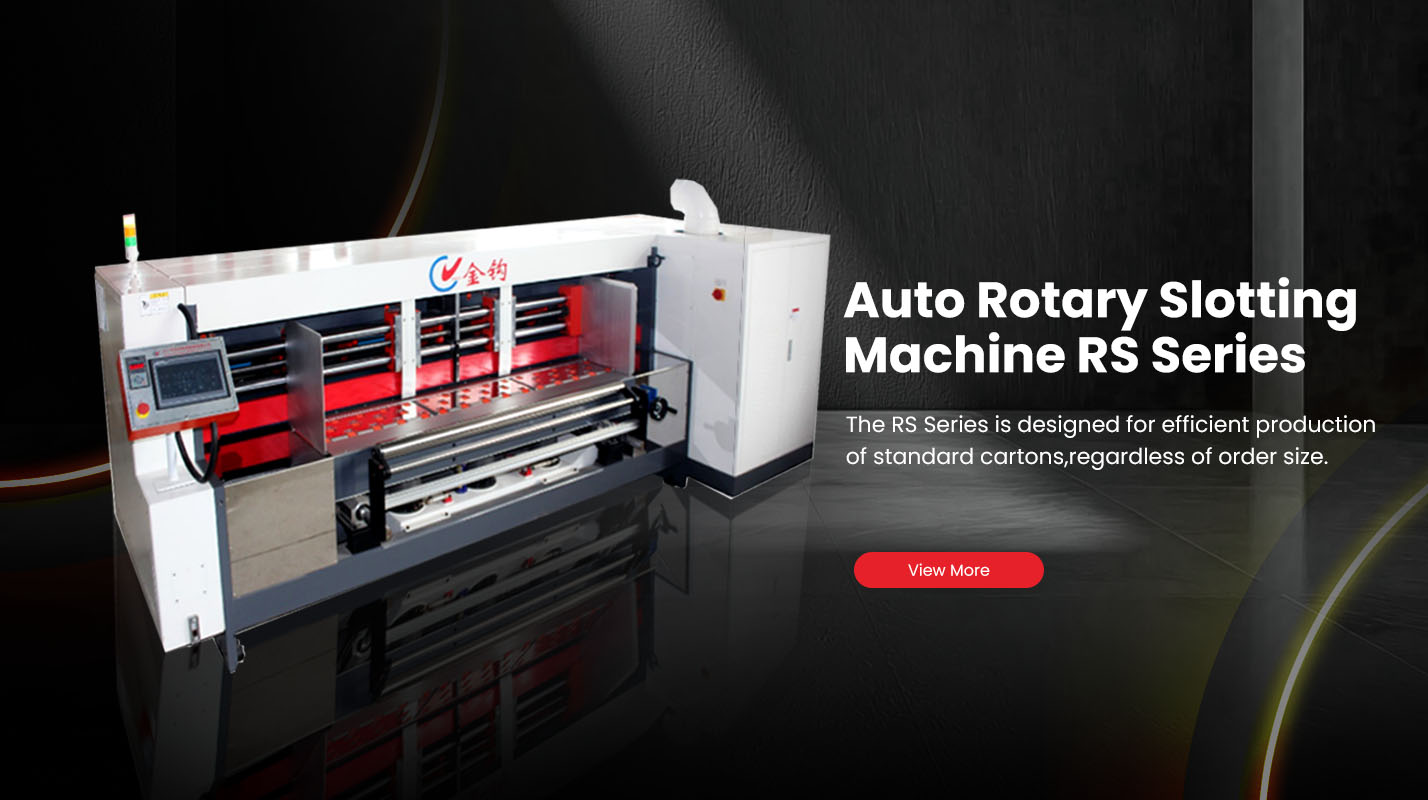
Jingou Packaging Machinery designs its carton forming and slitter-scorer machines specifically for high stability, flexible production, and consistent performance—even in variable environments commonly found in developing manufacturing regions.
Choosing Jingou helps overseas clients ensure:
High-precision cutting and scoring
Reliable forming performance in mixed humidity environments
Strong carton adhesion through controlled gluing systems
Adaptability for both small and medium-batch production
Long-term operational stability with proper environmental management
For customers seeking OEM/ODM carton solutions, new production lines, or automated upgrades, environmental optimization combined with Jingou’s equipment provides a complete pathway to predictable and high-quality packaging output.