




Technological Advantages And Future Directions Of Integrated Packaging Production Lines
The Shift Toward Integrated Packaging Production
Integrated packaging production lines represent a major evolution from traditional, segmented packaging processes. Instead of relying on separate machines with manual transfer and isolated control, integrated lines connect multiple packaging functions into a coordinated, continuous system. This shift is driven by rising efficiency requirements, labor constraints, and the need for stable quality across increasingly complex order structures.
In modern packaging factories, integration is no longer a premium feature. It is becoming a baseline requirement for maintaining competitiveness, especially in environments handling high throughput, diversified products, and tight delivery schedules.
Core Technological Advantages Of Integrated Packaging Lines
Streamlined Material Flow And Reduced Handling
One of the most immediate advantages of integrated packaging production lines is the reduction of manual handling between processes. When carton forming, packing, sealing, strapping, and conveying are linked in a single system, material moves in a controlled and predictable flow.
This reduces:
Transfer damage to cartons
Misalignment between processes
Idle time caused by manual intervention
A continuous flow improves overall line efficiency and stabilizes output quality.
Higher Overall Equipment Effectiveness
Integrated systems are designed to balance speeds across machines, preventing bottlenecks that commonly occur in standalone setups. When upstream and downstream equipment communicate through a unified control architecture, the entire line can operate closer to its optimal capacity.
This results in:
Higher utilization rates
Fewer unplanned stops
More consistent output across long production runs
Efficiency gains come not from a single machine, but from coordinated operation.
Improved Consistency And Quality Control
Quality variations often occur at transition points between separate machines. Integrated packaging lines reduce these risks by maintaining consistent positioning, timing, and process parameters throughout the line.
Stable integration helps ensure:
Uniform carton forming and alignment
Reliable sealing and strapping performance
Predictable stacking and handling behavior
This consistency is especially important when using lightweight or high-recycled-content corrugated materials.
Reduced Labor Dependency And Operational Risk
Integrated packaging production lines significantly reduce reliance on manual labor for feeding, transferring, and monitoring individual machines. Automation shifts operator roles from manual handling to system supervision.
Key benefits include:
Lower labor cost per unit
Reduced impact of workforce fluctuations
Fewer human-induced errors
For many factories, this shift improves both productivity and operational stability.
The Role Of Control Systems In Integration
Centralized PLC And HMI Architecture
Modern integrated packaging lines rely on centralized control systems that manage multiple machines through a unified interface. PLC and HMI systems allow operators to monitor performance, adjust parameters, and respond to alarms from a single control point.
This simplifies:
Line startup and shutdown
Changeover coordination
Fault diagnosis and recovery
Centralized control is a cornerstone of effective integration.
Data Visibility And Production Transparency
Integrated lines generate more structured production data than standalone equipment. This visibility supports better decision-making related to output tracking, maintenance planning, and process optimization.
As factories move toward more data-driven management, integrated systems provide the foundation for measurable performance improvement.
JINGOU’s Approach To Integrated Packaging Production Lines
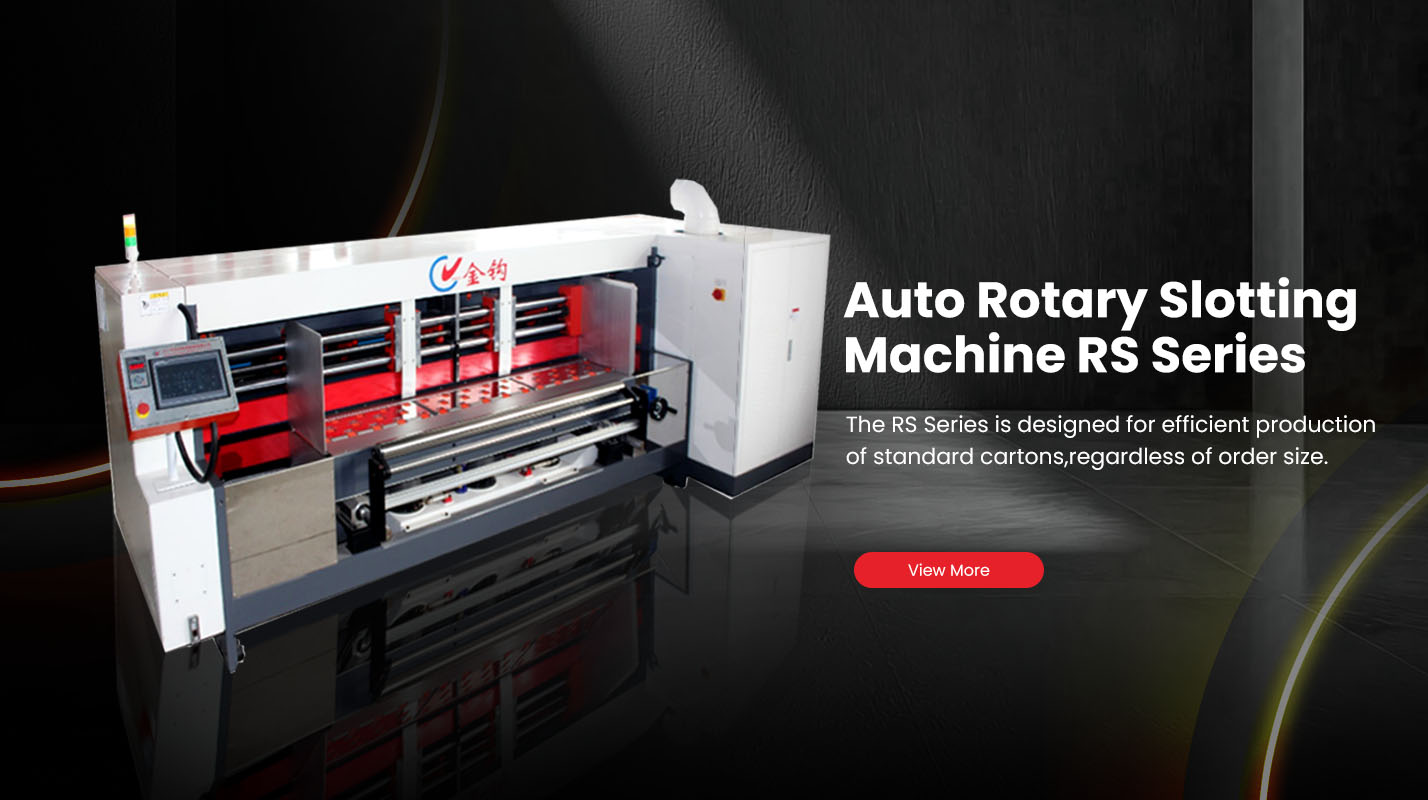
JINGOU focuses on packaging machinery solutions that support practical integration rather than isolated automation. From carton forming and slotting to downstream conveying and handling, JINGOU designs equipment with compatibility and process continuity in mind.
This approach emphasizes:
Functional integration between key packaging processes
Stable mechanical performance under continuous operation
Flexibility for small-batch and diversified orders
Control systems that support coordinated line operation
By addressing integration at the design level, JINGOU supports packaging factories seeking scalable and reliable production line solutions.
Future Directions Of Integrated Packaging Production
Greater Flexibility For Diversified Orders
Future integrated packaging lines will increasingly need to handle frequent SKU changes and smaller batch sizes. This drives demand for faster changeover mechanisms, adaptive control logic, and modular line configurations that can be reconfigured as product mixes evolve.
Deeper Automation And Intelligent Coordination
Integration will move beyond mechanical connection toward intelligent coordination. Automated parameter adjustment, inter-machine communication, and predictive response to process variation will play a larger role in maintaining efficiency and quality.
Focus On Sustainability And Resource Efficiency
Integrated packaging lines support sustainability goals by reducing waste, minimizing rework, and improving material utilization. As environmental requirements tighten, factories will rely more on integrated systems to control resource consumption and maintain consistent output with lighter materials.
Scalable And Modular Line Design
Future packaging factories will favor integrated lines that can grow over time. Modular design allows additional functions or capacity to be added without disrupting existing operations, protecting long-term investment value.
Conclusion
Integrated packaging production lines offer clear technological advantages in efficiency, consistency, labor reduction, and quality control. By replacing fragmented processes with coordinated systems, manufacturers gain better control over output and adaptability to changing market demands.
As packaging operations continue to evolve toward higher automation and greater flexibility, integrated production lines will become central to competitive factory design. With a focus on practical integration, stable performance, and flexible production capability, JINGOU supports manufacturers preparing for the next stage of packaging automation and industrial development.