




Adaptive Production Lines: Essential Equipment for Quick Changeovers And Short-Run Production
Why Adaptive Production Lines Are Becoming Essential
Packaging factories are facing a fundamental shift from long, single-format production runs to short-run, multi-SKU, and fast-response manufacturing. Customer demand is more fragmented, product life cycles are shorter, and order quantities are less predictable. In this environment, traditional fixed-format production lines struggle with excessive downtime, high setup waste, and unstable output.
Adaptive production lines are designed to respond to these challenges by prioritizing flexibility, fast changeovers, and stable performance under frequent adjustments. Equipment selection plays a decisive role in determining whether a production line can truly adapt or becomes a bottleneck.
Core Characteristics Of Adaptive Production Lines
Adaptive production lines are not defined by maximum speed, but by how efficiently they handle change. Their key characteristics include:
Short setup and changeover time
Ability to handle multiple formats and sizes
Stable quality across small and varied batches
Minimal reliance on manual fine-tuning
Smooth coordination between connected machines
To achieve this, factories must focus on equipment specifically designed for short-run and diversified production scenarios.
Essential Equipment For Quick Changeovers
Flexible carton forming machines
carton forming is often the first point where changeover efficiency is tested. In short-run production, machines must handle frequent carton size changes without lengthy mechanical adjustments.
Key features include:
Adjustable guides with clear positioning references
Parameter storage for repeated carton sizes
Stable forming performance across different formats
Flexible carton forming machines reduce downtime between orders and ensure dimensional consistency even during frequent transitions.
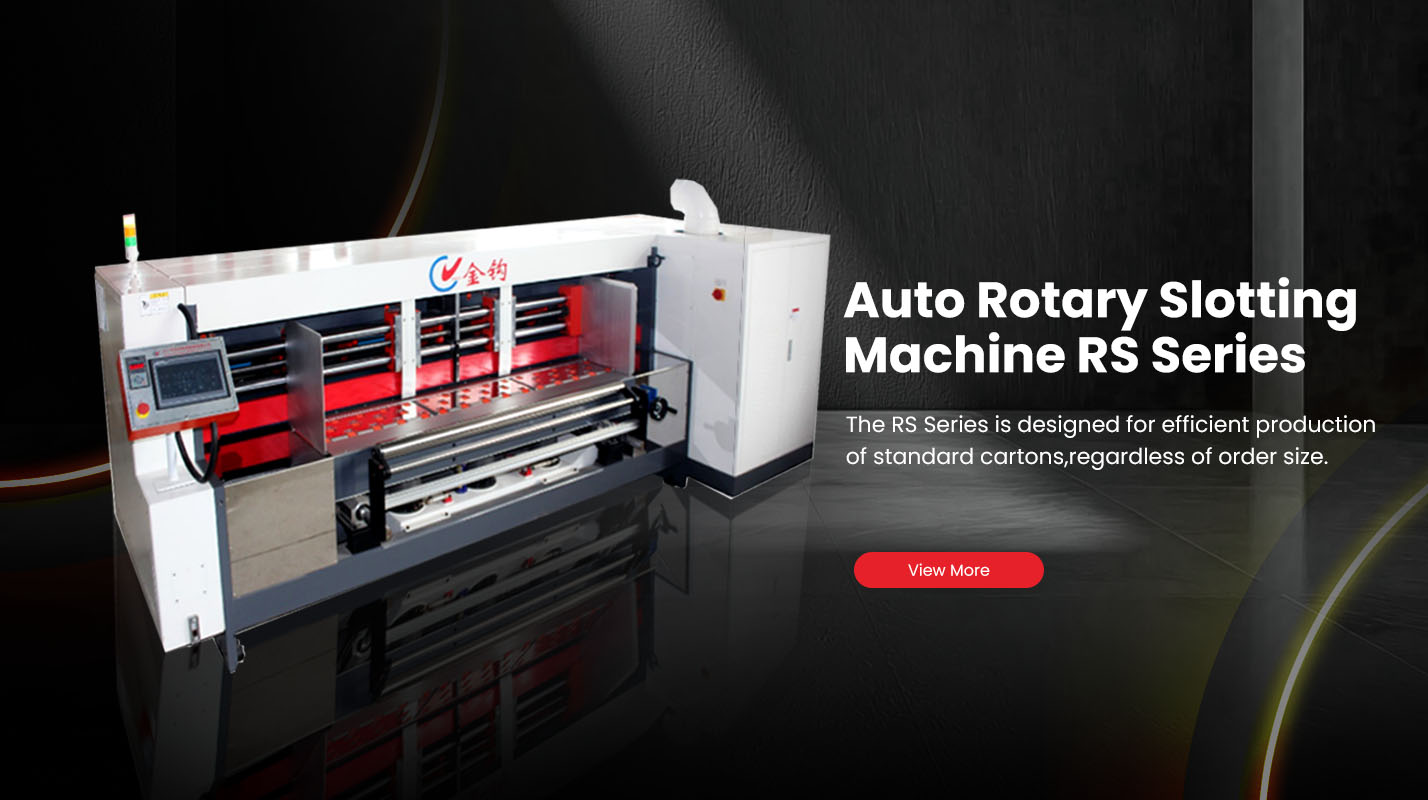
Adjustable Slitting And Slotting Equipment
In corrugated processing, slitting and slotting accuracy directly affect downstream forming and packing efficiency. For adaptive production lines, equipment must support:
Fast width and slot position adjustments
Repeatable accuracy after each changeover
Stable operation with lightweight or recycled materials
Machines that require manual recalibration after every size change increase scrap and reduce line responsiveness.
Integrated Conveying And Transfer Systems
Quick changeovers are ineffective if material handling remains rigid. Adaptive production lines rely on conveying systems that can adjust to different carton sizes and production paths.
Essential capabilities include:
Adjustable conveyor widths and heights
Smooth transfer between machines during speed changes
Buffering options to absorb temporary imbalances
Flexible conveying ensures that frequent format changes do not disrupt overall line flow.
Control Systems That Enable Fast Transitions
PLC + Touch Screen Control Architecture
Control systems are central to adaptive production. PLC + touch screen interfaces allow operators to manage multiple formats efficiently by storing and recalling production parameters.
Benefits include:
Reduced setup errors
Faster format change execution
Consistent operation across shifts and operators
Without intelligent control systems, mechanical flexibility alone is not enough to support rapid changeovers.
Coordinated Line Control
Adaptive lines require machines to communicate with each other. Coordinated start–stop logic, speed synchronization, and fault handling prevent cascading downtime during frequent transitions.
Integrated control improves overall line stability, especially when switching between short production runs.
Equipment Stability Under Frequent Adjustments
Short-run production increases mechanical stress due to constant adjustments. Equipment used in adaptive lines must maintain precision and alignment despite frequent repositioning.
Stable machine structures and reliable transmission systems help ensure:
Consistent quality after changeovers
Reduced need for corrective adjustments
Lower long-term maintenance burden
Stability is a prerequisite for adaptability.
Reducing Waste During Changeovers
One of the biggest challenges in short-run production is waste generated during setup and trial runs. Adaptive production lines focus on minimizing this loss through:
Accurate positioning systems
Parameter memory for repeat orders
Predictable machine behavior
When machines return to a known, repeatable state quickly, scrap during startup is significantly reduced.
JINGOU’s Perspective On Adaptive Production Lines
JINGOU designs packaging and corrugated processing equipment with small quantity orders and diversified production as a core application scenario. This approach reflects real factory conditions where frequent changeovers are unavoidable.
JINGOU focuses on:
Functional integration to reduce manual handling between processes
Flexible adjustment mechanisms that support rapid format changes
PLC + touch screen control systems for stable, repeatable operation
Equipment structures optimized for long-term stability under frequent adjustments
By aligning equipment design with adaptive production requirements, JINGOU supports manufacturers seeking to improve responsiveness without sacrificing quality or efficiency.
Future Direction Of Adaptive Packaging Lines
As markets continue to fragment, adaptive production lines will evolve further toward:
Faster and more intuitive changeover mechanisms
Greater reliance on stored production data and parameter recall
Modular equipment configurations that can be re-arranged as needs change
Deeper integration between mechanical design and digital control
Factories that invest in adaptability today are better positioned to respond to future demand volatility.
Conclusion
Adaptive production lines are essential for manufacturers operating in short-run and diversified packaging environments. Quick changeovers, stable quality, and minimal waste are achieved not through speed alone, but through flexible equipment, intelligent control systems, and integrated line design.
By focusing on equipment built for frequent adjustments and practical factory operation, manufacturers can transform changeovers from a productivity loss into a competitive advantage. With an emphasis on flexibility, stability, and real-world adaptability, JINGOU supports the development of production lines capable of meeting the demands of modern, short-run packaging manufacturing.