




The Relationship Between Packaging Waste Recycling And Mechanical Efficiency Improvement
Packaging Waste Recycling Is Closely Linked To Production Efficiency
Packaging waste recycling is often discussed from an environmental or regulatory perspective, but in real manufacturing environments, it is deeply connected to mechanical efficiency and production performance. Waste is not only generated after packaging is used by end customers; a significant portion originates during manufacturing due to inefficiencies, unstable processes, and equipment limitations.
Improving mechanical efficiency is therefore one of the most direct and effective ways to reduce packaging waste and improve recycling outcomes at the source.
How Mechanical Inefficiency Creates Packaging Waste
Packaging waste generated on the factory floor is frequently a symptom of mechanical inefficiency rather than material choice alone. Common causes include:
Inaccurate slitting, slotting, or forming leading to dimensional defects
Unstable feeding or conveying causing jams and carton damage
Poor alignment during forming or sealing resulting in rejected cartons
Frequent trial runs and setup scrap during changeovers
When equipment lacks precision or stability, waste increases even if recyclable materials are used.
Recycling Quality Depends On Waste Quality
From a recycling standpoint, not all waste is equal. Clean, undamaged corrugated material is far easier to recycle than waste contaminated by adhesives, excessive deformation, or mixed materials.
Mechanical efficiency contributes to higher-quality recyclable waste by:
Reducing crushed or torn cartons
Minimizing excessive glue or tape application
Preventing surface damage that weakens fiber structure
Better machine control results in waste that retains higher recycling value.
Mechanical Precision Reduces Waste At The Source
Accurate Processing Improves Yield
Machines with precise control over cutting, creasing, slotting, and forming reduce off-spec output. When cartons meet dimensional and structural requirements consistently, fewer units are scrapped before reaching the packing stage.
Higher yield directly lowers the volume of waste entering recycling streams and reduces energy consumption associated with reprocessing.
Stable Operation Lowers Trial And Setup Scrap
Frequent adjustments and unstable machine behavior increase startup waste. Equipment designed for repeatable positioning and parameter recall returns to stable operation faster after changeovers.
This reduces the amount of material discarded during setup and supports more efficient recycling practices.
Automation Supports Consistent Recycling Outcomes
Automated systems with PLC-based control maintain consistent operating parameters across shifts and operators. This consistency limits human-induced variation that often leads to quality defects and waste.
Stable automation helps ensure that recyclable packaging materials are processed efficiently rather than wasted due to operational inconsistency.
Recycling Targets Push Higher Mechanical Performance
Environmental regulations and buyer sustainability requirements increasingly emphasize waste reduction at the production stage, not just post-use recycling. This pressure pushes packaging manufacturers to improve mechanical performance so that:
Less material is consumed per finished package
Fewer cartons are rejected during production
Recycling volumes represent unavoidable trim rather than preventable defects
Mechanical efficiency becomes a compliance tool, not just a cost-saving measure.
Energy, Waste, And Mechanical Efficiency Are Interconnected
Waste reduction also improves energy efficiency. Every scrapped carton represents wasted energy from material production, transport, and processing.
By improving mechanical efficiency:
Less energy is consumed per usable carton
Recycling systems handle smaller volumes more effectively
Overall environmental impact is reduced
Efficient machines therefore support both recycling objectives and energy-saving goals.
JINGOU’s Perspective On Waste Reduction Through Efficiency
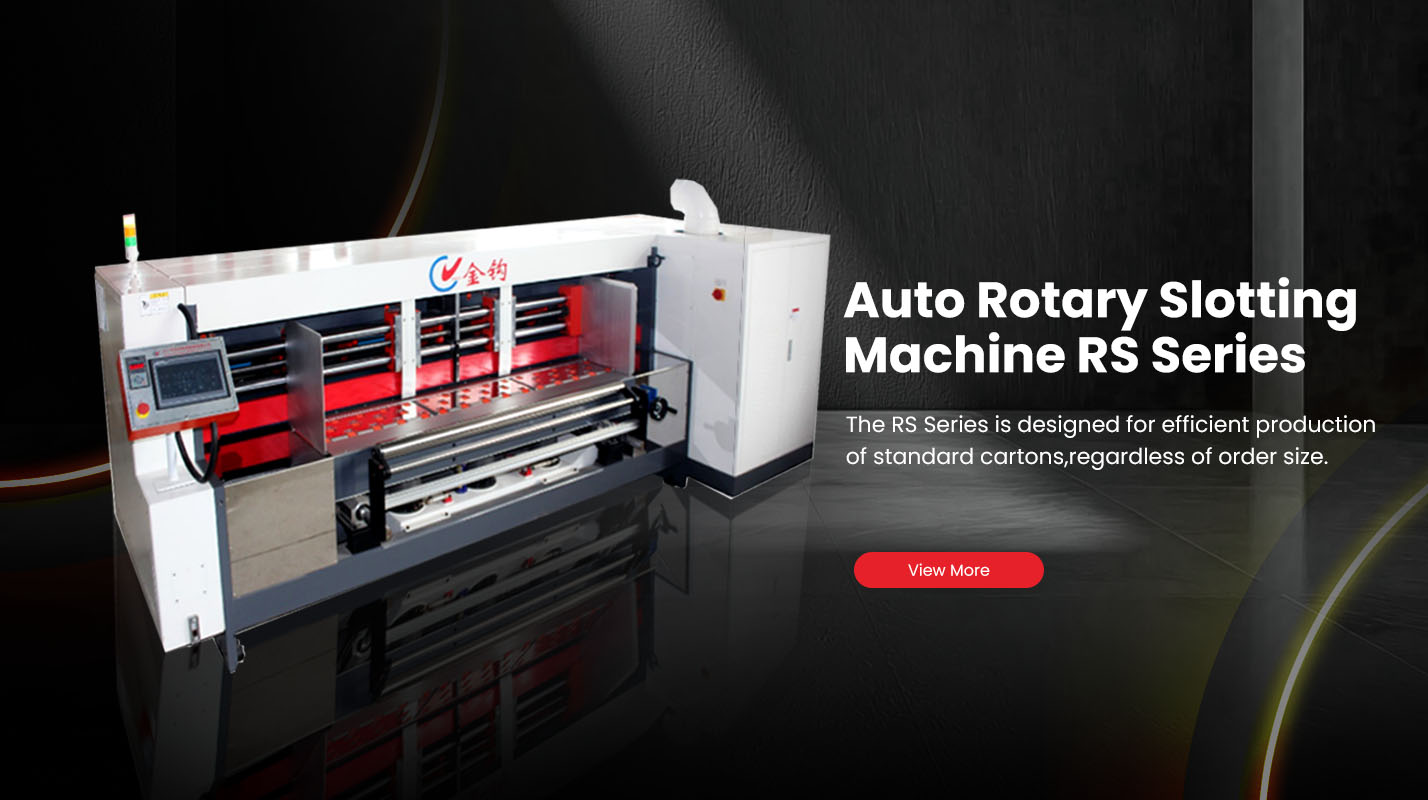
JINGOU approaches packaging machinery design with the understanding that waste reduction begins at the machine level. By focusing on stable mechanical structures, precise processing, and PLC-controlled operation, JINGOU equipment helps manufacturers reduce avoidable waste during slitting, forming, slotting, and handling.
This approach supports cleaner recycling streams, higher material yield, and improved compliance with sustainability expectations, particularly in factories handling diversified orders and frequent changeovers.
Moving From Recycling-Only To Efficiency-Driven Sustainability
Relying solely on recycling systems does not address the root cause of packaging waste. Sustainable packaging production increasingly depends on improving mechanical efficiency to prevent waste before it occurs.
Factories that invest in efficient, stable, and adaptable equipment are better positioned to:
Lower waste generation
Improve recycling quality
Reduce operating costs
Meet environmental and buyer-driven requirements
Conclusion
Packaging waste recycling and mechanical efficiency improvement are closely connected. While recycling manages waste after it is created, mechanical efficiency reduces waste at its source by improving accuracy, stability, and consistency in packaging production.
As sustainability expectations evolve, manufacturers must look beyond material recyclability and focus on equipment performance. By improving mechanical efficiency, packaging factories can reduce waste generation, enhance recycling effectiveness, and achieve more sustainable, cost-effective production.