




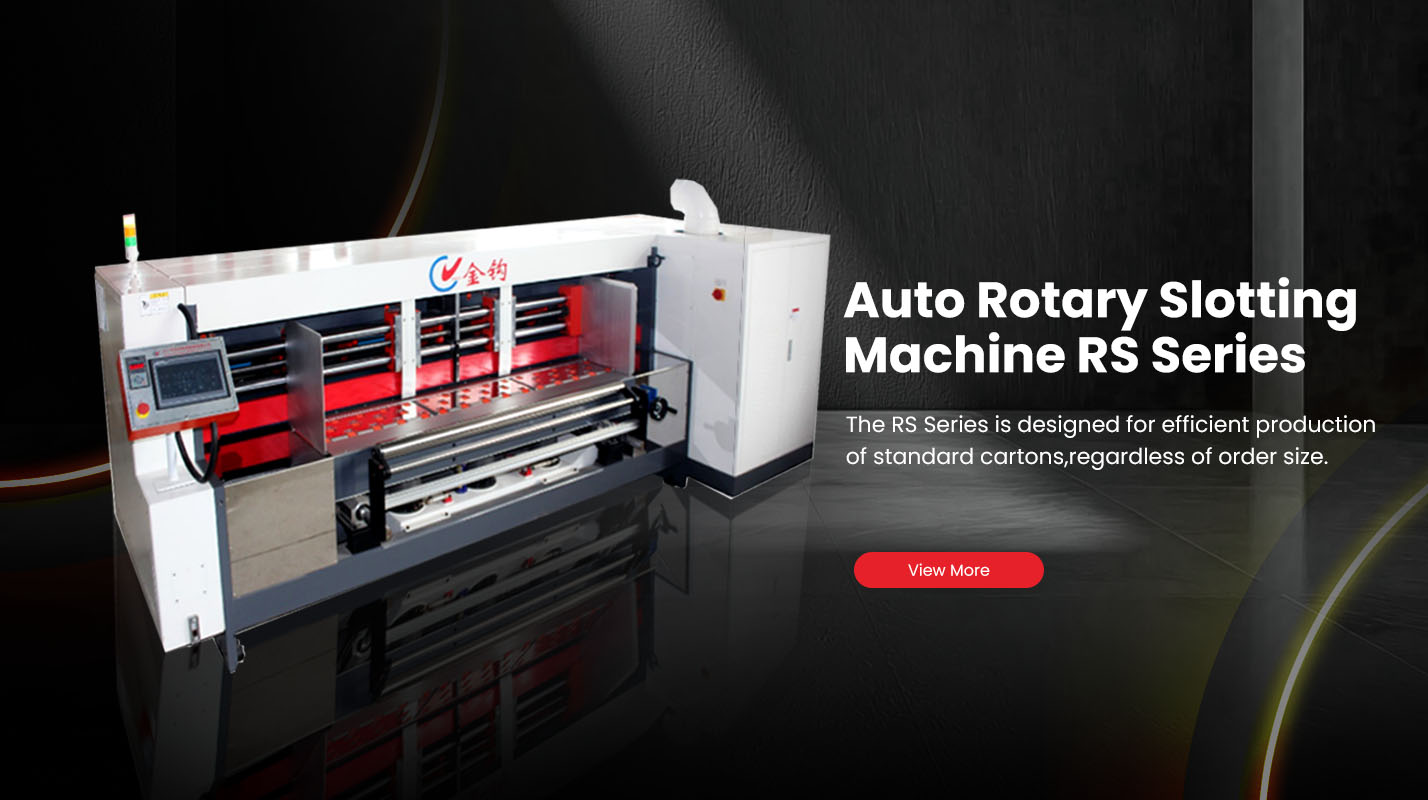
Why Rotary Slotter Design Matters for Heavy-Duty Corrugated Boxes
Heavy-Duty Corrugated Boxes Place Higher Demands On Slotting Equipment
Heavy-duty corrugated boxes are used for industrial goods, bulk products, export packaging, and high-load logistics applications. Compared with standard cartons, they typically feature thicker board, higher grammage liners, multiple wall structures, and stricter strength requirements.
Under these conditions, slotting quality becomes a structural issue rather than a cosmetic one. Rotary slotter design directly affects whether heavy-duty corrugated boxes can achieve reliable folding, accurate dimensions, and consistent compression performance at scale.
Slotting Accuracy Directly Influences Box Strength
For heavy-duty corrugated boxes, slotting is not only about cutting flap gaps. Slot depth, slot width, and alignment determine how stress is distributed when the box is folded, filled, stacked, and transported.
Poorly designed rotary slotters can cause:
Uneven flap engagement
Stress concentration at fold lines
Misaligned panels that reduce compression strength
Difficulty during folding and gluing
In heavy-duty applications, even small slotting inaccuracies can significantly reduce load-bearing capacity.
Why Rotary Slotter Structural Rigidity Is Critical
Thicker Board Requires Higher Cutting Force Stability
Heavy-duty corrugated board requires greater cutting force during slotting. If the rotary slotter frame, shafts, or bearings lack sufficient rigidity, deflection can occur under load.
This leads to:
Inconsistent slot depth across the sheet
Variable slot width between panels
Gradual dimensional drift during long runs
A rigid mechanical structure ensures that cutting force is absorbed by the machine frame rather than transferred into unwanted blade movement.
Shaft And Bearing Design Affect Long-Term Accuracy
Rotary slotters for heavy-duty cartons must maintain alignment over extended production cycles. High-strength shafts and properly rated bearings help preserve precise positioning even under continuous high load.
Weak mechanical components may perform acceptably on light board but lose accuracy quickly when processing thick or multi-wall corrugated material.
Slotting Knife System Design Matters More With Heavy Board
Knife Geometry And Cutting Stability
Slotting knives used for heavy-duty corrugated boxes must maintain clean cutting edges under higher resistance. Knife geometry, mounting method, and pressure control all influence cut quality.
A well-designed knife system ensures:
Clean slot edges without tearing
Consistent penetration depth
Reduced fiber damage along slot lines
This supports stable folding and minimizes damage to liner structure.
Precise Knife Positioning Prevents Panel Misalignment
Heavy-duty cartons often have larger dimensions, which amplifies the impact of small positional errors. Accurate knife positioning systems are essential to ensure that all slots align correctly across wide panels.
Repeatable positioning reduces setup scrap and ensures that large boxes assemble squarely.
Scoring And Slotting Must Work As A System
In heavy-duty corrugated boxes, scoring and slotting are closely linked. Slotting that is not properly coordinated with scoring positions can cause folding resistance, cracking, or uneven panel angles.
Rotary slotter design must ensure:
Consistent spatial relationship between slots and scores
Stable depth control across thick board profiles
Predictable folding behavior during downstream forming
Integrated design reduces structural variability in finished boxes.
Speed Without Stability Is A Risk For Heavy-Duty Applications
High production speed is attractive, but in heavy-duty corrugated processing, stability is more important than peak speed. Rotary slotters designed primarily for light board may struggle to maintain accuracy at higher speeds when processing thick materials.
A design optimized for heavy-duty cartons emphasizes:
Controlled cutting pressure
Vibration reduction
Smooth transmission under load
This allows stable operation at practical production speeds without sacrificing slotting quality.
Waste Reduction Depends On Slotter Design Quality
Heavy-duty corrugated material is more expensive and generates higher cost when scrapped. Poor slotter design increases waste through:
Rejected cartons due to misalignment
Folding failures during assembly
Downstream jams caused by dimensional inconsistency
Accurate and stable rotary slotter design directly reduces scrap rates and improves material yield in heavy-duty packaging lines.
JINGOU’s Focus On Rotary Slotter Design For Heavy-Duty Corrugated Boxes
JINGOU approaches rotary slotter design with the understanding that heavy-duty corrugated boxes require structural precision and mechanical strength, not just cutting capability. Emphasis is placed on rigid machine frames, stable shaft systems, reliable knife positioning mechanisms, and PLC-based control for repeatable accuracy.
By designing rotary slotting equipment that maintains performance under higher loads and continuous operation, JINGOU supports manufacturers producing heavy-duty cartons with consistent quality, reduced waste, and reliable downstream performance.
Selecting Rotary Slotters For Heavy-Duty Corrugated Production
When evaluating rotary slotters for heavy-duty applications, manufacturers should focus on:
Mechanical rigidity and frame strength
Knife system stability and adjustability
Precision of positioning and repeatability
Ability to maintain accuracy under continuous load
Compatibility with thick and multi-wall board structures
Design quality directly determines whether the slotter can support heavy-duty carton requirements over the long term.
Conclusion
Rotary slotter design plays a decisive role in the performance of heavy-duty corrugated boxes. Structural rigidity, knife system stability, precise positioning, and coordinated scoring-slotting design are essential to maintaining box strength, dimensional accuracy, and production consistency.
For manufacturers serving industrial and high-load packaging markets, selecting rotary slotters engineered specifically for heavy-duty corrugated processing is critical. By focusing on mechanical stability and precision rather than speed alone, JINGOU helps packaging factories produce strong, reliable corrugated boxes that meet demanding performance requirements in real-world logistics environments.