




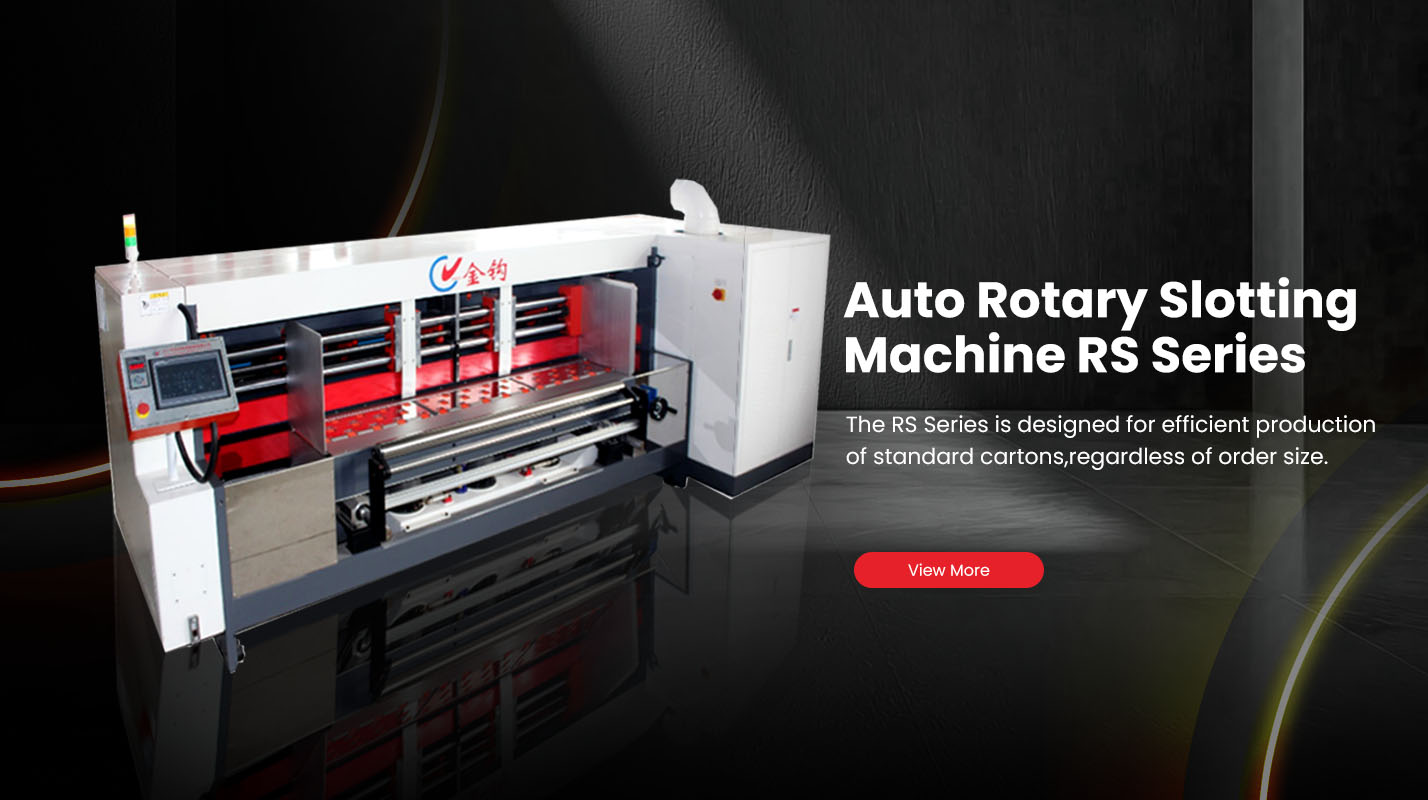
Common Causes Of Inconsistent Slotting in Carton Production Lines
Inconsistent Slotting Is A System-Level Problem
In carton production lines, inconsistent slotting is rarely caused by a single factor. It is usually the result of mechanical instability, control inaccuracies, material variation, or process mismatch within the production system. When slotting consistency declines, the effects quickly propagate downstream, leading to folding errors, poor box squareness, sealing failures, and increased scrap.
Understanding the root causes of inconsistent slotting is essential for maintaining stable production, especially in high-volume or diversified carton manufacturing environments.
Mechanical Structure And Rigidity Issues
Insufficient Frame And Shaft Rigidity
Slotting operations generate cutting forces that must be absorbed by the machine structure. If the frame, shafts, or bearing systems lack sufficient rigidity, deflection can occur during operation.
This results in:
Variable slot depth across the sheet
Inconsistent slot width between panels
Gradual dimensional drift during long runs
Machines that perform adequately on light board may struggle to maintain accuracy when processing thicker or higher-grammage corrugated material.
Wear In Bearings And Transmission Components
Over time, worn bearings, gears, or couplings introduce play into the system. Even small amounts of mechanical looseness can translate into visible slotting inconsistency at the carton level.
Common symptoms include:
Slot position variation between sheets
Increased vibration during operation
Reduced repeatability after adjustments
Regular inspection and maintenance are critical to preventing these issues.
Slotting Knife System Problems
Unstable Knife Mounting Or Positioning
If slotting knives are not securely mounted or if adjustment mechanisms lack precision, knives may shift slightly under load. This movement causes uneven slot alignment and depth variation.
Inconsistent knife positioning often leads to:
Flap misalignment during folding
Uneven engagement during gluing or stitching
Difficulty maintaining repeatable setup
Uneven Knife Wear Or Incorrect Knife Geometry
Slotting knives wear over time, especially when processing abrasive or thick corrugated board. Uneven wear across knives can cause differences in slot quality between panels.
Incorrect knife geometry or improper sharpening can also increase cutting resistance, leading to inconsistent slot formation.
Board Feeding And Sheet Control Issues
Unstable Feeding Speed Or Skewing
Even when slotting units are accurately set, inconsistent board feeding can cause slotting variation. Skewed sheets or fluctuating feed speed change the relative position between the board and the slotting knives.
This may result in:
Slot misplacement
Irregular slot spacing
Increased scrap during startup and restarts
Stable feeding systems and proper sheet guidance are essential for consistent slotting.
Poor Sheet Support During Slotting
If sheets are not adequately supported during the slotting process, flexing can occur, especially with large or heavy-duty cartons. This flexing alters the effective cutting position and depth.
Proper support and pressure control help maintain consistent slotting across the entire sheet width.
Control System And Adjustment Limitations
Manual Adjustment Variability
Manual positioning of slotting knives introduces operator-dependent variability. Small measurement errors during setup can lead to noticeable slotting inconsistency, particularly in multi-SKU environments with frequent changeovers.
Manual systems also make it difficult to return to exact previous settings, increasing setup scrap.
Lack Of Parameter Memory And Repeatability
Without PLC-based positioning and parameter memory, machines rely on repeated manual adjustment for each order. This reduces repeatability and increases the likelihood of slotting variation between production runs.
Repeatability is especially critical for customers requiring consistent carton dimensions across recurring orders.
Material Variation And Process Mismatch
Inconsistent Corrugated Board Quality
Variations in board thickness, flute structure, or moisture content affect how material responds to slotting. If machine settings are not adjusted to accommodate these changes, slotting consistency can suffer.
Thicker or stiffer sections may resist cutting differently, leading to uneven slot depth or edge quality.
Mismatch Between Speed And Material Characteristics
Running at speeds unsuitable for the board type increases the impact of any instability. High speed amplifies vibration, feeding variation, and cutting force fluctuation, making consistent slotting harder to achieve.
Proper speed matching is necessary to maintain accuracy.
Maintenance And Setup Practices
Inadequate Maintenance Of Slotting Components
Lack of regular inspection and maintenance allows minor issues to accumulate into significant slotting problems. Worn knives, damaged anvils, or loose fasteners all contribute to inconsistency.
Preventive maintenance helps sustain long-term slotting accuracy.
Rushed Or Incomplete Setup Procedures
In high-pressure production environments, insufficient setup time can lead to poor knife alignment and incomplete verification. This often results in early-run scrap and unstable quality.
Structured setup procedures reduce variability and improve repeatability.
JINGOU’s Perspective On Slotting Consistency Control
JINGOU treats slotting consistency as a system-level performance outcome, not a single-component feature. By focusing on rigid mechanical design, stable knife positioning systems, PLC-based control, and reliable feeding structures, JINGOU equipment helps manufacturers reduce the root causes of inconsistent slotting.
This approach is especially important in production lines handling diversified orders, heavy-duty cartons, or long continuous runs where small variations quickly scale into large losses.
Practical Checklist To Reduce Slotting Inconsistency
Verify frame and shaft rigidity under load
Inspect knife mounting and positioning stability
Maintain uniform knife condition and geometry
Ensure stable feeding and proper sheet support
Use repeatable, PLC-based adjustment where possible
Match operating speed to material characteristics
Implement regular preventive maintenance
Conclusion
Inconsistent slotting in carton production lines is usually caused by a combination of mechanical instability, knife system issues, feeding variation, control limitations, and material mismatch. Addressing these issues requires a holistic approach that considers equipment design, control capability, operating practices, and maintenance discipline.
By improving mechanical rigidity, positioning precision, feeding stability, and repeatability, manufacturers can significantly reduce slotting variation, lower scrap rates, and achieve more consistent carton quality. Through a focus on stable, precision-oriented equipment design, JINGOU supports packaging factories seeking reliable slotting performance under real-world production conditions.