




The Role Of Servo Control Systems In Modern Corrugated Box Equipment
Servo Control Has Become A Core Technology In Corrugated Processing
Modern corrugated box equipment is expected to deliver high speed, high precision, and stable performance under increasingly diversified production conditions. Traditional mechanical transmission and basic motor control systems struggle to meet these requirements, especially when frequent size changes, short-run orders, and higher quality expectations are involved.
Servo control systems play a critical role in addressing these challenges by enabling precise motion control, fast response, and repeatable positioning, making them a foundational technology in modern corrugated box equipment.
What Servo Control Systems Do In Corrugated Machinery
A servo control system uses servo motors combined with feedback devices and digital controllers to precisely manage position, speed, and torque. Unlike conventional motors that operate at fixed or loosely controlled speeds, servo systems continuously adjust motion based on real-time feedback.
In corrugated box equipment, servo control is commonly applied to:
Feeding and sheet positioning
Slitting, scoring, and slotting adjustments
Folding and forming actions
Conveying and synchronization between units
This precise control allows machines to respond accurately to changing production demands.
Improving Dimensional Accuracy And Consistency
Precise Positioning For Slitting And Slotting
Dimensional accuracy is fundamental to corrugated box quality. Servo-driven positioning systems allow slitting and slotting components to move to exact coordinates with high repeatability.
Compared with manual or mechanically linked systems, servo control:
Reduces positioning error during setup
Maintains accuracy during long production runs
Improves repeatability for recurring orders
This precision directly improves box squareness and downstream forming reliability.
Stable Motion Reduces Cumulative Errors
Servo systems deliver smooth acceleration and deceleration, minimizing vibration and mechanical shock. Reduced vibration helps prevent gradual positional drift that can occur in high-speed or long-duration operation.
Stable motion ensures that accuracy is maintained not only at startup, but throughout continuous production.
Faster Changeovers For Diversified Orders
Digital Adjustment Replaces Manual Setup
In modern corrugated plants, frequent order changes are common. Servo control systems enable size changes and parameter adjustments through digital input rather than manual repositioning.
This results in:
Shorter setup time
Less reliance on operator experience
Reduced setup scrap
Fast changeovers are especially valuable for small to medium batch production environments.
Parameter Memory Enhances Repeatability
Servo systems integrated with PLC control allow machine settings to be stored and recalled accurately. When an order is repeated, the machine can return to exact previous positions without trial-and-error adjustment.
This improves production efficiency and ensures consistent quality across repeated runs.
Better Synchronization Across The Production Line
Coordinated Motion Between Multiple Axes
Modern corrugated box equipment often involves multiple moving axes that must operate in precise coordination. Servo control systems synchronize these motions digitally rather than mechanically.
This coordination improves:
Feeding stability
Alignment between slitting, scoring, and slotting
Timing consistency during folding and transfer
Better synchronization reduces jams and improves overall line stability.
Smooth Speed Matching With Downstream Equipment
Servo-driven systems allow corrugated box machines to adjust speed dynamically to match downstream processes such as folding, gluing, or stacking. This flexibility helps balance the production line and avoid bottlenecks.
Reduced Mechanical Wear And Maintenance Load
Lower Stress On Mechanical Components
Because servo systems control motion precisely, they reduce sudden starts, stops, and impact loads. This lowers stress on gears, belts, and shafts.
Reduced mechanical stress leads to:
Longer component lifespan
Lower maintenance frequency
More stable long-term performance
This reliability is particularly important in high-volume corrugated production.
Improved Process Control With Less Mechanical Complexity
Servo control allows some mechanical functions to be simplified or eliminated. Fewer mechanical linkages reduce backlash and wear, further supporting accuracy and stability.
Energy Efficiency And Operational Control Benefits
Motion Only When Needed
Servo motors consume energy based on actual load and motion demand rather than running continuously at full speed. This improves energy efficiency, especially during partial load operation or frequent start-stop cycles.
Intelligent Control Enhances Process Stability
Integrated with PLC systems, servo control supports intelligent motion planning, error detection, and automatic correction. This reduces abnormal operation and improves overall equipment effectiveness.
JINGOU’s Application Of Servo Control In Corrugated Box Equipment
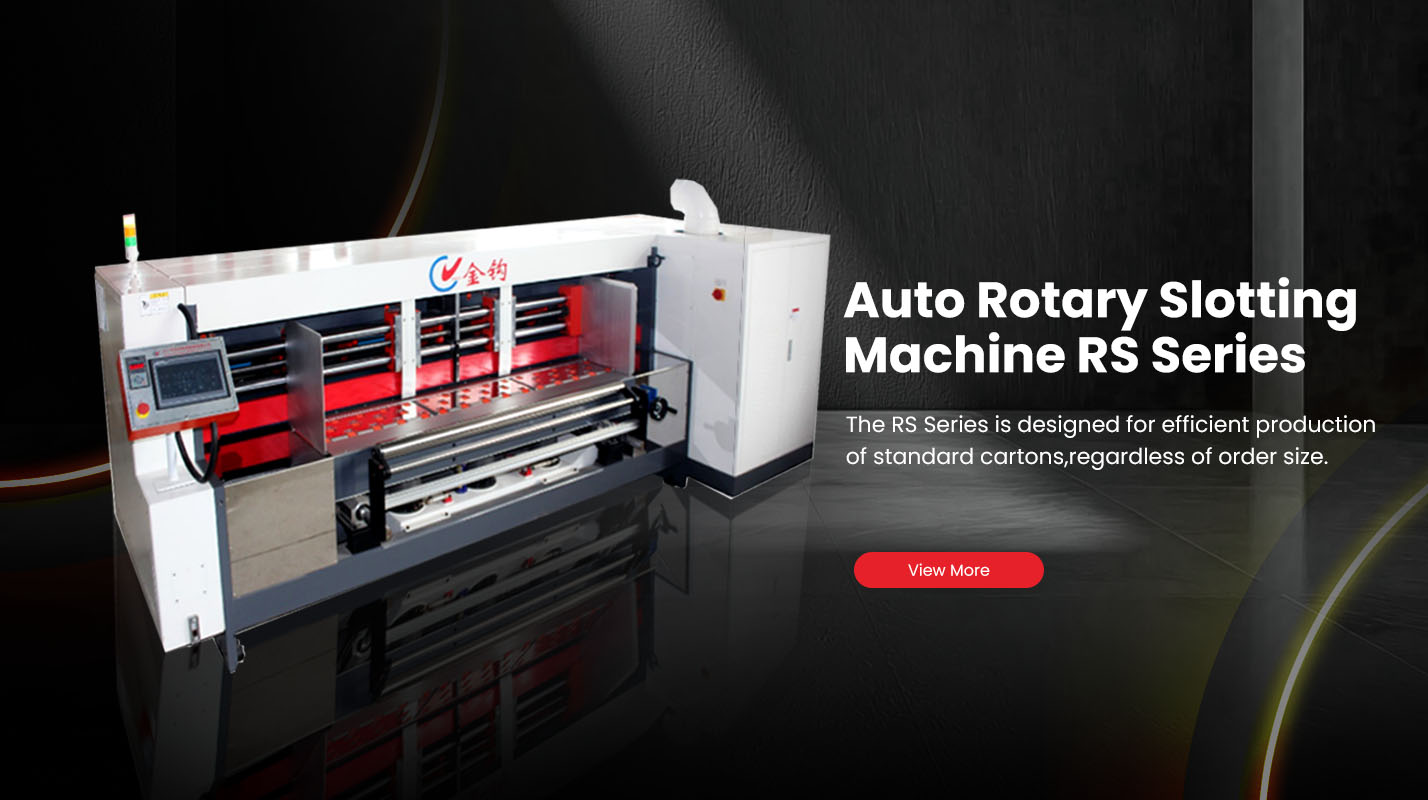
JINGOU integrates servo control systems into corrugated box equipment with a focus on precision, stability, and practical factory operation. Servo-driven positioning and motion control are used to improve dimensional accuracy, speed coordination, and repeatability across slitting, slotting, forming, and conveying processes.
By combining servo technology with rigid mechanical design and PLC-based control, JINGOU equipment supports consistent performance under high-speed operation and frequent order changes.
When Servo Control Delivers The Most Value
Servo control systems provide the greatest benefits in environments that require:
High dimensional accuracy
Frequent size changes
Multi-shift production with consistent quality
Integration across automated production lines
In such conditions, servo technology transforms corrugated box equipment from mechanically limited machines into flexible, digitally controlled production systems.
Conclusion
Servo control systems play a vital role in modern corrugated box equipment by improving accuracy, speeding up changeovers, enhancing synchronization, and reducing mechanical stress. They enable manufacturers to meet the demands of high-volume production while maintaining flexibility for diversified orders.
As corrugated packaging continues to evolve toward higher efficiency and tighter quality standards, servo control is no longer an optional upgrade but a core capability. By applying servo technology in a practical and stable manner, JINGOU helps corrugated manufacturers achieve reliable, precise, and future-ready production performance.