




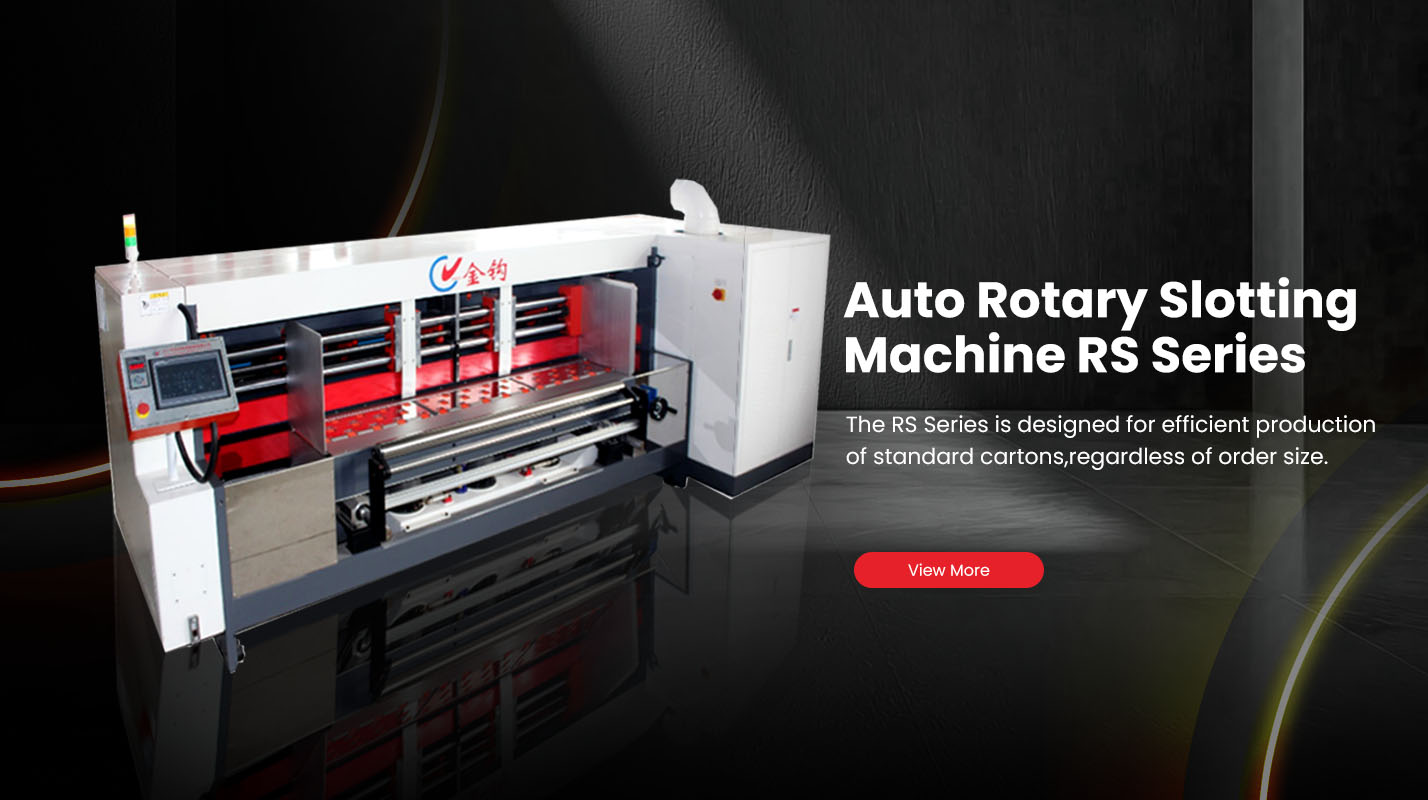
Differences Between Semi-Automatic And Fully Automatic Corrugated Box Machines
Automation Level Directly Shapes corrugated box production Strategy
Choosing between semi-automatic and fully automatic corrugated box machines is a strategic decision that affects productivity, labor structure, quality consistency, and long-term scalability. While both types are widely used, they are designed for different production realities, order structures, and investment goals.
Understanding their core differences helps manufacturers select equipment that matches real operating conditions rather than theoretical capacity.
Definition And Core Operating Concept
Semi-Automatic corrugated box machines
Semi-automatic machines rely on a combination of mechanical automation and manual intervention. Key processes such as feeding, alignment, transfer, or certain adjustments still require operator involvement.
They are commonly used where:
Production volumes are moderate
Order sizes vary significantly
Labor availability is stable
Budget constraints are tighter
Automation assists the operator but does not replace them.
Fully Automatic Corrugated Box Machines
Fully automatic machines are designed for continuous, process-driven production. From feeding and processing to transfer and stacking, operations are coordinated automatically through control systems with minimal human intervention.
They are suited for:
High-volume or continuous production
Standardized quality requirements
Labor optimization goals
Integrated packaging lines
The production process is system-controlled rather than operator-dependent.
Labor Dependency And Workforce Structure
Labor Requirements In Semi-Automatic Systems
Semi-automatic machines require operators to:
Feed sheets or cartons
Monitor alignment manually
Assist during changeovers
Handle transfer between processes
As output increases, labor demand scales up accordingly. Production consistency is also more sensitive to operator experience and fatigue.
Labor Reduction In Fully Automatic Systems
Fully automatic corrugated box machines significantly reduce labor dependency by automating repetitive and precision-sensitive tasks. One operator can supervise multiple machines or an entire line.
This results in:
Lower labor cost per unit
Reduced skill dependency
More stable multi-shift production
Automation converts labor from manual execution to system supervision.
Production Consistency And Quality Stability
Variability In Semi-Automatic Production
Because semi-automatic machines involve manual handling, quality can vary between shifts or operators. Minor inconsistencies in feeding or alignment may lead to:
Dimensional variation
Folding misalignment
Higher downstream adjustment needs
Quality control relies more heavily on human attention.
Standardization In Fully Automatic Production
Fully automatic machines operate based on preset parameters and synchronized motion. Once configured, each carton is processed under the same conditions.
This improves:
Dimensional repeatability
Slotting and scoring consistency
Downstream forming and sealing reliability
Consistency becomes a system outcome rather than an operator outcome.
Changeover Speed And Flexibility
Semi-Automatic Changeovers
Semi-automatic machines often allow flexible manual adjustment, which can be advantageous for highly irregular or experimental orders. However, changeovers are typically:
Slower
More dependent on operator skill
Less repeatable
Setup scrap is more common due to trial adjustments.
Fully Automatic Changeovers
Fully automatic corrugated box machines use PLC-based control and parameter memory. Size changes are executed through digital input and synchronized adjustment.
Advantages include:
Faster changeover time
High repeatability for recurring orders
Reduced setup waste
This is especially beneficial for small to medium batch production with frequent size changes.
Production Speed And Throughput Stability
Practical Speed Of Semi-Automatic Machines
Although semi-automatic machines may have competitive rated speeds, actual throughput is often limited by manual handling capacity. Fatigue, coordination delays, and operator availability affect output stability.
Sustained Output Of Fully Automatic Machines
Fully automatic machines maintain stable output over long production runs. Speed is controlled and synchronized across processes, reducing micro-stoppages and bottlenecks.
This supports:
Continuous operation
Higher effective equipment utilization
Predictable daily output
Integration With Packaging Production Lines
Limited Integration In Semi-Automatic Setups
Semi-automatic corrugated box machines are often used as standalone units. Manual transfer between machines limits line integration and increases handling risk.
Line Integration With Fully Automatic Machines
Fully automatic machines are designed for seamless integration with:
Feeding systems
Folding and gluing units
Conveying and stacking equipment
Integrated operation improves material flow and overall line efficiency.
Investment And Long-Term Cost Considerations
Lower Initial Cost Of Semi-Automatic Machines
Semi-automatic machines typically require lower upfront investment and simpler infrastructure. They are suitable for:
Small factories
Start-up operations
Limited production schedules
However, long-term labor and quality costs should be considered.
Higher Efficiency Return From Fully Automatic Machines
Fully automatic machines involve higher initial investment but deliver long-term value through:
Labor cost reduction
Lower scrap rates
Higher consistency and throughput
Over time, total cost per unit is often lower in automated systems.
JINGOU’s Perspective On Automation Selection
JINGOU supports both semi-automatic and fully automatic corrugated box solutions, with equipment design focused on practical production matching rather than one-size-fits-all automation.
The selection depends on:
Production volume and order structure
Labor availability and cost
Quality consistency requirements
Expansion and integration plans
By aligning machine configuration with real factory needs, JINGOU helps manufacturers achieve balanced efficiency and sustainable growth.
Quick Comparison Overview
| Aspect | Semi-Automatic | Fully Automatic |
|---|---|---|
| Labor Dependency | High | Low |
| Production Consistency | Operator-dependent | System-controlled |
| Changeover Speed | Slower | Faster |
| Throughput Stability | Variable | Stable |
| Line Integration | Limited | Strong |
| Initial Investment | Lower | Higher |
| Long-Term Efficiency | Moderate | High |
Conclusion
The differences between semi-automatic and fully automatic corrugated box machines go far beyond automation level. They affect labor structure, production consistency, scalability, and long-term operational efficiency.
Semi-automatic machines offer flexibility and lower initial cost for moderate production needs, while fully automatic machines provide stable, labor-efficient, and scalable solutions for modern corrugated packaging operations.
By carefully evaluating production requirements and future goals, manufacturers can select the automation level that delivers the best balance between investment and performance. Through flexible equipment design and practical automation solutions, JINGOU supports corrugated producers at every stage of operational development.
Previous:
Next: How Multi-Function Carton Machines Support Flexible Box Sizes