




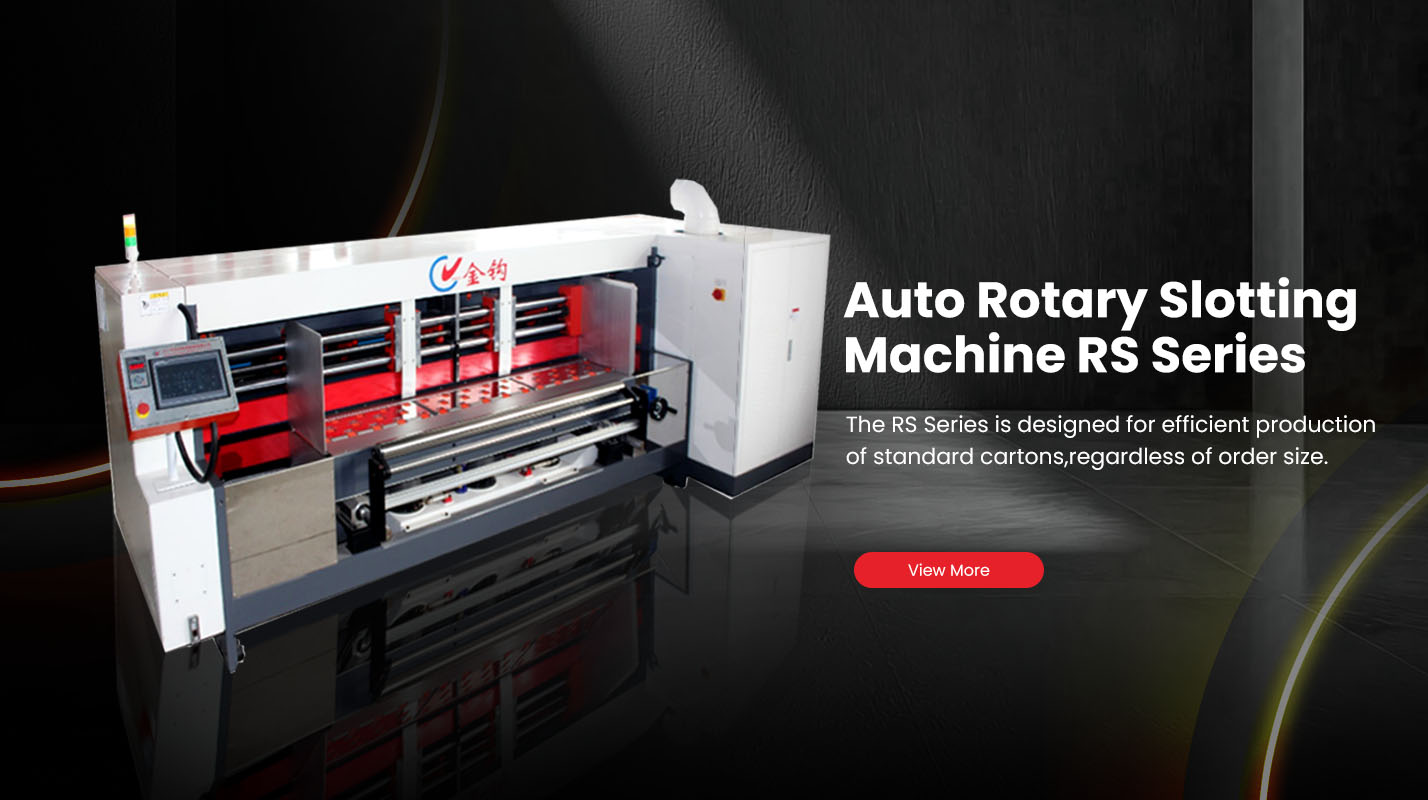
How Machine Frame Structure Affects Long-Term Operating Stability
In corrugated carton production, “stability” is not an abstract engineering word. It shows up every day as slotting accuracy, scoring consistency, cut-edge quality, noise level, and how often your line needs re-adjustment. Across thin-blade slitter scoring, rotary slotting, and box forming workflows, the machine frame is the foundation that determines whether performance stays consistent after thousands of operating hours.
From a manufacturer and decision-guide perspective, this topic matters because many field problems blamed on blades, settings, or operators are actually caused by frame stiffness, alignment retention, and vibration behavior. For buyers sourcing equipment for small-quantity, multi-SKU orders, stable frames reduce setup time, scrap, and maintenance disruption. JINGOU focuses on corrugated carton machines designed for these realities, including thin-blade slitter scoring and box-making solutions built for efficient small-order production.
Why the Frame Determines Long-Term Stability
A machine frame does three jobs at the same time:
Carries static loads: rollers, shafts, motor systems, tooling modules
Resists dynamic loads: cutting, slotting, scoring impact and continuous rotational forces
Protects geometry: keeps parallelism, squareness, and center distances within acceptable range over time
When a frame is not engineered for long-term rigidity, you typically see a predictable sequence:
Minor vibration increases
Fasteners loosen, micro-misalignment grows
Consistency drops: scoring depth drift, slot width variation, feeding skew
Higher wear on bearings and drive interfaces
More downtime for “recalibration” that never fully solves the root cause
Key Frame-Structure Features That Keep Machines Stable
High stiffness where cutting forces concentrate
Slotting and scoring zones are where intermittent forces peak. A stable structure focuses reinforcement around:
Tooling mounts and cross-beam interfaces
Bearing seats and shaft supports
Load paths between upper and lower working units
Alignment retention through precision machining
Even a thick frame will drift if the critical interfaces are not machined and referenced correctly. Long-term stability depends on:
Flatness and perpendicularity of mounting faces
Accurate locating features (pins, keys, reference edges)
Repeatable assembly datum strategy
Vibration control by design, not by luck
Vibration is often amplified when a machine’s natural frequency sits too close to excitation frequencies generated by rotating parts and intermittent cutting forces. This is why stiffness-to-mass balance and structural damping matter in real production lines.
What “Unstable Operation” Looks Like on the Factory Floor
If your frame structure is struggling, the symptoms are usually consistent across different cartons and operators:
Frequent need to re-square or re-center the line
Increasing noise and “buzz” under load
Uneven scoring depth across width
Slotting position drift after long runs
More frequent blade/roller wear than expected
Fasteners that keep backing out even with correct torque practices
These are not just maintenance issues. They are total cost drivers because they consume labor time, reduce yield, and create delivery risk.
Manufacturer vs Trader: Why Frame Quality Is Hard to “Trade”
With machine frames, the most important value is not the brochure spec. It is process control:
Material selection consistency
Welding and stress-control discipline
Machining capability and datum control
Assembly verification and run-in standards
A manufacturer can manage these variables inside one system. A trader typically cannot control frame metallurgy, weld sequence, heat influence, or machining reference strategy across different upstream sources. That’s why two machines with the same “model name” can behave very differently after commissioning.
For small-quantity corrugated production, where changeovers are frequent, frame stability directly affects your daily throughput and the predictability of “first-pass OK” output.
Manufacturing Process Overview: Where Stability Is Won or Lost
A stable frame is usually the result of disciplined steps:
Frame material strategy: matching section thickness and reinforcement to load paths
Weld and fabrication control: minimizing distortion during joining
Reference machining: establishing true datums for critical assemblies
Assembly alignment: controlling center distance, parallelism, and squareness
Dynamic checks: confirming vibration behavior and stability under working loads
This is exactly why buyers should evaluate how a machine is built, not only what it can do on day one.
Quality Control Checkpoints That Predict Long-Term Stability
If you want a short, decision-ready set of checks, these are the ones that correlate strongly with stable operation:
Critical mounting-face flatness and perpendicularity checks
Bearing seat machining accuracy verification
Shaft parallelism and roller alignment inspection under assembly conditions
Fastener strategy: locking method, torque standardization, and re-check protocol
Functional run test under load simulation, not idle-only demonstration
When these checkpoints exist and are enforced, stability is repeatable across bulk production units.
Project Sourcing Checklist for Frame-Stable Carton Machines
Use this when comparing suppliers for slitter scorers, rotary slotters, or Box Maker Machines:
Can the supplier explain the frame load path and reinforcement logic in plain engineering terms
Are machining references and alignment verification part of standard QC
Is there a defined commissioning and run-in standard before shipment
Can they support OEM / ODM mechanical adaptations without weakening the structure
Do they offer clear guidance for foundation, anchoring, and installation to protect frame geometry
Export Market Compliance: Structural Stability Must Support Safety Compliance
Export compliance is not just paperwork. Frame stability affects guarding gaps, safe access integrity, and predictable operation under normal and foreseeable misuse conditions. For European markets, CE-related conformity under the Machinery Directive framework is a common requirement, and manufacturers carry responsibility for conformity and documentation.
JINGOU emphasizes export readiness for its equipment category and positions itself as a dedicated manufacturer focused on corrugated carton machines for small-quantity order efficiency.
Closing Perspective: Stability Is a Procurement Decision, Not a Maintenance Hope
A door-to-door comparison of machine specs rarely reveals the real differentiator. Long-term operating stability is primarily determined by frame structure quality, alignment retention, and disciplined manufacturing control. If your project requires frequent SKU changes, reliable accuracy, and predictable uptime, treat frame engineering as a first-class requirement—not an afterthought.
If you share the next title (or specify the exact machine type you want to highlight: slitter scorer, rotary slotter, Box Making Machine), I can align the article even more tightly to that product scenario while keeping the same manufacturer decision-guidance angle.