




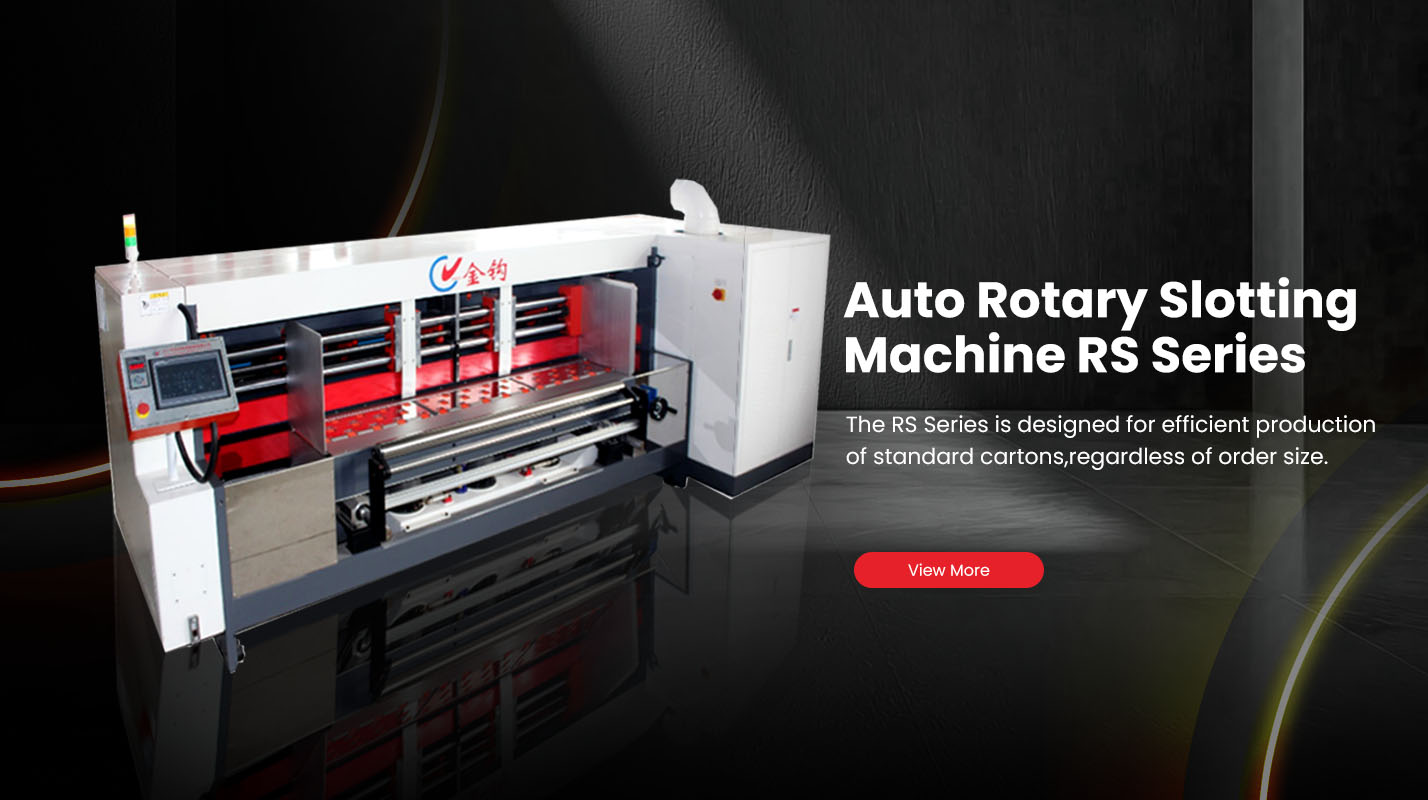
In corrugated box production, rated speed on a machine specification sheet rarely reflects real-world output. Many factories invest in higher-speed equipment, yet actual production efficiency remains below expectations. The limiting factors are often structural, procedural, and engineering-related rather than purely mechanical horsepower.
From a manufacturer’s and decision advisor’s perspective, increasing output speed sustainably requires understanding the constraints inside the entire converting system — not just pushing motors harder. For carton plants handling multi-SKU, small-batch, or export-oriented production, stability and repeatability are often more important than peak theoretical speed.
1. Machine Frame Rigidity and Structural Stability
The frame is the backbone of slitter scorers, rotary slotters, and Box Making Machines. When structural rigidity is insufficient:
Vibration increases under load
Alignment shifts during continuous operation
Scoring depth becomes inconsistent
Slotting position drifts at higher RPM
As speed increases, dynamic forces multiply. Without reinforced load paths and precision machining of bearing seats and tooling mounts, higher speed results in higher instability rather than higher output.
True manufacturers control welding sequence, machining reference surfaces, and assembly alignment to preserve geometric stability across production batches. Traders typically cannot control upstream fabrication precision, which may impact long-term high-speed stability.
2. Feeding System Accuracy
Board feeding is one of the most underestimated bottlenecks in corrugated converting.
Common limitations include:
Skewed board entry
Inconsistent sheet spacing
Double feeding
Manual correction delays
Even a high-speed cutting system cannot compensate for unstable feeding. Automated alignment and synchronized feeding mechanisms significantly reduce micro-stoppages that accumulate into major productivity losses over time.
In small-quantity order environments, where frequent size changes occur, feeding precision becomes even more critical.
3. Tooling Quality and Wear Rate
Output speed is directly tied to tooling durability.
Limitations often arise from:
Blade imbalance
Uneven scoring wheel pressure
Poor heat treatment of cutting components
Inconsistent spindle concentricity
As speed increases, tooling wear accelerates. Without controlled material standards and machining precision, cutting accuracy degrades rapidly.
High-speed capability must be supported by hardened spindle systems, accurate shaft alignment, and vibration-controlled structural design.
4. Setup Time Between Orders
In modern carton factories, production rarely runs one SKU continuously. Frequent job changes introduce downtime.
Speed limitations appear when:
Manual calibration is required for each order
Position adjustments lack repeatable digital memory
Alignment must be visually corrected
Servo-controlled positioning systems reduce this limitation by allowing stored parameter recall, minimizing human adjustment dependency.
Output speed is not only about meters per minute — it is about minimizing non-productive transition time.
5. Mechanical Alignment Retention
Long-term output speed is limited when alignment drifts during continuous operation.
Typical causes include:
Inadequate shaft support
Weak mounting plates
Thermal expansion mismatch
Fastener loosening under vibration
Proper machining tolerance control and structured torque verification during assembly help preserve alignment under load.
Stable geometry ensures consistent scoring and slotting accuracy at higher operational speeds.
6. Electrical and Control System Synchronization
Even when mechanical systems are capable, synchronization issues may restrict performance:
Signal delay between servo modules
Inconsistent PLC logic optimization
Poor cable shielding causing signal instability
Integrated automation engineering ensures that mechanical and electrical systems are calibrated together, rather than assembled as independent modules.
True output stability comes from synchronized system architecture.
7. Material Handling and Downstream Bottlenecks
Production speed can also be limited by:
Inefficient stacking systems
Manual bundling delays
Slow transfer between processing units
Insufficient discharge alignment
When downstream systems cannot match upstream speed, operators reduce overall machine speed to maintain flow stability.
A complete line perspective is required when evaluating speed limitations.
8. Maintenance and Preventive Control
Machines that lack structured maintenance planning often suffer gradual speed degradation.
Common performance-reducing factors:
Bearing wear
Accumulated dust and debris
Lubrication neglect
Belt tension inconsistency
Preventive maintenance protocols protect high-speed capability over the long term.
Manufacturer vs Trader: Stability Determines Real Speed
Rated speed is easy to advertise. Sustained speed under real production conditions depends on:
Frame structural integrity
Precision machining capability
Material quality control
Integrated assembly standards
Functional load testing
A manufacturer with in-house fabrication, machining, and assembly control can maintain consistency across machines. Traders often cannot verify internal structural processes, making long-term high-speed reliability uncertain.
Project Sourcing Checklist for Speed-Oriented Buyers
When evaluating corrugated box production machinery, consider:
Frame reinforcement strategy
Bearing seat machining accuracy
Servo positioning repeatability
Tooling material specification
Dynamic vibration testing under load
Installation guidance for foundation stability
Spare parts availability
Speed should be evaluated as sustainable operational throughput, not peak demonstration performance.
Bulk Production and Export Considerations
For export-oriented factories, output speed directly affects delivery commitments. Equipment should:
Maintain stable geometry under continuous operation
Withstand multi-shift usage
Meet electrical and safety compliance standards
Provide documentation and technical traceability
Compliance and structural integrity together protect long-term productivity.
Strategic Perspective
Increasing speed without addressing structural and systemic limitations results in higher wear, more downtime, and inconsistent quality. Sustainable output speed is the result of:
Stable mechanical design
Precision machining
Controlled automation integration
Disciplined quality checkpoints
Factories that treat speed as a systems engineering question — rather than a motor upgrade — achieve better margin protection and operational predictability.
Conclusion
The key factors limiting output speed in corrugated box production are rarely isolated to one component. Structural rigidity, feeding precision, tooling durability, alignment retention, automation synchronization, and downstream flow all contribute to sustainable performance.
For decision-makers investing in packaging machinery, the focus should be on long-term structural stability and integrated engineering control. Sustainable speed is engineered through disciplined manufacturing processes, consistent quality inspection, and a system-level approach to production design.