




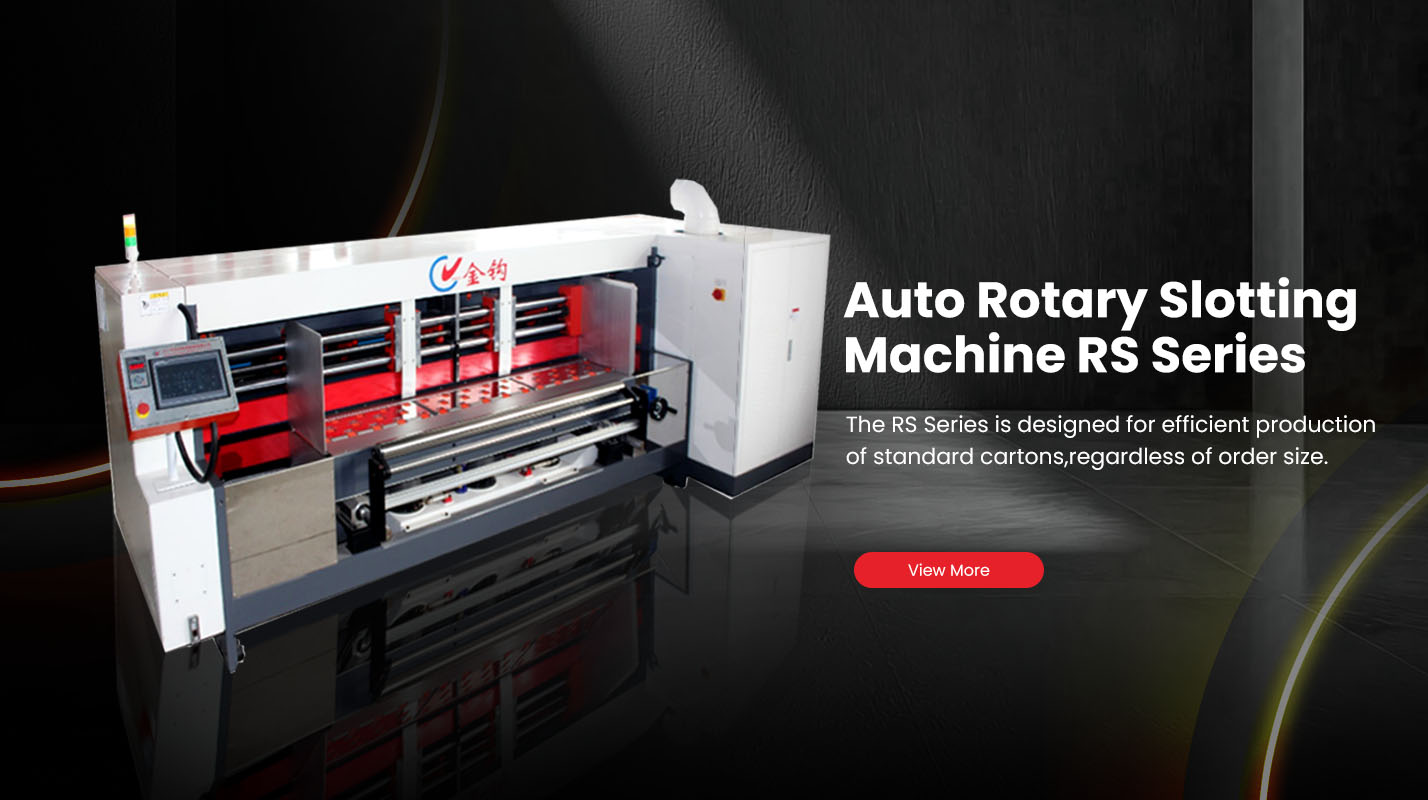
In modern carton manufacturing, profitability is increasingly tied to flexibility. Customer orders are smaller, SKU counts are higher, and delivery expectations are tighter. Under these conditions, the real bottleneck is often not maximum machine speed, but changeover time between jobs.
From a manufacturer’s and decision advisor’s perspective, quick-change setup systems are no longer optional upgrades. They are structural design decisions that directly affect daily throughput, labor efficiency, and long-term operating stability.
Why Downtime Is a Hidden Cost Driver
In corrugated box production, downtime occurs during:
Slot width adjustments
Scoring position changes
Tool replacement
Board size transitions
Feeding recalibration
Even if each adjustment takes only 10–20 minutes, multiple daily changeovers can accumulate into hours of non-productive time.
In small-quantity order environments, downtime often consumes more production capacity than actual cutting and slotting operations.
What Is Quick-Change Setup?
Quick-change setup refers to mechanical and control system designs that allow operators to:
Adjust tool positions rapidly
Replace tooling without complex disassembly
Store and recall size parameters
Align feeding and scoring automatically
Reduce manual measurement steps
The objective is to minimize mechanical intervention while maintaining alignment accuracy.
Structural Design That Enables Quick Change
Quick-change capability is not only about software. It depends heavily on mechanical architecture.
1. Modular Tool Mounting
Tooling units designed with standardized interfaces allow:
Faster blade or scoring wheel replacement
Reduced risk of misalignment
Stable reinstallation positioning
Precision machining of mounting faces ensures repeatable positioning after every change.
2. Servo-Based Positioning Systems
Servo-controlled movement enables:
Digital adjustment of slotting and scoring widths
Memory-based job recall
Elimination of manual fine-tuning
This significantly reduces operator dependency and human variation.
3. Rigid Frame Geometry
Frequent adjustments can weaken alignment if the frame lacks stiffness. A structurally stable machine ensures that repeated changeovers do not introduce cumulative deviation.
Frame rigidity and machining accuracy protect long-term calibration.
Manufacturer vs Trader: Why Integration Matters
Quick-change systems require tight integration between:
Mechanical structure
Electrical control system
Software logic
Precision machining
A manufacturer with in-house fabrication and engineering control can coordinate these elements from the design phase. Traders often assemble subsystems from different sources, which may result in:
Mismatch between servo accuracy and mechanical tolerance
Software limitations
Reduced repeatability in alignment
Quick-change performance is only as strong as the weakest integrated component.
Manufacturing Process Overview Supporting Quick Change
To deliver reliable quick-change capability, production must include:
Accurate machining of tool rails and positioning tracks
Alignment verification of shaft and spindle systems
Servo motor calibration under load conditions
Assembly torque control
Functional testing of parameter recall consistency
Without these controls, stored digital positions may not translate into precise physical alignment.
Quality Control Checkpoints That Reduce Setup Error
Factories seeking minimal downtime should evaluate whether equipment includes:
Position repeatability verification
Mechanical backlash inspection
Tooling interface tolerance measurement
Load-based functional testing
Vibration analysis during high-speed transitions
Quick-change success depends on consistent dimensional accuracy.
Bulk Production Considerations
For carton manufacturers handling:
Multi-shift operations
High SKU variety
Export-oriented production schedules
Quick-change systems help:
Shorten transition cycles
Increase daily order capacity
Reduce operator fatigue
Lower error-related scrap
Over time, cumulative savings from reduced downtime significantly exceed initial equipment cost differences.
Project Sourcing Checklist
Before selecting quick-change capable machinery, consider:
Is positioning digitally controlled and repeatable?
Are tooling interfaces modular and standardized?
Does the frame structure maintain geometry after repeated adjustments?
Is there documentation for parameter memory management?
Are spare parts and servo components easily serviceable?
Evaluating these elements prevents underperforming automation investments.
Export Market Compliance Considerations
Quick-change systems often involve advanced electrical control units. For international markets, machinery must meet:
Electrical safety requirements
Machinery operational standards
Control system documentation protocols
Installation and maintenance traceability
Compliance reflects disciplined engineering rather than optional certification.
Strategic Perspective
In carton manufacturing, increasing machine speed alone does not improve flexibility. The competitive advantage lies in reducing non-productive time between jobs.
Quick-change setup:
Protects production margins
Supports small-batch flexibility
Reduces reliance on highly skilled manual adjustment
Improves schedule predictability
Factories that prioritize structured mechanical precision and integrated automation achieve more stable daily output without overloading operators.
Conclusion
Quick-change setup reduces downtime in carton manufacturing by combining modular mechanical design, servo-based positioning, rigid frame structure, and disciplined production control. It transforms changeovers from manual recalibration processes into predictable, repeatable adjustments.
For decision-makers investing in packaging machinery, the focus should be on structural engineering integrity and integrated automation control. Sustainable productivity comes not from running faster, but from stopping less.