




How E-Commerce Growth Is Driving Demand for Corrugated Box Machinery
Strategic Analysis from a Corrugated Equipment Manufacturer’s Perspective
The explosive expansion of global e-commerce has fundamentally reshaped packaging requirements. Online retail, direct-to-consumer logistics, subscription commerce, and cross-border trade have increased demand for custom-sized, durable, and high-volume corrugated cartons. As order frequency rises and SKU variety expands, manufacturers are investing in advanced corrugated box machinery to achieve scalable, flexible, and cost-efficient production.
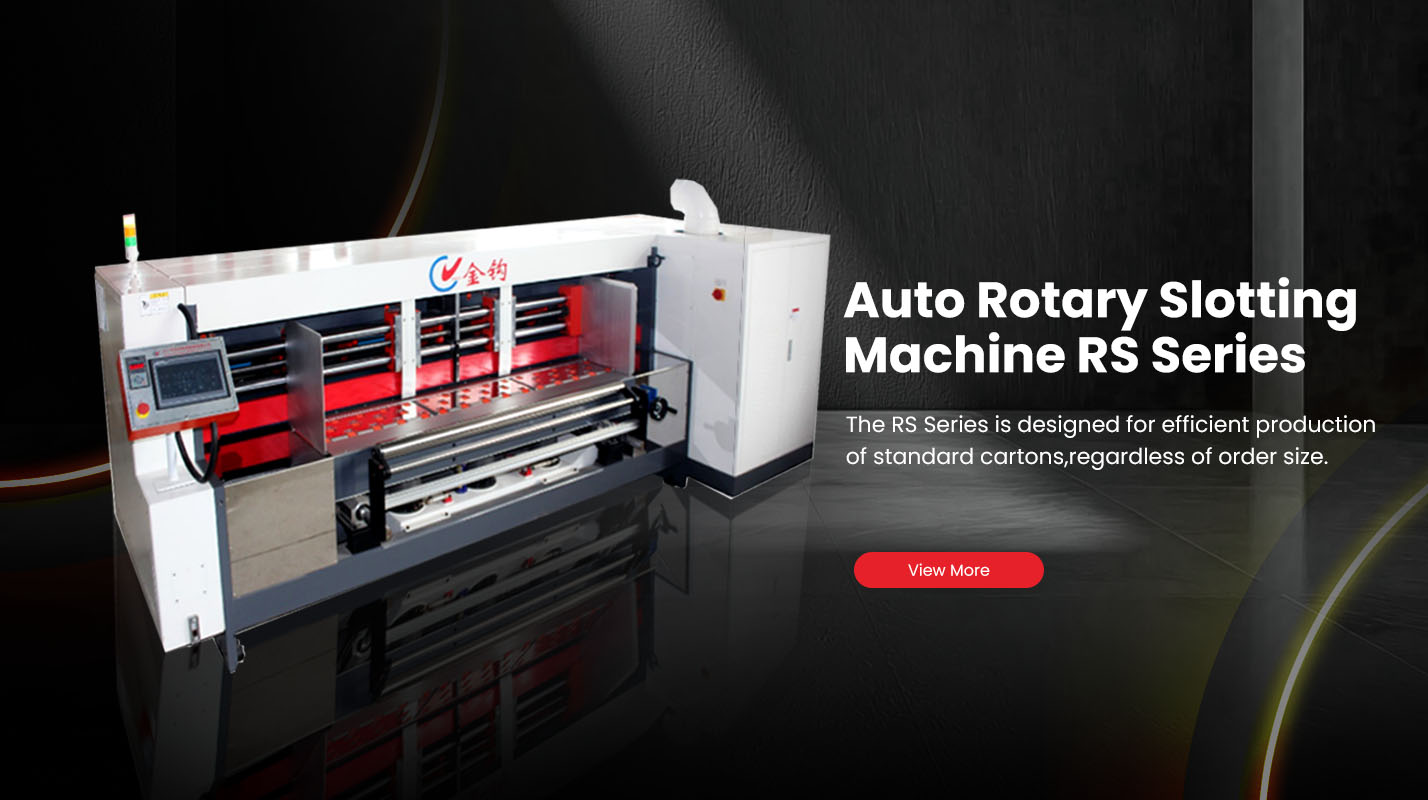
As a professional manufacturer specializing in carton forming machines, slotting systems, and automated corrugated box solutions, Jingou Packaging Machinery Co., Ltd. provides modular and automation-ready equipment designed to support factories adapting to e-commerce-driven production demands.
1. Why E-Commerce Is Reshaping corrugated box production
E-commerce differs significantly from traditional bulk retail distribution. Instead of palletized shipments to centralized stores, businesses now process millions of small parcel shipments daily.
Key impacts include:
Increased demand for custom box sizes to reduce void fill and shipping cost
Higher order frequency with smaller batch runs
Rapid SKU turnover
Pressure for faster order fulfillment cycles
Need for protective packaging for long-distance shipping
These dynamics require corrugated box machinery that is:
Flexible in size adjustment
Capable of quick changeovers
Suitable for modular expansion
Stable under continuous production cycles
2. Manufacturer vs Trader: Strategic Equipment Sourcing
As factories expand capacity to meet e-commerce demand, sourcing equipment directly from a manufacturer offers strategic advantages over purchasing from a trader.
A manufacturer provides:
In-house machine design capability
Control over structural frame fabrication
PLC and HMI system customization
Spare parts manufacturing assurance
Engineering support for layout optimization
Integration planning for future modules
A trader may resell machines without detailed understanding of internal mechanical tolerances or long-term scalability.
Jingou Packaging Machinery develops and manufactures corrugated carton forming and slotting equipment internally, enabling customers to integrate additional modules as production demand increases.
3. Modular Equipment Supports Scalable Expansion
E-commerce demand rarely grows linearly. Seasonal spikes, promotional campaigns, and cross-border sales events create sudden volume surges.
Modular corrugated box machinery supports scalable expansion by allowing factories to:
Start with semi-automatic base systems
Add slotting, scoring, or die-cutting modules later
Upgrade control systems without replacing core frames
Expand feeding and stacking automation progressively
This staged investment approach reduces financial risk while maintaining production flexibility.
4. OEM / ODM Process for E-Commerce Packaging Lines
For high-growth packaging plants, structured OEM/ODM development ensures equipment aligns with order profiles and SKU diversity.
Typical workflow includes:
Production data analysis (daily carton count, size variation range)
Equipment configuration planning (feeding speed, slitting precision, stacking automation)
Control system customization (PLC presets for fast size switching)
Layout planning for space efficiency
Prototype validation or simulation
Mass production scheduling and commissioning
Working directly with a machinery manufacturer ensures modular planning is integrated at the design stage rather than retrofitted later.
5. Bulk Supply Considerations for Corrugated Equipment Deployment
When deploying multiple machines across expanding facilities, buyers should evaluate:
Monthly production capacity of the machinery supplier
Spare parts stock availability
Interchangeability between modules
Standardization of control systems
Lead time reliability
After-sales technical support
Bulk installation planning reduces downtime and ensures consistent production performance across parallel lines.
6. Project Sourcing Checklist
Factories responding to e-commerce growth should verify the following before purchasing corrugated machinery:
Performance Criteria
Maximum sheet width and thickness compatibility
Rated production speed under continuous operation
Accuracy of slotting and scoring
Quick size change capability
Mechanical and Structural Integrity
High-strength steel frame construction
Precision-machined slitting and cutting assemblies
Stable conveyor alignment
Automation Integration
PLC with scalable control logic
HMI for parameter presets
Servo-controlled movement systems
Safety and Compliance
Emergency stop systems
Protective guarding
CE-compliant design for export markets
7. Manufacturing Process Overview of Corrugated Machinery
High-performance corrugated equipment is built through a disciplined production workflow:
Structural steel frame fabrication
Precision machining of slotting and cutting components
Assembly of drive systems and servo motors
PLC and electrical cabinet integration
Functional module testing
Full system commissioning
Final inspection and documentation
Jingou’s integrated manufacturing approach ensures mechanical stability and long-term operational durability in high-output environments.
8. Quality Control Checkpoints
To support continuous e-commerce packaging output, quality checkpoints typically include:
Frame alignment verification
Blade precision inspection
PLC and HMI response testing
Conveyor synchronization checks
Full-cycle performance validation
Safety mechanism verification
Batch documentation and traceability
These inspections ensure equipment maintains stable performance during extended multi-shift production.
9. Material Standards Used in Equipment Construction
Reliable corrugated machinery relies on:
Heavy-duty steel frames for vibration resistance
Industrial-grade servo motors
High-precision alloy cutting tools
Certified PLC control systems
Industrial electrical components
Material and component standards directly affect operational longevity and uptime.
10. Export Market Compliance
As e-commerce expands globally, packaging equipment must meet international requirements:
CE certification for European markets
Electrical compliance aligned with regional voltage standards
Safety guarding and interlock systems
Export documentation and machinery testing reports
Manufacturers experienced in global shipment provide documentation that simplifies customs clearance and installation approvals.
Conclusion
E-commerce growth is accelerating demand for flexible, scalable, and automation-ready corrugated box machinery. The shift toward high-mix, small-batch production requires equipment that can adapt quickly without sacrificing structural reliability or production speed.
By partnering directly with a corrugated machinery manufacturer that offers modular architecture, structured OEM/ODM development, disciplined quality control checkpoints, industrial-grade material standards, and export compliance support, factories can build packaging operations that grow in parallel with digital commerce demand.