




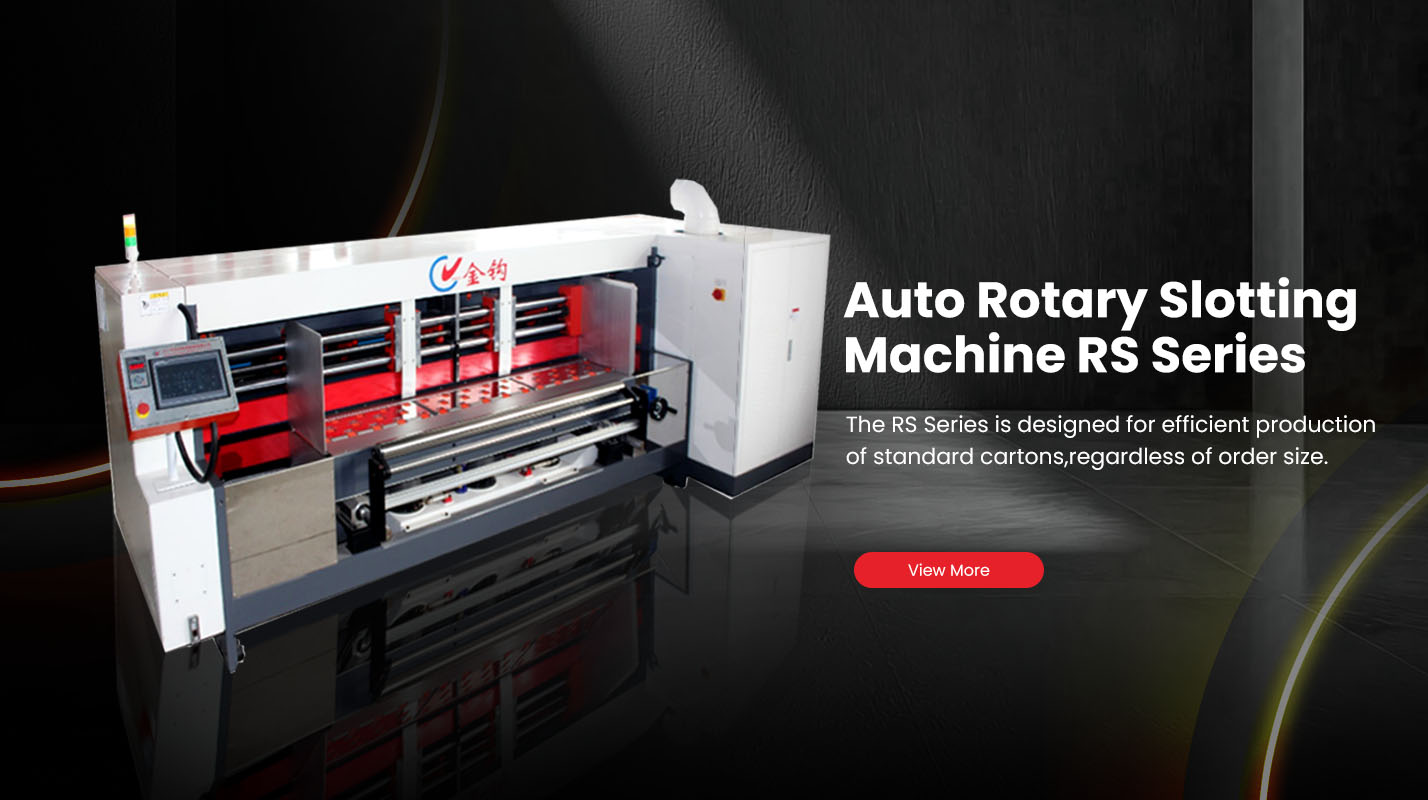
In corrugated carton production, the formation of box flaps is an essential step that determines how a carton will fold and close during packaging. The machine responsible for creating these flap structures is the rotary slotting machine. This equipment precisely cuts slots into corrugated boards, defining the panels and flaps that allow cartons to fold into their final shape.
Rotary slotting machines play a critical role in modern corrugated box production lines because they ensure accurate slot placement, stable production speed, and consistent carton dimensions. As a manufacturer of carton processing equipment, Jingou Packaging Machinery develops slotting systems designed to maintain precision and stable performance in industrial packaging production.
The Role of Slotting in Carton Manufacturing
Before slotting occurs, corrugated boards have already been processed through slitting and scoring stages. Slitting defines the board width, while scoring creates folding lines.
Slotting is the step that forms the openings between carton panels. These slots determine where the top and bottom flaps of the carton will fold. Without properly positioned slots, cartons cannot fold correctly or maintain structural strength.
Rotary slotting machines cut these openings with high precision so that the carton panels align perfectly during the folding process.
How Rotary Slotting Machines Work
A rotary slotting machine uses rotating cutting tools mounted on cylindrical shafts. As corrugated boards move through the machine, the rotating blades cut slots into the board according to the required carton design.
The basic working process includes several stages.
Board Feeding
Corrugated boards are transported into the machine through a controlled feeding system that keeps the board aligned.
Blade Positioning
Slotting blades are positioned according to the required carton dimensions. These blades determine the width and depth of the slots.
Rotary Cutting
As the board passes through the rotating shafts, the blades cut precise openings into the cardboard. Because the blades rotate continuously, the machine can maintain high production speed.
Panel Separation
The slotting process creates defined carton panels and flaps that will later fold along the scoring lines to form the finished box.
This rotary cutting structure allows machines to process large volumes of corrugated boards efficiently while maintaining consistent slot accuracy.
Manufacturer vs Trader in Equipment Selection
The performance of rotary slotting machines depends heavily on machine design, blade precision, and mechanical stability. When sourcing equipment, buyers often consider whether to work directly with a manufacturer or through a trading intermediary.
Manufacturers control engineering design, component machining, and equipment assembly. This enables them to maintain tighter quality control and provide technical support during installation and operation.
Trading companies typically purchase equipment from external suppliers and may have limited control over machine design or manufacturing processes.
Jingou Packaging Machinery operates its own production facility and engineering team, allowing the company to develop rotary slotting machines designed for stable operation and precise carton processing.
OEM and ODM Equipment Development
Many packaging factories require machines tailored to their production environment. OEM and ODM cooperation allows manufacturers to design rotary slotting machines based on factors such as board size range, carton dimensions, and production capacity.
The development process begins with technical requirement analysis. Engineers then design machine structure and blade configuration according to the required carton specifications.
Prototype testing ensures that slotting accuracy, machine speed, and structural stability meet industrial production standards before full-scale manufacturing begins.
Manufacturing Process Overview
The production of rotary slotting machines requires precise machining and structured assembly procedures.
Machine frames and transmission components are manufactured using precision machining equipment to ensure dimensional accuracy. Slotting blade assemblies and feeding mechanisms are produced as independent modules before system integration.
Electrical control systems are installed to manage machine speed and operational coordination. After final assembly, machines undergo operational testing to verify slotting accuracy and mechanical stability.
Quality Control Checkpoints
Strict inspection procedures ensure that rotary slotting machines perform reliably during industrial production.
Raw materials are inspected before machining begins to confirm mechanical strength and durability. Machining accuracy checks verify that components meet dimensional tolerance standards.
Assembly alignment inspections ensure that slotting blades and shafts operate correctly. Operational testing simulates production conditions to confirm machine stability and cutting precision before shipment.
Material Standards Used
Industrial slotting machines require durable materials capable of supporting continuous operation. High-strength structural steel is commonly used for machine frames to maintain mechanical stability.
Precision alloy steel is used for rotating shafts and transmission components to ensure smooth mechanical movement. Slotting blades are produced using wear-resistant materials designed to maintain cutting sharpness during extended production cycles.
These materials help ensure that machines maintain consistent performance over long production periods.
Bulk Supply Considerations
Packaging factories expanding production capacity often purchase multiple machines as part of larger equipment projects. Bulk procurement requires coordinated production scheduling, logistics planning, and installation preparation.
Manufacturers must ensure that all machines delivered within a project maintain consistent quality standards. Technical training for operators also helps ensure stable machine operation after installation.
Export Market Compliance
Packaging machinery exported to international markets must comply with industrial safety regulations and documentation requirements. These typically include electrical safety standards, operational protection systems, and technical manuals for installation and maintenance.
Proper export packaging and transportation arrangements are also necessary to ensure safe delivery of heavy equipment.
Industry Outlook
As corrugated packaging demand continues to grow, rotary slotting machines will remain a key component of carton production lines. precision slotting technology allows packaging factories to maintain accurate carton dimensions and stable production performance.
Manufacturers that focus on engineering design, structured manufacturing processes, and strict quality control systems will continue to support the development of efficient carton processing equipment. Jingou Packaging Machinery continues to develop rotary slotting machines designed to deliver reliable performance for modern packaging production environments.