




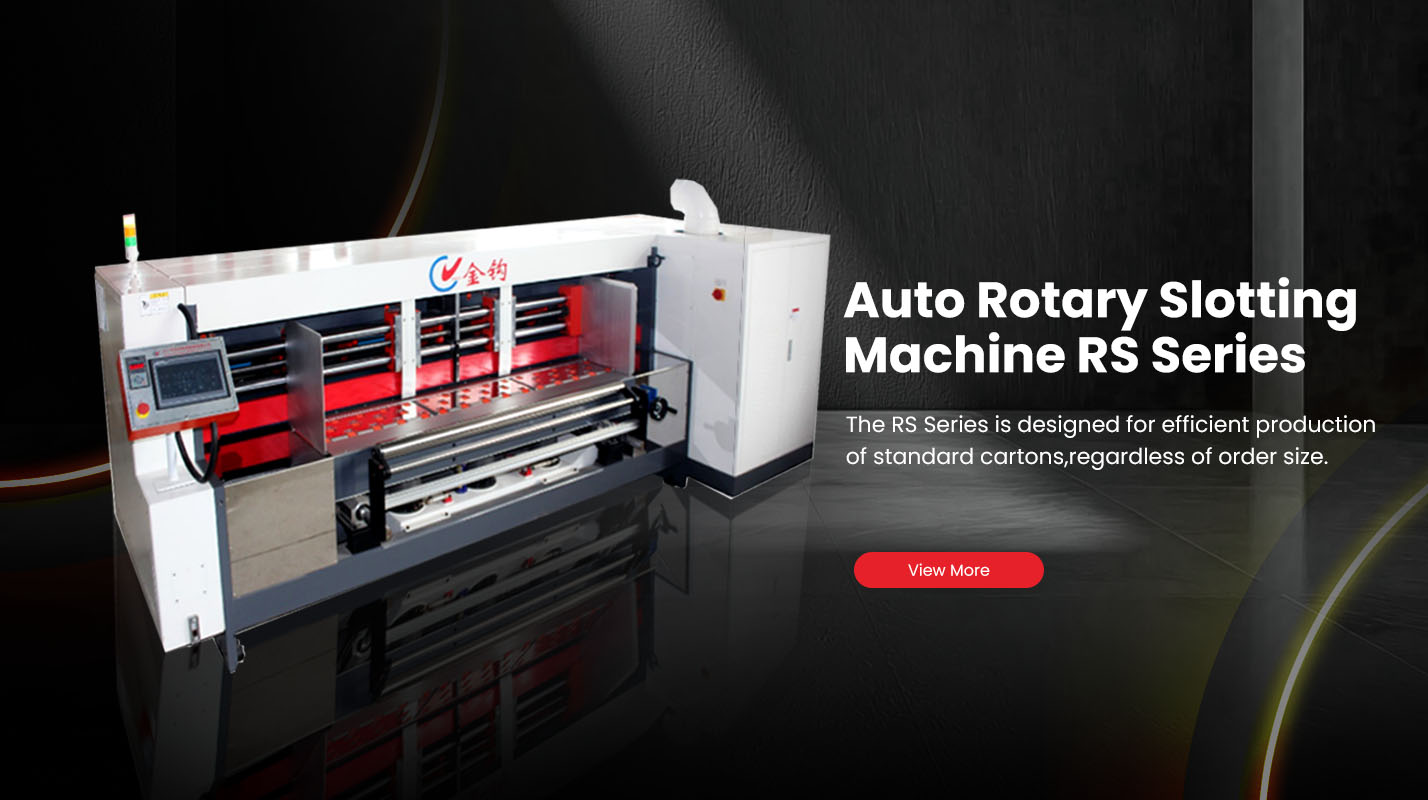
Production speed is one of the most important performance indicators in corrugated box manufacturing. Packaging factories rely on high-speed carton production to meet growing demand from logistics, retail distribution, and e-commerce industries. However, the actual output speed of corrugated box machines depends on several technical and operational factors, including machine design, board quality, process configuration, and maintenance conditions.
Understanding these factors helps packaging manufacturers optimize production efficiency and maintain stable output performance. Machinery manufacturers such as Jingou Packaging Machinery focus on developing equipment that maintains reliable speed performance while ensuring accurate carton processing.
Machine Design and Mechanical Stability
The structural design of the machine plays a critical role in determining production speed. Machines built with stable frames, precision transmission systems, and balanced rotating components can operate at higher speeds without vibration or mechanical instability.
High-precision machining of shafts, gears, and transmission assemblies ensures smooth power transfer throughout the machine. Stable mechanical structures allow equipment to maintain consistent operating speed during continuous production.
Slitting and Scoring System Performance
Slitting and scoring systems directly influence how fast corrugated boards can be processed. Thin blade slitting technology is widely used because it reduces cutting resistance and produces cleaner edges.
Lower cutting resistance allows machines to maintain higher operating speeds without damaging the board. Accurate scoring also ensures that folding lines remain stable during high-speed processing.
If slitting or scoring accuracy is poor, machine speed may need to be reduced to maintain product quality.
Corrugated Board Quality
The physical properties of the corrugated board significantly affect machine performance. Factors such as paper strength, moisture content, and flute structure influence how easily the board can be processed.
Boards with inconsistent thickness or high moisture content may cause feeding instability or cutting difficulties. Stable board quality allows machines to maintain higher processing speeds without interruptions.
Feeding System Efficiency
The feeding system controls how corrugated boards enter the machine. An efficient feeding system maintains stable board alignment and prevents jams or misfeeds.
Automatic feeding systems with precise positioning mechanisms allow machines to process boards continuously. Smooth feeding reduces downtime and helps maintain consistent production speed.
Machine Automation and Control Systems
Modern corrugated box machines often use automated control systems to improve production efficiency. PLC controllers and servo motor systems allow machines to maintain precise synchronization between different processing stages.
Automated monitoring systems can adjust machine parameters in real time to maintain stable operation. These technologies allow machines to operate at higher speeds while maintaining processing accuracy.
Operator Skill and Production Management
Although machines perform most processing tasks automatically, operator expertise still influences production speed. Skilled operators can optimize machine settings, adjust cutting positions, and monitor production performance.
Proper production management also ensures that machines operate continuously without unnecessary downtime caused by material shortages or maintenance delays.
Manufacturer vs Trader in Equipment Selection
Machine performance and production speed depend heavily on engineering quality. When purchasing corrugated box machines, buyers often evaluate whether to work with a manufacturer or a trading company.
Manufacturers control machine design, material selection, machining processes, and final assembly. This allows them to maintain stricter quality control and optimize machine performance.
Trading companies typically source machines from different factories and may not control equipment engineering or manufacturing standards.
Jingou Packaging Machinery operates its own production facility and engineering team, enabling the development of machines designed for stable high-speed carton production.
OEM and ODM Equipment Development
Packaging factories often require machines customized to their production environment. OEM and ODM cooperation allows machinery manufacturers to design equipment based on production width, carton dimensions, and required output capacity.
During the development process, engineers analyze machine structure and processing systems to ensure that equipment maintains both high speed and processing accuracy.
Prototype testing and performance validation confirm that machines meet production efficiency requirements before entering full manufacturing.
Manufacturing Process Overview
The production of corrugated carton machinery requires precise machining and structured assembly procedures.
Machine frames, shafts, and transmission components are produced using precision machining equipment. Functional modules such as slitting systems, feeding units, and slotting assemblies are assembled before final machine integration.
Electrical control systems coordinate machine operation and ensure stable production performance.
Quality Control Checkpoints
Quality control procedures ensure that machines maintain reliable performance during high-speed operation.
Manufacturers inspect raw materials before machining begins. Machining accuracy inspections confirm that components meet dimensional tolerance standards.
Assembly alignment tests verify that cutting systems and transmission components operate correctly. Operational testing simulates production conditions to confirm machine stability before shipment.
Material Standards Used
Industrial carton machinery requires durable materials capable of supporting continuous operation.
High-strength structural steel is commonly used for machine frames to maintain mechanical stability. Precision alloy steel components are used for shafts and drive systems, while wear-resistant materials are applied to cutting components.
These materials help machines maintain stable performance during long production cycles.
Bulk Supply Considerations
Packaging factories expanding production capacity often purchase multiple machines as part of equipment investment projects. Bulk procurement requires coordinated production scheduling, logistics planning, and installation preparation.
Manufacturers must ensure that all machines delivered within a project maintain consistent performance standards.
Export Market Compliance
Packaging machinery exported to international markets must comply with industrial safety regulations and documentation requirements. These include electrical safety standards, machine protection systems, and technical manuals necessary for equipment installation and operation.
Proper export packaging and transportation arrangements are also necessary to ensure safe delivery of heavy machinery.
Conclusion
The production speed of corrugated box machines depends on several factors including machine design, slitting and scoring performance, board quality, feeding system efficiency, automation level, and operational management. Optimizing these elements helps packaging factories maintain high productivity and consistent carton quality.
Manufacturers with strong engineering capability, structured manufacturing systems, and strict quality control procedures can provide equipment designed for stable high-speed production. Jingou Packaging Machinery continues to develop carton processing equipment designed to support efficient corrugated packaging manufacturing.