




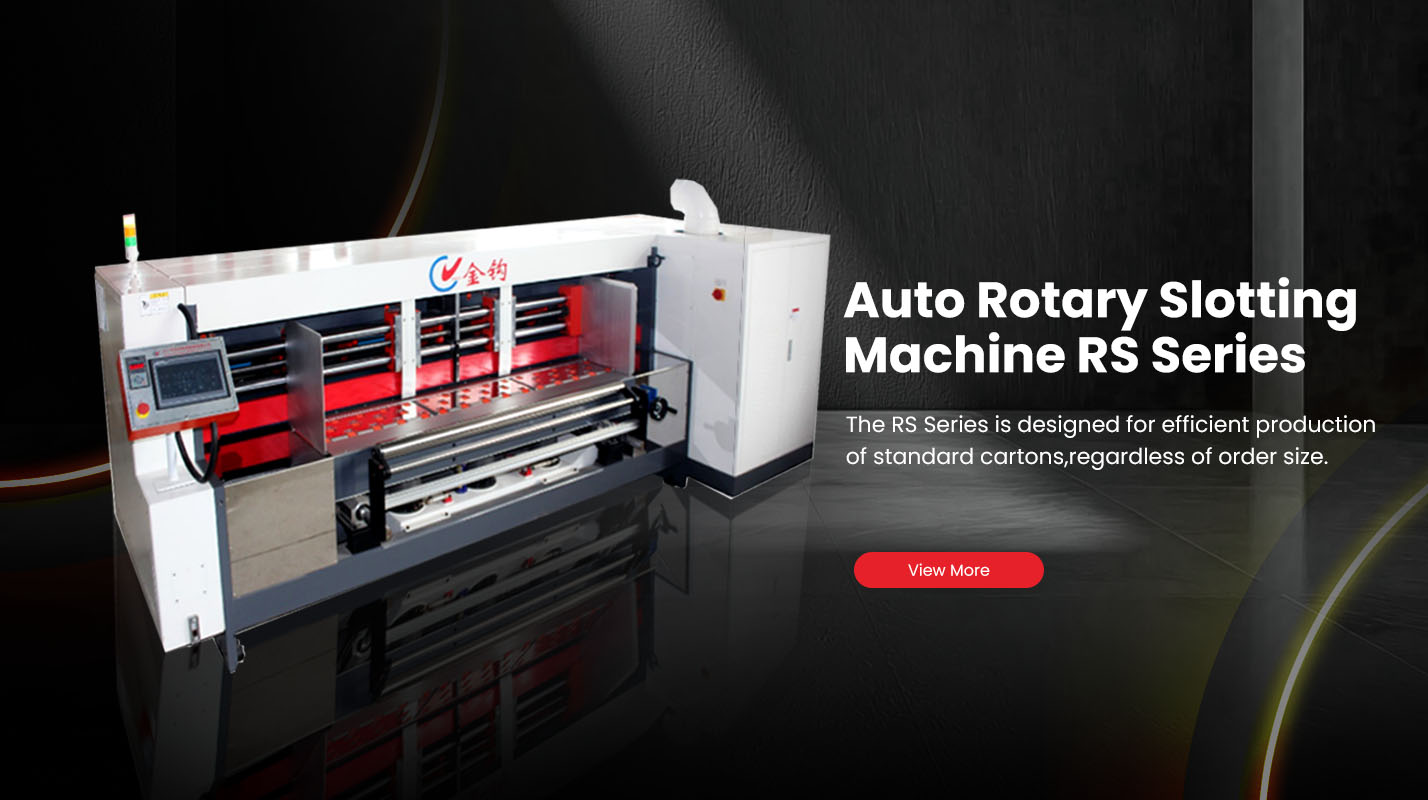
How To Choose Between Inline And Offline Box Machines?
Selecting between inline and offline box machines depends on production requirements, order structure, labor availability, and future growth plans. For corrugated packaging manufacturers, the right choice is not only about production speed but also about flexibility, material compatibility, investment efficiency, and quality stability.
According to Smithers market research, the global corrugated packaging industry continues to grow as e-commerce, logistics, and customized product packaging increase demand for different carton formats. This market trend has encouraged manufacturers to look for equipment that can quickly adapt to changing orders instead of relying only on traditional high-volume production models.
Understand The Difference Between Inline And Offline box machines
Inline box machines integrate multiple production steps into one continuous process. Feeding, cutting, scoring, slotting, and forming operations are connected, which can reduce manual handling and improve production efficiency.
Offline box machines complete individual processes separately. They provide more flexibility for factories that need to combine different machines according to specific production requirements.
The choice depends on production goals:
| Machine Type | Suitable Production Situation | Main Advantage |
|---|---|---|
| Inline box machine | Stable large-volume production | Higher automation and continuous output |
| Offline box machine | Multiple carton types and changing orders | Greater flexibility and easier process adjustment |
For factories producing customized cartons or handling frequent order changes, offline solutions often provide better adaptability.
Evaluate Production Volume And Order Flexibility
Before selecting equipment, manufacturers should analyze their production model.
Inline machines are suitable when:
Carton sizes remain relatively stable
Production volume is predictable
Continuous operation is required
Labor reduction is a priority
Offline machines are more suitable when:
Carton specifications change frequently
Small batch orders are common
Different cardboard materials are processed
Production requires more customization
JINGOU focuses on developing corrugated carton machines for flexible production, especially for small quantity and multi-variety orders. Our equipment helps manufacturers improve production efficiency while maintaining the ability to handle different carton requirements. :contentReference[oaicite:0]{index=0}
Consider Machine Flexibility And Material Compatibility
A flexible carton machine should support different cardboard structures and thickness requirements.
Important evaluation points include:
Cardboard thickness range
Feeding size adjustment
Cutting and slotting accuracy
Production changeover efficiency
Compatibility with different carton designs
Our Small Corrugated Box Making Machine supports cardboard thickness from 2mm to 11mm, with feeding sizes from 120mm × 350mm up to 2500mm width. The machine can achieve around 400 to 600 pieces per hour and is designed for flexible carton production needs. :contentReference[oaicite:1]{index=1}
Manufacturer Capability Is Important For Long-Term Production
When choosing packaging equipment, cooperation with a manufacturer provides advantages beyond machine supply.
A professional manufacturer can support:
Equipment customization
OEM and ODM projects
Production process optimization
Technical communication
Spare parts supply
Export support
Compared with traders, manufacturers are directly involved in machine design, component selection, assembly, and testing. This allows better understanding of real production challenges.
At JINGOU, we develop equipment based on practical carton manufacturing requirements. Our team has focused on corrugated carton machines and developed automatic thin blade slitter scorer technology since 2009. Our CK series equipment has obtained invention patents, utility model patents, and CE certification for international markets. :contentReference[oaicite:2]{index=2}
Review Manufacturing Process And Quality Control
Machine reliability depends on every manufacturing stage. Before investing in equipment, manufacturers should understand the production process behind the machine.
A complete manufacturing process includes:
Engineering design and machine planning
Material inspection and component preparation
Precision machining of key parts
Mechanical assembly
Electrical system installation
Machine testing before shipment
Quality control checkpoints should include:
Frame structure inspection
Cutting and scoring accuracy testing
Transmission system verification
Electrical safety inspection
Continuous operation testing
A complete quality management process helps ensure stable performance after installation.
Consider Bulk Supply And Export Project Requirements
For international equipment projects, machine selection should consider long-term supply capability.
A practical sourcing checklist includes:
| Project Factor | Evaluation Question |
|---|---|
| Production demand | Is the machine suitable for current and future orders? |
| Machine structure | Can it support different carton requirements? |
| Quality standards | Does it meet export market requirements? |
| Technical support | Is installation guidance available? |
| Spare parts | Can maintenance parts be supplied quickly? |
Export compliance is also important. Equipment documentation, safety standards, packaging protection, and after-sales service should be confirmed before shipment.
Inline Or Offline: Choose Based On Your Manufacturing Strategy
There is no universal answer when selecting between inline and offline box machines. The best equipment depends on production volume, carton variety, labor conditions, and future business plans.
For manufacturers focusing on flexible carton production, equipment that supports quick adjustments and multiple applications can create more opportunities in changing markets.
With experience in corrugated packaging equipment development, JINGOU provides practical solutions that combine production stability, flexible operation, and reliable manufacturing support.