




What Are The Packaging Solutions Helpful for Heavy Machinery Shipping
Heavy machinery shipping places much higher demands on packaging than ordinary product transport. The package must handle concentrated weight, repeated lifting, long-distance vibration, humidity changes, and export inspection requirements at the same time. That is why the most helpful packaging solutions are rarely based on a single material. In practice, effective heavy machinery packaging usually combines reinforced corrugated packaging, internal blocking, pallet support, edge protection, moisture control, and a packaging process that can be repeated with stable quality. The broader packaging sector is moving in this direction as well. PMMI reported that U.S. packaging machinery shipments grew 5.8 percent in 2023 to 10.9 billion dollars, showing that manufacturers continue to invest in packaging systems that improve efficiency and transport reliability.
For heavy machinery, the outer structure must protect against compression and impact, but internal control is equally important. A strong carton or case alone is not enough if the product can move during loading or sea transport. The most practical heavy machinery shipping packaging solutions often include high-strength corrugated cartons for secondary protection, reinforced wooden pallets or base supports for load distribution, custom inserts for fixing irregular parts, and moisture barrier materials for export routes with long transit time. When the load has sharp edges, offset weight, or exposed components, custom box making becomes even more valuable because the packaging has to match the machinery instead of forcing the machinery into a standard box size.
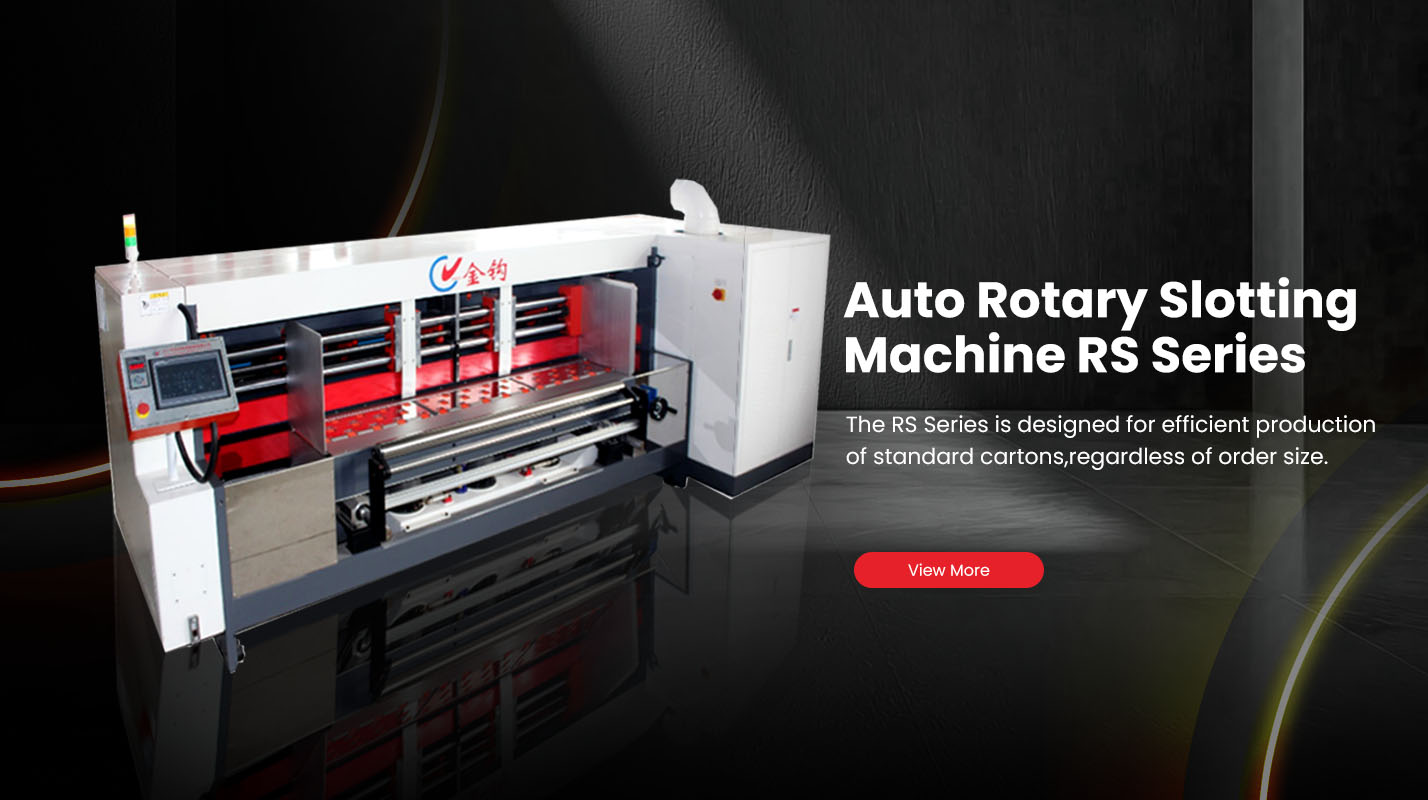
This is where the difference between manufacturer vs trader becomes clear. A trader may coordinate orders, but a manufacturer can respond more directly to packaging structure, board processing, slotting accuracy, machine setting, and production adjustments. For project buyers handling heavy equipment shipments, this matters because even a small error in scoring, slotting, or board selection can affect carton strength and transport safety. JINGOU presents itself as a high-tech enterprise specializing in corrugated carton machines for small quantity orders, and its website states that it developed the world’s first automatic thin slitter scorer machine in 2009 and that its CK25 box maker platform earned patents and CE certifications. That manufacturer-based position is important because it supports faster communication and better control over custom packaging production.
When heavy machinery is shipped in repeated batches, OEM and ODM support becomes a major advantage. Many projects do not need a standard carton. They need a packaging format adapted to machine dimensions, weight distribution, export route, and loading method. A good OEM or ODM process should begin with machinery size analysis, weight review, transport condition confirmation, and packaging structure planning. It should then continue through machine configuration, sample testing, mass production review, and shipment inspection. JINGOU’s published product information shows that its cardboard box forming machine is built for serial production of corrugated boxes and is suitable for applications including furniture, appliances, and other industrial packing needs. The same page states that the machine can process 3-ply and 5-ply corrugated cardboard, supports multiple box structures, stores up to 300 box configurations, and runs at 400 to 600 pieces per hour. For factories producing packaging for heavy or oversized goods, this kind of flexibility supports faster changeover and more controlled output.
Bulk supply considerations are also critical in heavy machinery shipping. One successful shipment is not enough if later batches show size variation, weak fold lines, unstable slotting, or inconsistent board handling. For long-term industrial supply, buyers need packaging solutions that can be reproduced with the same structural standard from order to order. They also need spare parts support and stable machine performance from the packaging machinery supplier. JINGOU states that its corrugated Box Making Machines are designed to convert corrugated board into boxes with accurate size, proper fold lines, and stable structural strength during production. This kind of consistency matters in heavy machinery shipping because packaging failure can lead not only to product damage but also to repacking cost, delayed delivery, and claim disputes.
A practical sourcing process for heavy machinery packaging should follow a clear checklist. Buyers should first confirm machinery dimensions, gross weight, center of gravity, and sensitive areas that need extra support. Then they should define the transport route, handling method, and whether the goods will move by truck, container, or multi-stage export shipment. After that, they should review material standards used in the packaging, including corrugated board grade, pallet structure, moisture protection materials, and any reinforced internal supports. It is also necessary to confirm the manufacturing process overview of the packaging supplier, from board processing to final inspection, because packaging quality depends on controlled production rather than design alone.
Quality control checkpoints should be visible at every stage. These checkpoints typically include raw material inspection, board feeding accuracy, scoring and slotting consistency, fold line verification, sample assembly, load review, and final shipment inspection. For heavy machinery, packaging must be judged not only by appearance but by how it performs in real distribution conditions. ASTM says its D4169 standard provides a uniform basis for evaluating shipping units in a laboratory by subjecting them to a sequence of anticipated hazard elements found in actual distribution. That is highly relevant for heavy machinery shipping because vibration, compression, and handling shocks are exactly the risks that strong industrial packaging must withstand.
Export market compliance also needs to be reviewed early. If wooden pallets, skids, or crates are used, ISPM 15 compliance becomes essential in many international shipments. The USDA APHIS guidance states that wood packaging material must be properly treated for ISPM 15 compliance, including heat treatment to a minimum wood core temperature of 56 degrees Celsius for at least 30 minutes, and it must carry an accredited quality mark showing compliance. For exporters shipping heavy machinery overseas, this is not a minor detail. A noncompliant wood base can delay customs clearance or even block entry into the destination market.
JINGOU’s strength in this field comes from its manufacturer background, experience in corrugated carton machinery, and focus on flexible production for customized orders. For heavy machinery shipping, the most helpful packaging solution is one that combines structural protection, repeatable manufacturing, custom box capability, disciplined quality control, and export compliance readiness. A supplier that can support these requirements as a direct manufacturer usually gives the project stronger technical control, better long-term consistency, and a more reliable path from packaging design to shipment execution.