




What Are The Suppliers Helpful for Heavy Machinery Packaging
Heavy machinery packaging requires more than a carton supplier that can produce boxes on time. The most helpful suppliers are the ones that understand load distribution, transport shock, export compliance, and the need for repeatable packaging quality across large orders. In industrial shipping, packaging failure can create much higher costs than packaging itself because damage claims, delivery delays, and repacking all reduce project efficiency. That is one reason the packaging equipment market continues to grow. PMMI reported that U.S. packaging machinery shipments grew 5.8 percent in 2023 to 10.9 billion dollars, showing continued investment in packaging performance and production stability.
For heavy machinery packaging, the most helpful suppliers are usually direct manufacturers rather than pure trading companies. The difference between manufacturer vs trader becomes clear as soon as the packaging project moves beyond standard sizes. A trader may collect quotations and coordinate communication, but a manufacturer can usually respond more directly on structure design, board processing, machine setting, material standards, and production control. Heavy machinery often needs packaging that matches weight concentration, dimensions, and handling methods very closely, so technical communication matters from the start. In this kind of project, a supplier with in-house machinery and production capability is usually more useful than one that only resells packaging solutions.
JINGOU fits this discussion because it operates as a direct manufacturer focused on corrugated carton machinery for customized orders. Its official website states that it is a high-tech enterprise focused on innovative corrugated carton machines for small quantity orders. The site also says its factory introduced the world’s first automatic thin slitter scorer machine in 2009 and developed the CK25 Box Maker Machine, with patents and CE certifications. This kind of manufacturer background is important for heavy machinery packaging because large or irregular loads often require custom corrugated structures rather than simple standard packaging.
A helpful supplier should also have a clear OEM and ODM process. Heavy machinery packaging projects often need more than a catalog product. They may require changes in box dimensions, board thickness, slotting structure, reinforcement design, and production setup. A strong OEM and ODM workflow should begin with equipment dimensions, weight review, shipping method, and packaging targets. It should then continue through structure planning, machine configuration, sample confirmation, trial production, inspection, and final delivery. If a supplier cannot support this process, it becomes difficult to scale packaging for repeated industrial shipments. For heavy machinery, custom packaging is often the difference between a one-time shipment solution and a stable long-term supply program.
Bulk supply considerations are another reason supplier choice matters. A heavy machinery packaging supplier should not only perform well on one order. It should be able to maintain the same folding quality, cutting accuracy, structural consistency, and delivery rhythm across repeated batches. Stable output is especially important when packaging is used for export equipment, project shipments, or multi-unit deliveries. JINGOU’s slitter scorer machine is described as an innovative solution for automatic cutting and slitting of cardboard with PLC and HMI control, good structural strength, and suitability for 3-ply and 5-ply corrugated cardboard. For suppliers supporting bulk packaging programs, this kind of processing capability helps keep output consistent and reduces dimensional variation across orders.
A practical project sourcing checklist can help identify whether a supplier is truly helpful for heavy machinery packaging. Buyers should confirm product dimensions, gross weight, center of gravity, transport route, handling method, board grade, and packaging structure before placing an order. They should also review whether the supplier can support OEM and ODM requests, manage repeated orders, and provide inspection records. The manufacturing process overview should be clear as well. A reliable supplier should be able to explain raw material inspection, machining control, board feeding accuracy, slotting and scoring verification, assembly checks, and final shipment inspection. This matters because packaging reliability is created by process control, not only by design.
Quality control checkpoints are especially important in heavy machinery packaging because transport conditions are much harsher than in standard consumer goods. Suppliers should be able to control dimensional accuracy, fold line stability, compression performance, and structural consistency before shipment. Material standards used in the machinery that produces the packaging are also relevant. Structural rigidity affects machine precision over long runs. Wear-resistant parts reduce variation in cutting and scoring. Electrical reliability lowers the risk of downtime during production. IEC 60204-1 is widely referenced for electrical equipment of machinery and is described as promoting safety of persons and property, consistency of control response, and ease of operation and maintenance. These factors directly support stable packaging production for industrial loads.
Export market compliance should be reviewed early when choosing a supplier for heavy machinery packaging. If the packaging machinery or supporting systems are supplied into Europe, CE-related responsibilities matter. The European Commission states that manufacturers are responsible for carrying out conformity assessment, setting up the technical documentation, issuing the EU declaration of conformity, and affixing the CE marking. EU guidance also states that manufacturers must prepare technical documentation before placing a product on the market and keep it available for authorities. That means the most helpful suppliers are not only production partners but also compliance-ready manufacturers that understand documentation and export procedures.
A simple comparison makes this clearer.
Supplier Type | Main Strength | Main Limitation
Direct manufacturer | Better technical response, process control, OEM and ODM support | Requires deeper project discussion
Trader | Easier early quotation collection | Less direct control over engineering and production
Custom machinery supplier | Better fit for heavy and irregular packaging needs | Longer evaluation stage
Bulk production supplier | More stable repeatability across large orders | Needs strong internal quality management
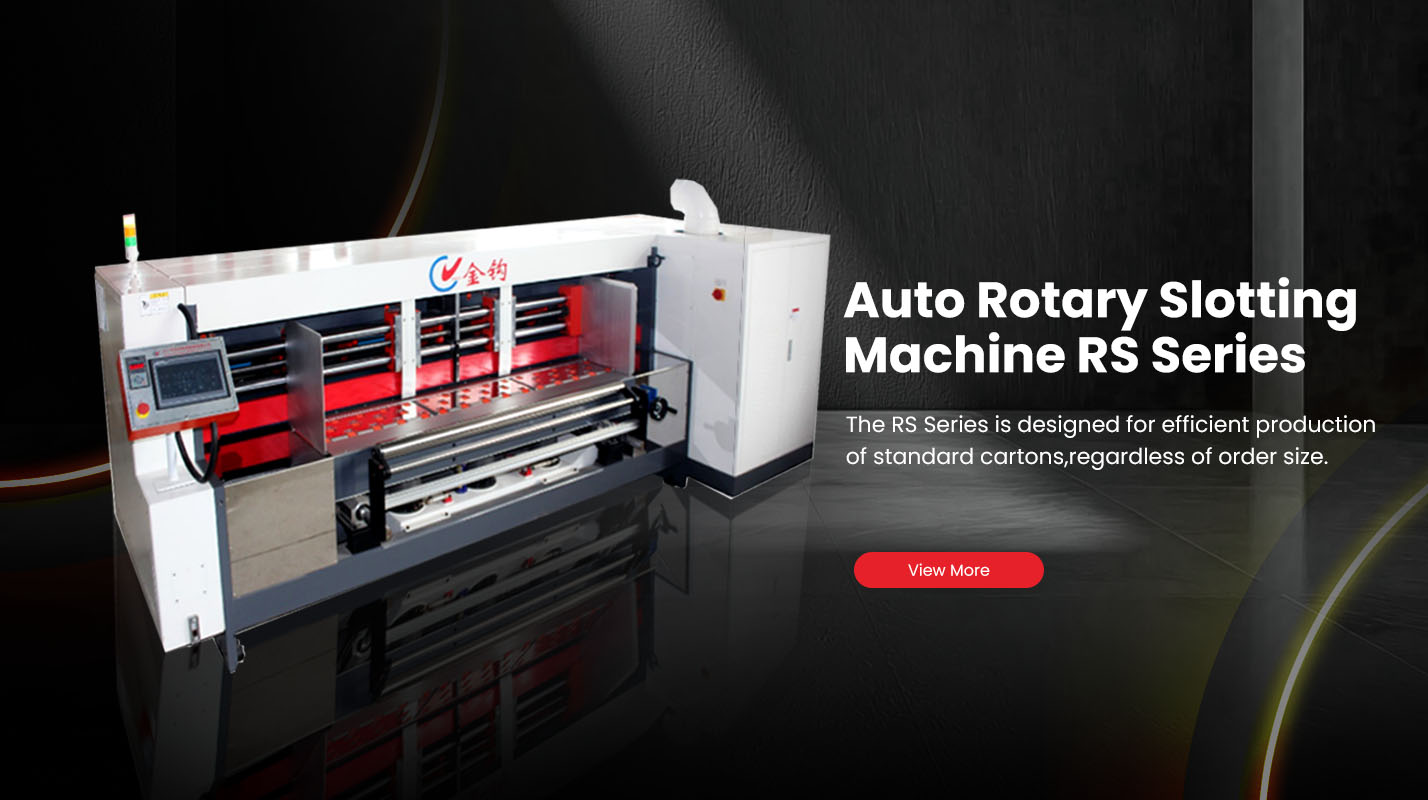
JINGOU’s value comes from combining direct manufacturing capability with equipment designed for customized corrugated production. Its product range includes slitter scorers, box forming machines, and rotary slotting and creasing machines, all of which support accurate corrugated processing. The company’s rotary slotting and creasing machine is presented as an advanced system for mass producing corrugated boxes with precision by integrating slotting and creasing in one system. For heavy machinery packaging, this kind of capability helps suppliers build stronger and more repeatable packaging structures for industrial shipping.
The suppliers most helpful for heavy machinery packaging are the ones that offer more than packaging output. They provide technical understanding, structured OEM and ODM support, bulk supply stability, visible quality checkpoints, dependable material standards, and export compliance readiness. In that context, a direct manufacturer such as JINGOU offers stronger long-term value than a simple trading channel because industrial packaging depends on engineering discipline as much as on production speed.
Previous: What Is Packaging Machinery