




Can Packaging Machinery
Packaging machinery can do far more than seal a box or close a carton. In modern manufacturing, it can cut corrugated board, score fold lines, slot panels, form boxes, support short-run customization, and improve the consistency of packaging output across different order sizes. That is one reason investment in this sector remains strong. PMMI reported that U.S. packaging machinery shipments grew 5.8 percent in 2023 and reached 10.9 billion dollars, reflecting continued demand for automation, higher efficiency, and more stable production performance.
For factories handling corrugated packaging, the real question is not only what packaging machinery is, but what packaging machinery can achieve in daily operations. It can reduce manual work, shorten changeover time, improve dimensional accuracy, and support bulk supply with more repeatable quality. JINGOU positions itself as a high-tech enterprise focused on innovative corrugated carton machines for small quantity orders. On its website, the company states that it introduced the world’s first automatic thin slitter scorer machine in 2009 and developed the CK25 box maker machine, with patents and CE certifications. That background is important because flexible packaging production now depends on machines that can respond to diversified orders without sacrificing efficiency.
A direct manufacturer is usually more helpful than a trader when packaging machinery needs to solve a real production problem. The difference between manufacturer vs trader becomes obvious once the project involves carton variation, line integration, or future expansion. A trader may help collect offers, but a manufacturer can usually respond faster on machine design, control systems, material standards, spare parts planning, and testing procedures. For packaging projects that need technical adjustment, that difference can shape both startup speed and long-term performance. JINGOU’s positioning as a direct machinery manufacturer strengthens its value here because the discussion can move from quotation to engineering more efficiently.
Packaging machinery can also support OEM and ODM projects in ways that standard equipment often cannot. A capable OEM and ODM process should begin with application analysis, product dimensions, board type, output target, and plant layout. From there, the supplier should confirm configuration, drawings, production details, testing steps, and final inspection. This matters because factories rarely need only a generic machine. They often need a machine that fits their own carton sizes, operating rhythm, and packaging workflow. JINGOU’s product pages show this kind of technical direction. Its slitter scorer machine is described as an automatic solution for cutting and slitting cardboard with PLC and HMI control, good structural strength, and suitability for 3-ply and 5-ply corrugated cardboard.
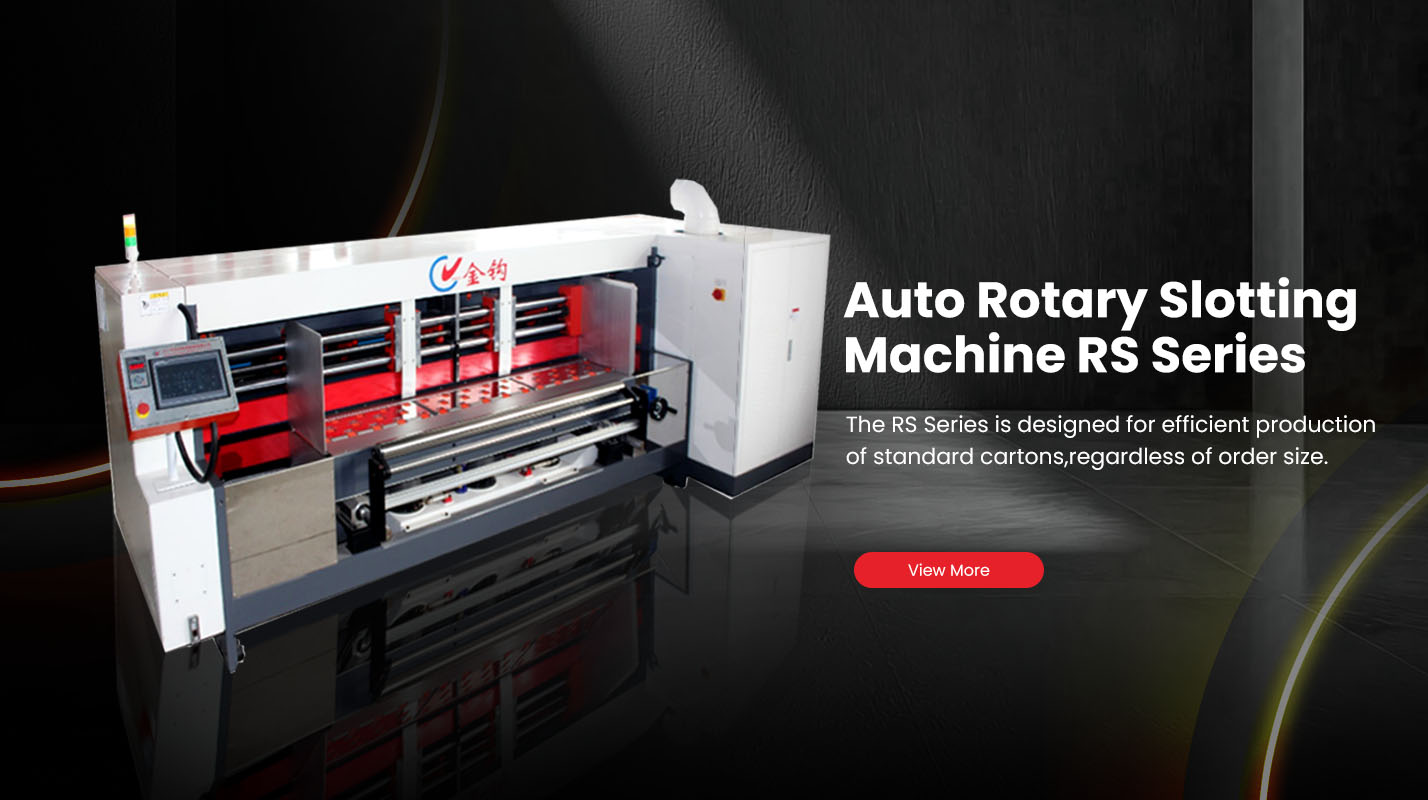
In practical terms, packaging machinery can cover several production stages. A thin blade slitter scorer can improve cutting and scoring precision during board preparation. A cardboard box forming machine can support serial production and improve efficiency for repetitive box output. A rotary slotting and creasing machine can combine key conversion steps into one system and improve consistency in mass production. JINGOU describes its rotary slotting and creasing machine as advanced equipment for mass producing corrugated boxes with precision by integrating rotary slotting and creasing in one system. These machine types show that packaging machinery is not one single product category. It is a system of production tools that can be configured to match different packaging needs.
A simple view is below.
Machinery Type | What It Can Do | Production Value
Thin blade slitter scorer | Cut and score corrugated board | Better preparation accuracy
Box forming machine | Produce corrugated boxes in serial runs | Higher output consistency
Rotary slotting and creasing machine | Slot and crease in one process | Fewer handling steps
Custom box making system | Handle varied sizes and styles | Better fit for short runs and mixed orders
Packaging machinery can also strengthen bulk supply performance. A machine is not truly valuable because it runs well once during a trial. It becomes valuable when it can keep the same quality standard across repeated orders, maintain dimensional stability, and support future output growth. That is why bulk supply considerations should be part of machine selection from the start. Buyers should review spare parts readiness, maintenance planning, setup repeatability, and supplier response speed before making a decision. In corrugated packaging production, these factors often matter as much as speed because unstable output creates waste, rework, and delivery pressure. JINGOU’s focus on machinery for small quantity and diversified corrugated orders makes it relevant for manufacturers trying to balance flexibility with stable supply.
A strong project sourcing checklist helps clarify what packaging machinery can really deliver. Buyers should confirm carton styles, board thickness range, target output, changeover frequency, line layout, voltage requirement, spare parts scope, and after-sales support. They should also ask for a manufacturing process overview. A reliable supplier should be able to explain raw material inspection, machining control, frame assembly, electrical testing, trial operation, and final shipment verification. These quality control checkpoints matter because packaging machinery performance depends on repeatability and structural stability, not only on a catalog description. JINGOU’s published product descriptions repeatedly highlight structural strength, process precision, and application-specific performance, which are exactly the factors buyers should verify during sourcing.
Material standards used in the machinery are another major factor. Strong structural materials support rigidity and long-run accuracy. Suitable wear-resistant parts reduce replacement frequency. Stable electrical systems lower the risk of faults and support more consistent control response. IEC 60204-1 is one of the most relevant standards in this context. According to IEC and machine-safety references, it applies to electrical, electronic, and programmable electronic equipment of machines not portable by hand while working, and it is aimed at safety of persons and property, consistency of control response, and ease of operation and maintenance. Those goals are directly linked to machine uptime and long-term factory use.
Export market compliance should also be considered early. For machinery entering the European market, technical documentation is necessary to demonstrate conformity and support the EU declaration of conformity. EU guidance also states that the manufacturer is responsible for ensuring the product meets all applicable requirements and for affixing the CE marking where required. This means packaging machinery must be built with compliance in mind, not only with production speed in mind. JINGOU’s emphasis on CE-certified equipment is therefore meaningful for buyers serving overseas markets, because export readiness is closely tied to technical discipline and documentation support.
So, can packaging machinery improve manufacturing performance, support customization, strengthen bulk supply, and help factories meet export expectations? In real production, the answer is yes. It can become a core part of the manufacturing system when the machine is selected through the right sourcing logic, supported by a direct manufacturer, and built around clear quality control checkpoints and material standards. JINGOU’s manufacturer-based model, patented corrugated machinery development, and CE-certified equipment make it a strong example of how packaging machinery can move beyond simple box making and become a practical tool for flexible, efficient, and export-ready production.