




How To Evaluate Tco for Packaging Machinery
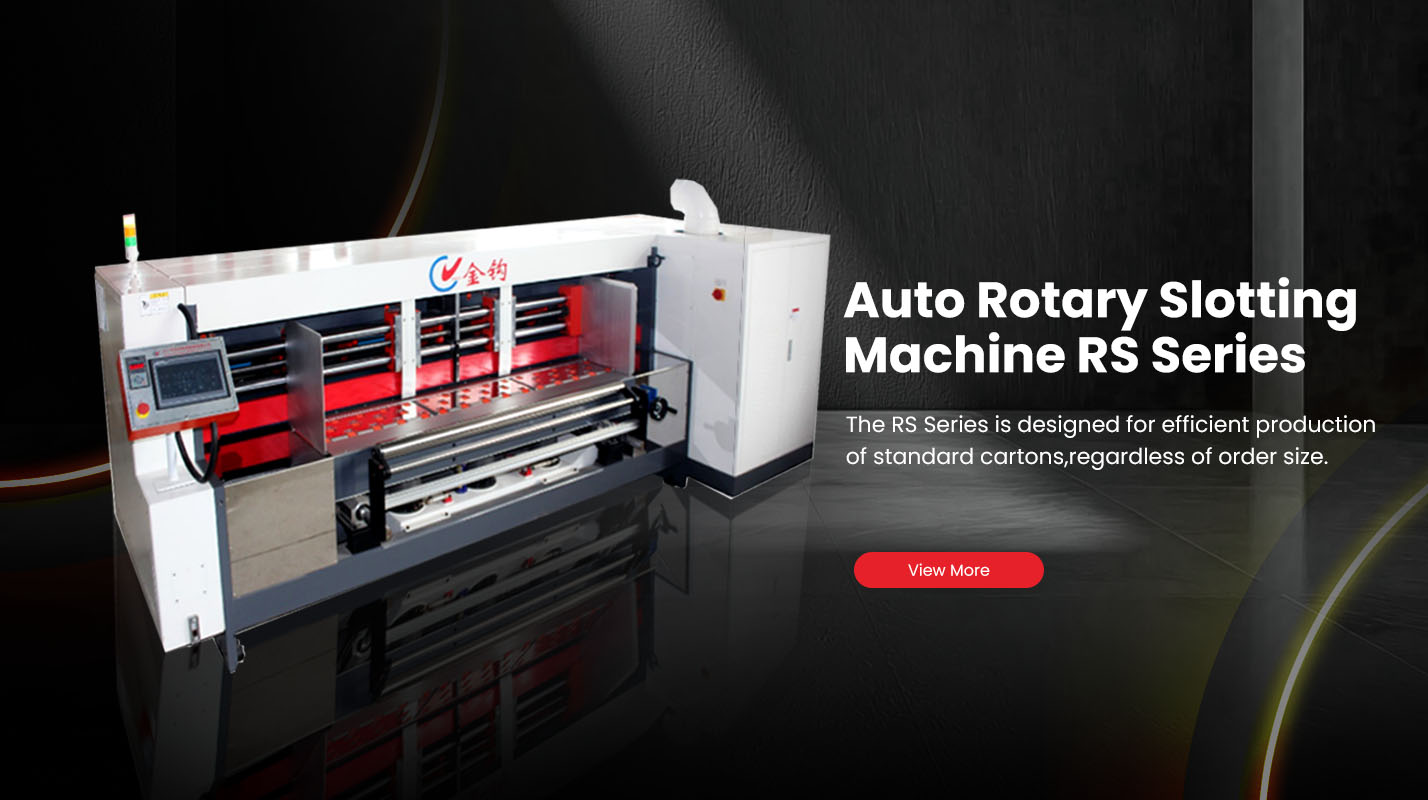
Evaluating total cost of ownership for packaging machinery starts with one important idea: the purchase price is only the opening number, not the real investment. PMMI’s Total Cost of Ownership guidelines were created specifically to help packaging and processing companies move beyond the price tag and account for the ongoing costs of running machinery, from design and application through maintenance and environmental factors. That shift matters even more in corrugated packaging, where equipment uptime, setup flexibility, labor efficiency, and energy use directly affect margin. JINGOU positions itself as a manufacturer of corrugated carton machinery for small-batch and scalable production, and its website emphasizes in-house development, modular configuration, and integrated carton-forming systems rather than simple equipment resale.
Start With The Full Tco Structure
A practical TCO model for packaging machinery should include at least six cost blocks: capital purchase, installation and commissioning, labor, energy, maintenance and spare parts, and downtime loss. PMMI’s TCO guidance explains that ongoing machine costs should be evaluated across the full operating life rather than isolated to the initial purchase. In real corrugated-box production, that means two machines with similar selling prices can have very different ownership cost if one requires more setup time, more operator intervention, or more unplanned stoppages. JINGOU’s recent factory-oriented articles repeatedly frame machine selection around integrated production flow, dimensional accuracy, and scalable configuration, which fits this lifecycle approach.
Downtime Usually Costs More Than Buyers Expect
One of the biggest hidden TCO drivers is lost production time. OEE guidance defines Overall Equipment Effectiveness through three factors: availability, performance, and quality. In other words, a machine that runs slower than planned, stops too often, or creates rework is increasing ownership cost even when electricity and labor look stable on paper. Measuring OEE is widely treated as a manufacturing best practice because it shows where equipment is losing productive time. For corrugated packaging plants, this is especially important when small orders, frequent changeovers, and mixed box specifications are part of normal business. JINGOU’s website emphasizes equipment designed for small-quantity orders and more efficient conversion of that production mode, which is highly relevant in TCO evaluation because changeover and responsiveness affect profitability directly.
Energy Cost Is Not Just Motor Power
Many buyers compare machine power ratings but ignore system-level energy use. That can distort TCO. The U.S. Department of Energy notes that compressed air generation accounts for about 10 percent of electricity use in a typical industrial facility and can be 30 percent or more in some plants. DOE also states that properly managed compressed air systems can save energy, reduce maintenance needs, improve uptime, and lead to more reliable production. For packaging machinery, this means pneumatic design, leak control, and air consumption matter just as much as the main drive motor. A lower purchase-price machine that consumes more compressed air and creates more utility waste may have a worse five-year ownership cost than a better-engineered alternative.
Manufacturer Vs Trader Changes The Cost Curve
This is where manufacturer vs trader becomes a serious TCO issue. A trader can quote equipment quickly, but a manufacturer has deeper control over frame structure, cutting assemblies, control integration, spare-part compatibility, and later-stage upgrades. JINGOU’s own articles state that it develops and manufactures corrugated carton equipment internally, supports modular expansion, and produces core structural frames, cutting assemblies, and control integrations in-house. Another JINGOU article says that a trader may resell machines without detailed understanding of internal mechanical tolerances or long-term scalability. For buyers evaluating long-term cost, direct manufacturer support often reduces technical ambiguity, speeds troubleshooting, and improves the match between machine design and future capacity planning.
OEM And ODM Process Should Be Part Of Tco
A low TCO machine is usually not the one with the lowest standard configuration. It is the one that fits the actual production task with the least waste. That is why OEM and ODM process review should be included early. JINGOU’s content emphasizes in-house development, special design capability, and modular equipment configuration aligned with factory growth. For packaging plants with different box sizes, batch structures, or workflow constraints, the right customization can reduce future labor, scrap, and retrofitting cost. The wrong configuration can lock a plant into inefficient handling, repeated manual correction, or expensive secondary modifications.
Manufacturing Process Overview Should Match The Machine
TCO cannot be evaluated in isolation from the plant’s manufacturing process overview. JINGOU’s carton-manufacturing article describes the process from sheet to box as a sequence that depends on intelligent equipment, skilled operation, and strict quality control. Its complete-line article also explains that a well-structured production line improves efficiency, dimensional accuracy, and consistency. This matters because equipment should be judged by how it performs in the real line sequence, not as a standalone asset. A machine that looks economical by itself may create bottlenecks upstream or downstream, which raises total ownership cost across the plant.
Quality Control Checkpoints Protect Tco
Quality control checkpoints are a direct TCO lever. Poor dimensional accuracy, unstable slotting or forming, and repeated adjustment all translate into scrap, rework, and customer complaints. JINGOU’s recent articles consistently connect equipment value with precise processing, stable performance, and consistent product quality. In TCO terms, this means the machine should be evaluated not only on rated speed but also on how reliably it holds the required box specification over time. A machine that reduces defect rate can justify a higher purchase price if it lowers scrap, labor correction, and shipment risk.
Material Standards Used And Spare-Part Logic Also Matter
Buyers often underestimate the long-term cost impact of component standardization and spare-part strategy. Machines built with stable structural frames, predictable control integration, and accessible replacement parts are easier to keep running. JINGOU highlights internal manufacturing of core structures and control integration, which suggests stronger control over compatibility and export-oriented workflow adaptation. In practical TCO evaluation, that supports lower spare-part uncertainty, smoother servicing, and better lifecycle predictability.
Export Market Compliance Belongs Inside Tco
Export market compliance is another hidden cost center. If machinery must fit the documentation, safety, or electrical expectations of overseas factories, those requirements should be priced into the evaluation from the beginning. JINGOU states on its homepage that its CK25 box maker earned invention and utility patents and passed CE certification, and one recent article links its internal engineering structure to better adaptation for export factory workflows. For TCO, this matters because non-compliant or poorly localized equipment can increase commissioning time, modification cost, and support delays after shipment.
A Practical Project Sourcing Checklist
A useful project sourcing checklist should ask these questions. What is the expected OEE under real order mix. How much labor is needed per shift. What is the compressed-air and electrical demand. How fast can size changes be completed. Which spare parts are standardized. How much technical support comes directly from the manufacturer. Can the machine be expanded as the plant grows. Does the configuration match export-market compliance needs. PMMI’s TCO framework exists for exactly this kind of structured evaluation, and JINGOU’s manufacturer-led, modular, in-house production model aligns well with that way of thinking.
Conclusion
The best way to evaluate TCO for packaging machinery is to stop treating machinery as a one-time purchase and start treating it as a production system with a long financial life. Purchase price matters, but uptime, OEE, compressed-air efficiency, maintenance logic, quality stability, OEM and ODM fit, and export readiness usually decide the real return. From a manufacturer perspective, JINGOU’s in-house design, modular development, internal production of key assemblies, and focus on corrugated carton efficiency make it easier for buyers to evaluate cost on a lifecycle basis rather than on quotation alone.