




What Types Of Automated Packaging Machinery Are Available for Manufacturing
Automated packaging machinery now covers much more than one sealing or forming step. In modern manufacturing, the available solutions usually include slitting and scoring machines, rotary slotting and creasing machines, box forming machines, custom box making systems, conveying units, and integrated end-of-line packaging setups. The reason this category keeps expanding is simple: factories need faster output, better consistency, and more flexibility for mixed orders. PMMI reported that U.S. packaging machinery shipments grew 5.8 percent in 2023 and reached 10.9 billion dollars, which shows how strongly manufacturers continue to invest in automation for packaging performance and production stability.
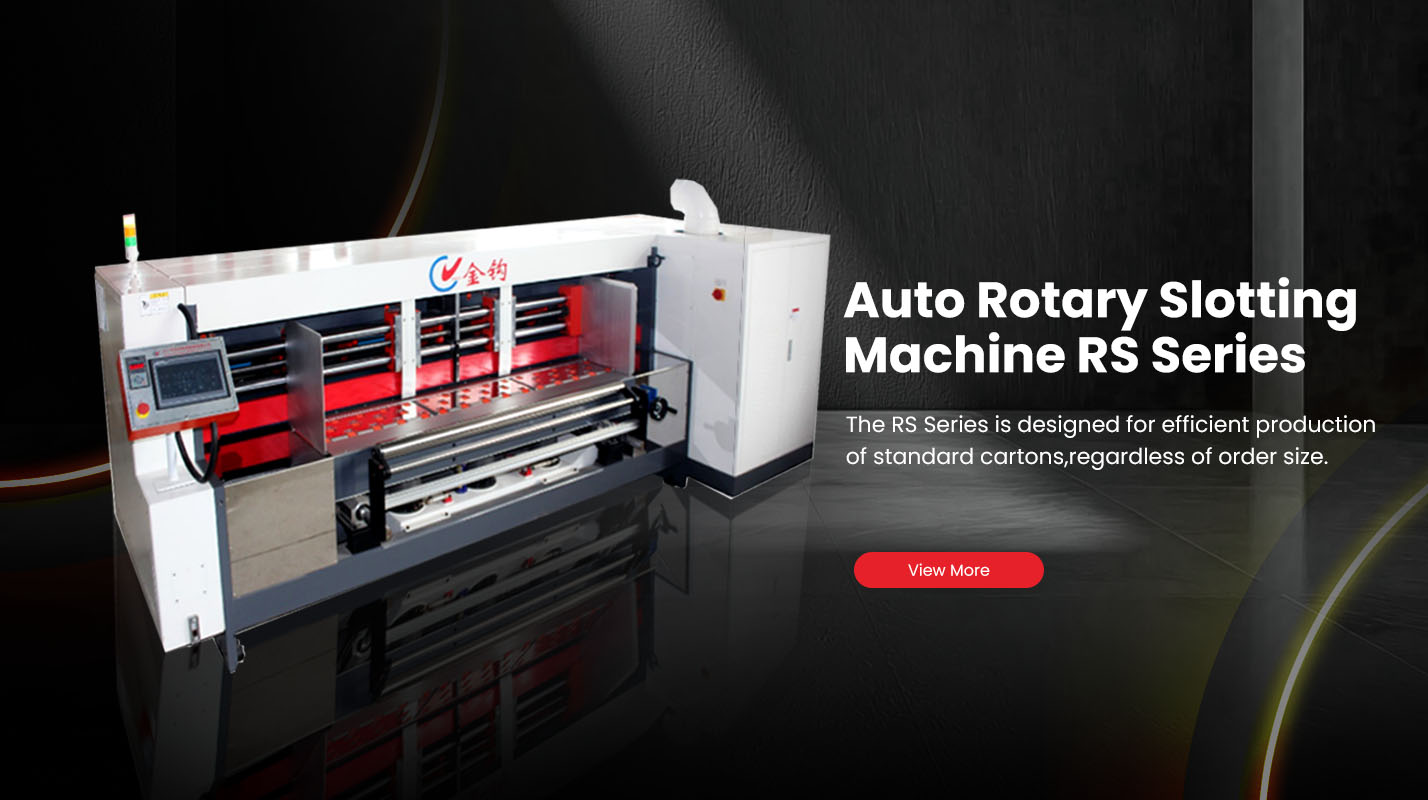
For corrugated packaging production, some of the most practical automated packaging machinery types are slitter scorer machines, box forming machines, and rotary slotting systems. JINGOU’s published product information shows this clearly. Its auto thin blade slitter scorer is presented as a machine for automatic cutting and slitting with PLC plus HMI control, solid structural strength, and suitability for 3-ply and 5-ply corrugated cardboard. Its cardboard box forming machine is described as a modern device for serial production of corrugated boxes, while its automatic rotary slotting and creasing machine is positioned as an advanced system for mass producing corrugated boxes with precise cuts and creases. Together, these machines cover core manufacturing steps from board preparation to box conversion.
This is where manufacturer vs trader becomes an important sourcing issue. A trader may offer multiple machine catalogs, but a direct manufacturer can usually respond faster on machine structure, control logic, material selection, customization limits, testing methods, and spare parts planning. For automated packaging machinery, that difference matters because many factories are not buying a standard standalone machine. They are building a workflow that must match box type, board range, production target, and future expansion plans. JINGOU presents itself as a high-tech enterprise focused on innovative corrugated carton machines for small quantity orders, and the company says its factory introduced the world’s first automatic thin slitter scorer machine in 2009 while its CK25 box maker machine has earned patents and CE certifications. That manufacturer-led positioning is a real advantage when projects require technical adaptation instead of simple resale.
OEM and ODM process also matter when evaluating what automated packaging machinery is available for manufacturing. In practice, the available machine types are not only standard models. They often include customized systems adjusted for carton dimensions, board thickness, output rhythm, plant layout, and handling method. A capable OEM or ODM process should begin with product and packaging analysis, then move into machine proposal, drawing confirmation, manufacturing, assembly, trial operation, and final verification. When this process is weak, factories often face slower startup and higher adjustment cost after installation. JINGOU’s own news page emphasizes in-house modular carton forming platforms and patented thin slitter and rotary solutions for scalable production, which supports this customized manufacturing approach.
Bulk supply considerations are another reason machine type selection should be done carefully. A machine may look efficient in a demo, but long-term value depends on whether the supplier can keep quality stable across repeated deliveries, provide spare parts on time, and maintain consistent material and electrical standards. For packaging machinery, this affects uptime, carton accuracy, and total operating cost. A useful project sourcing checklist should therefore include carton styles, board grades, expected output, changeover frequency, voltage standard, line integration needs, spare parts scope, and training requirements before the order is finalized.
The manufacturing process overview behind the machine should also be reviewed. Reliable suppliers should be able to explain raw material inspection, machining accuracy, frame assembly, wiring checks, trial running, and final inspection. These quality control checkpoints are critical because packaging machinery depends on repeatability. If slitting accuracy drifts or control response becomes unstable, waste and downtime rise quickly. Material standards used inside the machine deserve the same attention. Structural rigidity affects long-run accuracy, while electrical reliability affects safety and maintenance frequency. IEC 60204-1 applies to electrical, electronic, and programmable electronic equipment of machines, and guidance on the standard highlights goals such as safety of persons and property, consistency of control response, and ease of operation and maintenance.
Export market compliance should be checked early, especially for machinery entering Europe. EU guidance states that technical documentation is necessary to prove that a product meets the applicable requirements and to support the EU declaration of conformity. The European Commission also states that it is the manufacturer’s responsibility to carry out conformity assessment, set up the technical documentation, issue the EU declaration of conformity, and affix the CE marking. For international buyers, that means export readiness is tied directly to the supplier’s engineering discipline, not just to a label on the machine. JINGOU’s emphasis on CE-certified equipment is therefore relevant for buyers comparing packaging machinery suppliers for overseas projects.
A simple comparison of available machine types is useful below.
| Machinery Type | Main Function | Best Fit |
|---|---|---|
| Thin blade slitter scorer | Cutting and scoring corrugated board | Precise board preparation |
| cardboard box forming machine | Serial box production | Stable batch manufacturing |
| Rotary slotting and creasing machine | Slotting and creasing in one system | High-volume corrugated box output |
| Custom box making system | Flexible size and style conversion | Short runs and mixed orders |
| Integrated carton line | Linked workflow across multiple steps | Scalable factory production |
The most useful answer to what types of automated packaging machinery are available for manufacturing is not just a product list. It is a selection strategy. Factories need machines that match their real packaging process, allow OEM and ODM flexibility, support bulk supply continuity, follow clear quality control checkpoints, use dependable material standards, and meet export compliance requirements. JINGOU’s focus on corrugated carton machinery, patented development, and CE-certified equipment makes it especially relevant for manufacturers that need automation built around practical production demands rather than generic machine supply.