




Which Equipment Increases Packaging Speed The Most
Packaging speed improves the most when a factory removes manual transfer points, reduces changeover time, and stabilizes the flow from board preparation to final box forming. In most corrugated packaging operations, the biggest gains do not come from adding one isolated machine with a higher top speed. They come from choosing equipment that shortens the full production cycle. This matters because packaging automation remains a major investment area. PMMI reported that U.S. packaging machinery shipments grew 5.8 percent in 2023 to 10.9 billion dollars, showing that manufacturers continue to prioritize packaging efficiency and output stability.
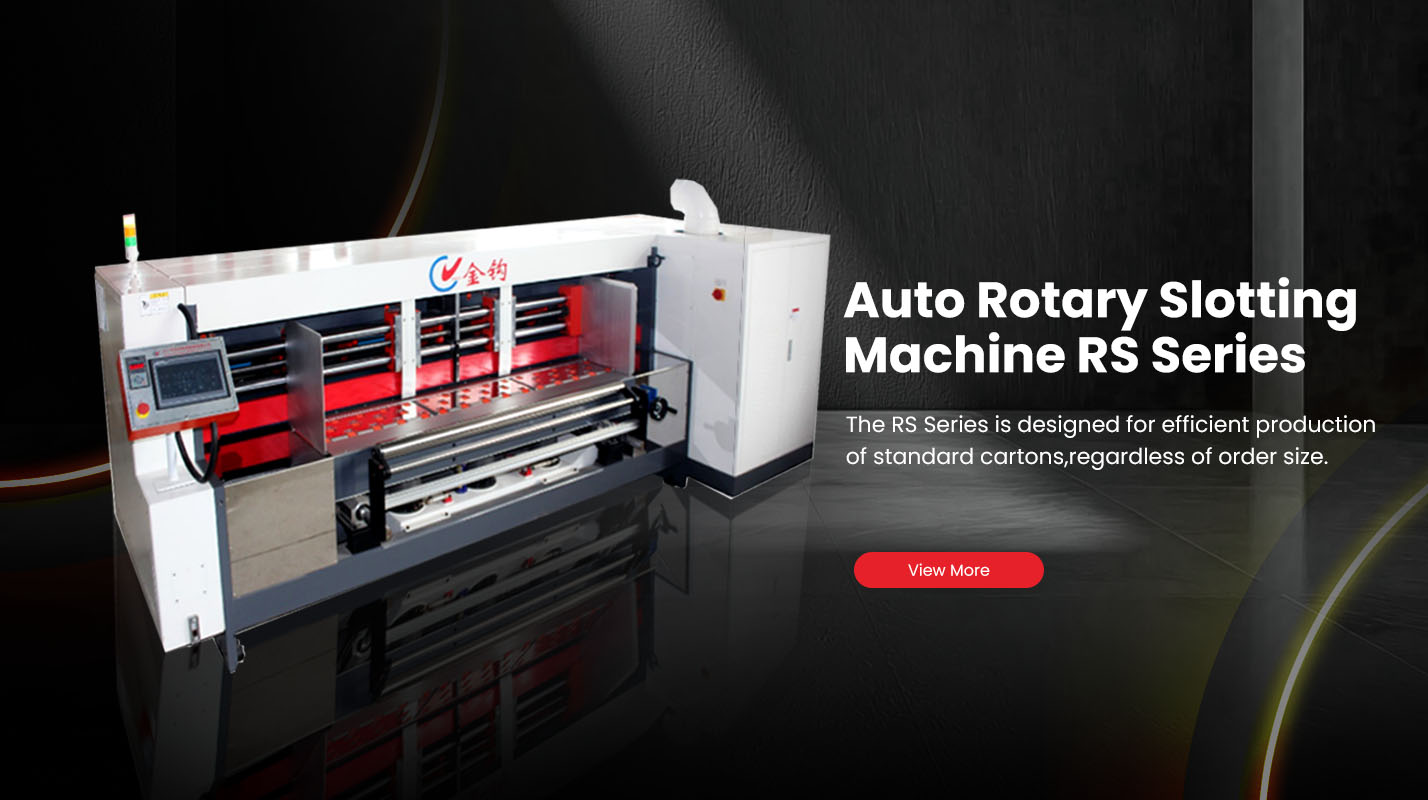
In practical manufacturing, the equipment that increases packaging speed the most is usually the machine that removes the biggest bottleneck in the line. For some factories, that is a thin blade slitter scorer because inaccurate or slow board preparation delays every downstream process. For others, it is an automatic cardboard box forming machine because manual forming limits total output even when board conversion is fast. In higher-volume corrugated production, a rotary slotting and creasing machine can deliver the largest speed gain because it combines multiple functions in one system and reduces handling between steps. JINGOU’s own product range reflects these three high-impact stages: thin blade slitting and scoring, cardboard box forming, and rotary slotting with creasing.
A thin blade slitter scorer often creates the first major speed improvement because it directly affects preparation accuracy and line rhythm. JINGOU states that its slitter scorer machine is built for automatic cutting and slitting of cardboard and highlights PLC plus HMI control, good structural strength, and suitability for 3-ply and 5-ply corrugated board. When cutting and scoring become more stable, factories usually see less board damage, smoother feeding, and fewer stoppages caused by poor preparation. JINGOU also notes in a 2026 article that thin blade technology improves cutting precision, reduces board damage, and supports smoother production performance compared with traditional thick blade systems. For factories still losing time at the board preparation stage, this kind of equipment often delivers one of the fastest returns in real packaging speed.
An automatic cardboard box forming machine can create even larger speed gains when the main bottleneck is manual box production. JINGOU describes its automatic cardboard box forming machine as a complete and modern device for serial production of boxes made from corrugated cardboard, with the goal of improving both quality and quantity per unit of time. This matters because many lines do not actually lose speed in cutting or slotting. They lose speed in repeated forming work, operator fatigue, and inconsistent output during long runs. When the line depends on repeated manual folding and forming, upgrading this stage usually changes the overall production pace more than improving any earlier step alone.
For mass production, the strongest speed increase often comes from a rotary slotting and creasing machine. JINGOU presents its automatic rotary slotting and creasing machine as an advanced way to mass produce corrugated boxes with precision by integrating rotary slotting and creasing in one system. That is important because packaging speed is not only about faster motion. It is also about reducing transitions between separate processes. When slotting and creasing happen in one coordinated stage, operators spend less time moving semi-finished work, adjusting alignment, and correcting inconsistent cuts. In higher-output operations, this kind of integrated machine is often the equipment that increases packaging speed the most.
The answer also depends on whether the supplier is a manufacturer or a trader. A trader may offer many machine categories, but a direct manufacturer can usually identify the real production bottleneck more accurately because it can review structure, board type, output target, and future workflow in technical detail. JINGOU positions itself as a high-tech enterprise focused on corrugated carton machines for small quantity orders. Its official site says the company developed the world’s first automatic thin slitter scorer machine in 2009, and that its CK25 box maker platform earned invention patents, utility model patents, and CE certifications. This manufacturer-led background matters because the equipment that increases speed the most is rarely chosen by catalog description alone. It is chosen by matching the machine to the actual production problem.
This is where the OEM and ODM process becomes critical. A faster machine is not automatically a faster production solution. It has to match carton dimensions, board thickness, product mix, plant layout, and the frequency of size changes. A strong OEM and ODM process should begin with application review, then move into machine selection, technical confirmation, configuration, testing, and final inspection. JINGOU’s custom box making machine is described as automated equipment developed specifically for custom corrugated cardboard boxes. That is especially relevant for factories handling mixed sizes or short runs, where flexibility can improve real line speed more than pure maximum output. A machine that switches faster between box styles often outperforms a higher-speed machine that loses time in repeated setup.
Bulk supply considerations also change the answer. The equipment that increases packaging speed the most in a demo is not always the equipment that keeps speed stable over months of production. Buyers should look at spare parts planning, repeatability, maintenance access, and whether the supplier can maintain the same quality standard across repeated orders or future line expansion. A practical project sourcing checklist should include carton styles, board grades, target output, changeover frequency, plant layout, voltage standards, and after-sales response before a machine is selected. That sourcing logic matters because packaging speed falls quickly when the machine is hard to maintain or poorly matched to the workload. JINGOU’s wider product positioning for diversified carton orders across sectors such as furniture, lighting, auto parts, household appliances, and bathroom and kitchen hardware shows that it is targeting flexible industrial use rather than one fixed packaging format.
The manufacturing process overview behind the machine matters as much as the machine category itself. A supplier should be able to explain raw material inspection, machining accuracy, structural assembly, electrical checks, trial running, and final inspection. Quality control checkpoints directly affect whether the machine can sustain speed without drift, waste, or repeated stoppages. Material standards used in the structure, working parts, and control system also shape long-term speed performance. If rigidity is weak or electrical stability is inconsistent, packaging speed usually drops in actual production even if the nominal machine speed looks competitive. JINGOU repeatedly emphasizes structural strength, control systems, and precision-oriented corrugated processing across its product pages, which supports this manufacturer-based approach to speed improvement.
Export market compliance should also be considered, especially for projects serving Europe or other regulated markets. The European Union states that manufacturers are responsible for ensuring products meet applicable requirements and for preparing the technical documentation and declaration of conformity where required for CE marking. That makes direct manufacturer support more valuable when speed upgrades are part of export-oriented production planning, because the project must combine performance, documentation, and compliance readiness. JINGOU’s website states that its CK25 box maker platform has passed CE certifications, which supports its positioning for international buyers comparing packaging equipment for long-term use.
A simple comparison is below.
| Equipment type | Where it increases speed most | Best fit |
|---|---|---|
| Thin blade slitter scorer | Board preparation and feeding stability | Lines losing time in cutting and scoring |
| Cardboard box forming machine | Manual forming bottlenecks | Serial box production with repetitive output |
| Rotary slotting and creasing machine | Integrated mass production flow | Higher-volume corrugated box manufacturing |
| Custom box making machine | Changeover efficiency for mixed orders | Short runs and diversified carton sizes |
The equipment that increases packaging speed the most is the one that removes the biggest delay in the actual workflow. In many corrugated packaging plants, that means a box forming machine for repetitive manual work, a rotary slotting and creasing machine for integrated mass production, or a thin blade slitter scorer for unstable board preparation. JINGOU’s advantage is that it covers these key stages as a direct manufacturer with patented development, custom box capabilities, and CE-certified equipment. For factories trying to improve real packaging speed rather than only machine speed on paper, that combination offers a stronger path to efficient and scalable production.